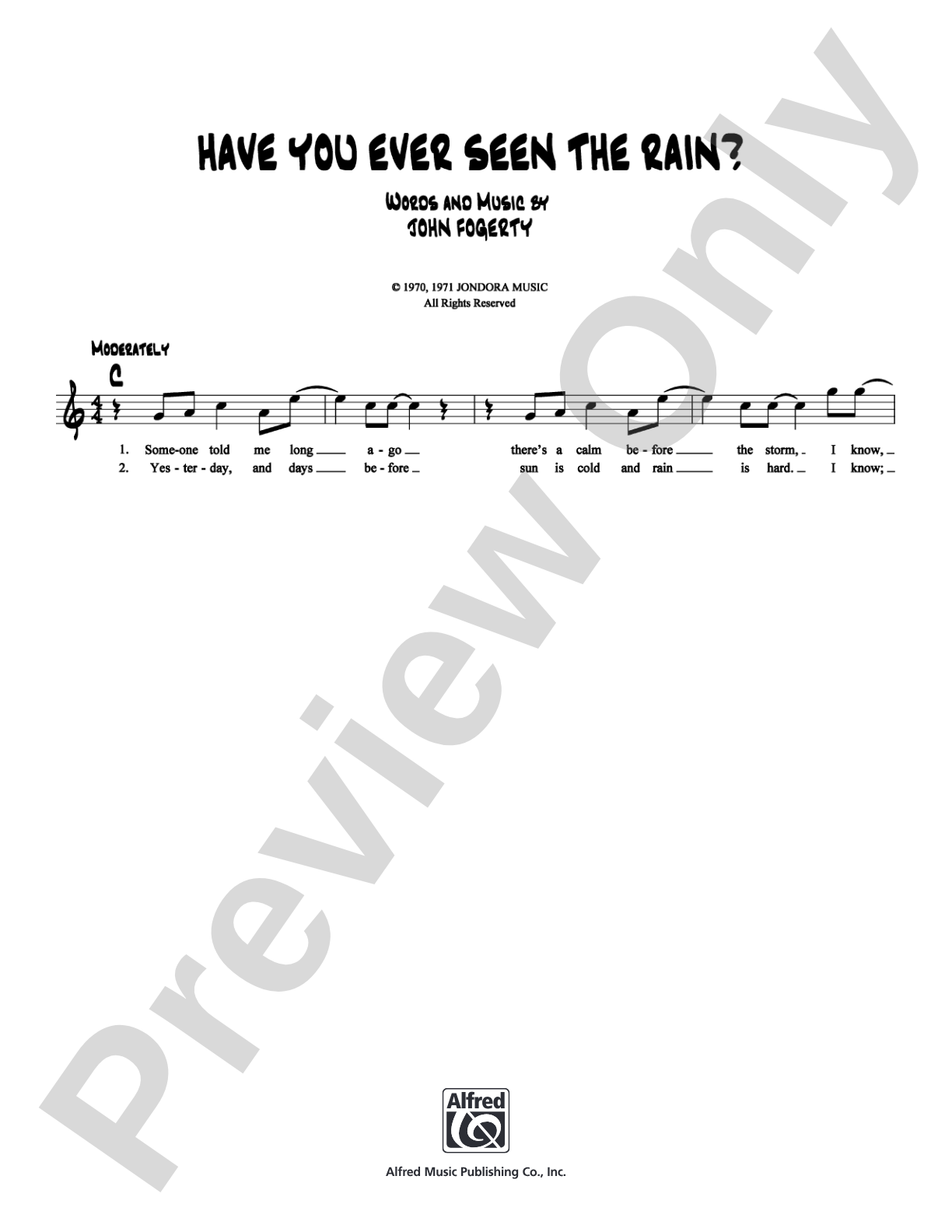
Have You Ever Seen the Rain?: Lead Sheet Digital Sheet Music

Have You Ever Seen the Rain?: Lead Sheet Digital Sheet Music

Creedence Clearwater Revival, John Fogerty

Item: 00-PS-0007413

Digital Download
$1.99
Description

Have You Ever Seen the Rain?: Lead Sheet Digital Sheet Music isn't in MakeMusic Cloud just yet...but it could be. Let us know you'd like to see it, and you'll help shape what comes next. In the meantime, start a free trial and dive into thousands of interactive titles your students can play along with today.

Sample Audio
No sample audio found.
Sample Video
Additional Details
SKU: 00-PS-0007413

More about this title

About the Artist: Creedence Clearwater Revival

Creedence Clearwater Revival formed in El Cerrito, California in 1967 and became one of the most commercially successful rock bands of their era. Led by John Fogerty's songwriting and distinctive vocal delivery, the band achieved massive chart success with their swamp rock sound, which blended blues, country, and rock influences into something entirely their own. Their catalog remains a staple of classic rock radio and continues to resonate across generations.

The band's influence on popular music extends far beyond their original run. Their songs have become standard repertoire in music education settings, offering accessible entry points into rock songwriting while maintaining genuine musical substance. Creedence's straightforward chord progressions and memorable melodies make their work ideal for students exploring contemporary composition and arrangement.

Why we love this

This lead sheet captures one of rock music's most enduring melodies in a format that invites creative interpretation. Students and musicians naturally gravitate toward the song, which means your ensemble's engagement comes built in. The simple harmonic structure rewards solid ensemble reading while leaving room for arrangement and improvisation at any level.

What to expect

The song carries an introspective, slightly melancholic quality despite its rock origins. There's a sense of patient observation in the melody, matched by harmonic changes that feel both simple and emotionally resonant. The overall character sits somewhere between resigned acceptance and gentle hope.

Who it's for

Pianists, guitarists, and ensemble players preparing for jazz combos, chamber groups, or contemporary music ensembles will find this lead sheet straightforward and immediately playable. It works equally well for music theory students analyzing popular songwriting or for musicians arranging the tune for their specific instrumentation. Beginning to intermediate players benefit from the accessible chord changes, while experienced musicians appreciate the interpretive possibilities.

How to get the most out of it

  • Pay attention to the song's triplet feel, which gives the tune its characteristic swing despite its moderate tempo. Lock this in early and let it inform every note.
  • Use the memorable melodic hook as an anchor for phrasing. The melody wants to breathe in specific places; honor those natural breaks rather than pushing through them mechanically.
  • Consider how the lead sheet's chord symbols can open conversations about voicing choices. Different instrumental colors and doublings can shift the song from contemporary pop to jazz-influenced arrangement.
  • Balance between strict adherence to the written melody and the interpretive flexibility a lead sheet invites. Experiment with where you might bend or reshape the line while preserving what makes the tune instantly recognizable.

How to use it

Include this in a contemporary music concert or a program exploring rock songwriting across different eras and styles. The lead sheet format makes it ideal for a student arrangement showcase, where different small ensembles can each interpret the tune according to their instrumentation. It also works well as a sight-reading exercise that carries real musical satisfaction because students recognize and connect with the tune immediately.

Skills your students will build

  • Reading lead sheet notation and chord symbols
  • Interpreting melodic phrasing in a popular song context
  • Understanding triplet subdivisions and swing feels
  • Making informed choices about harmonic voicing
  • Translating a single melody line into ensemble-appropriate arrangements

You May Also Like