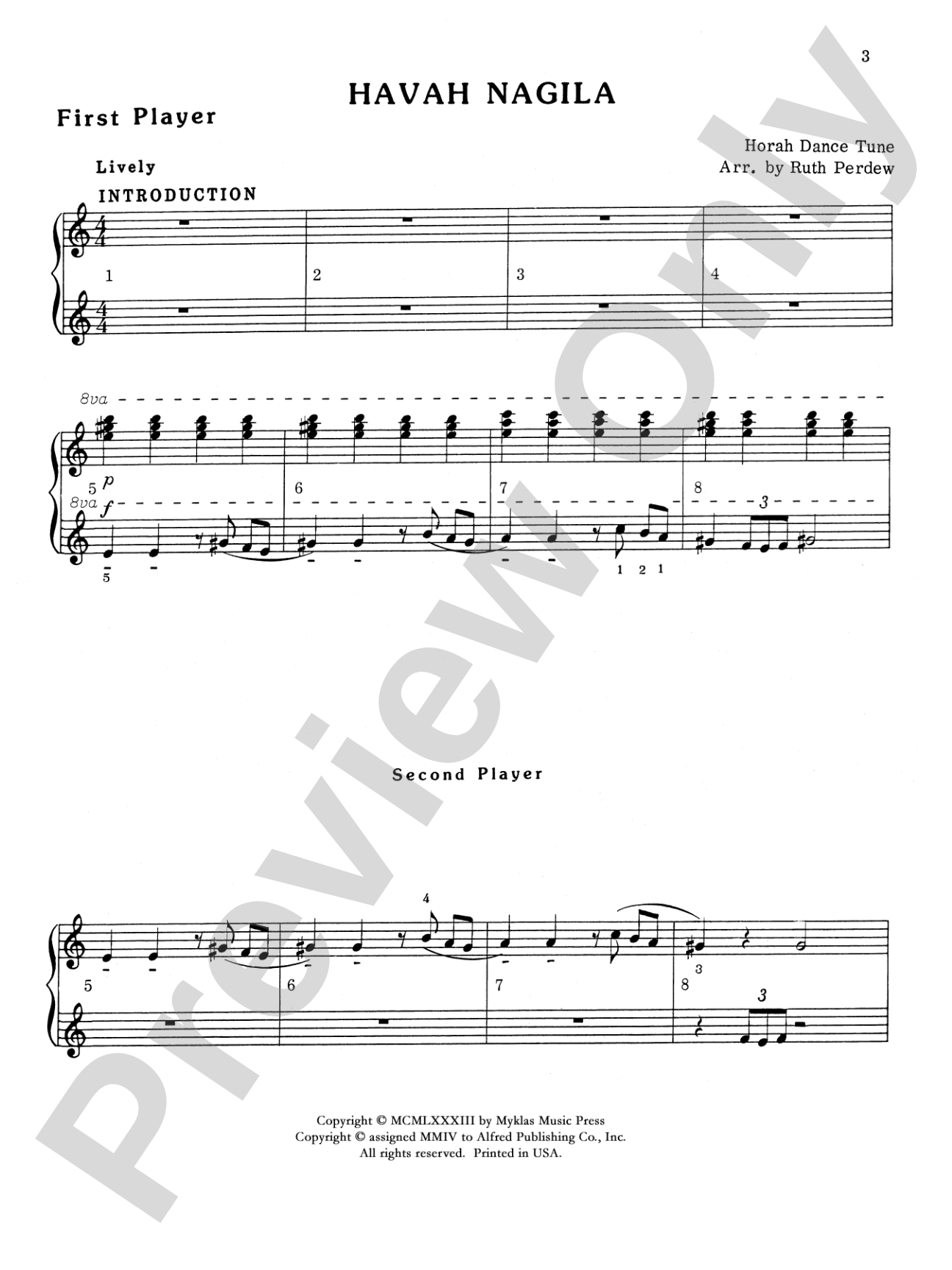
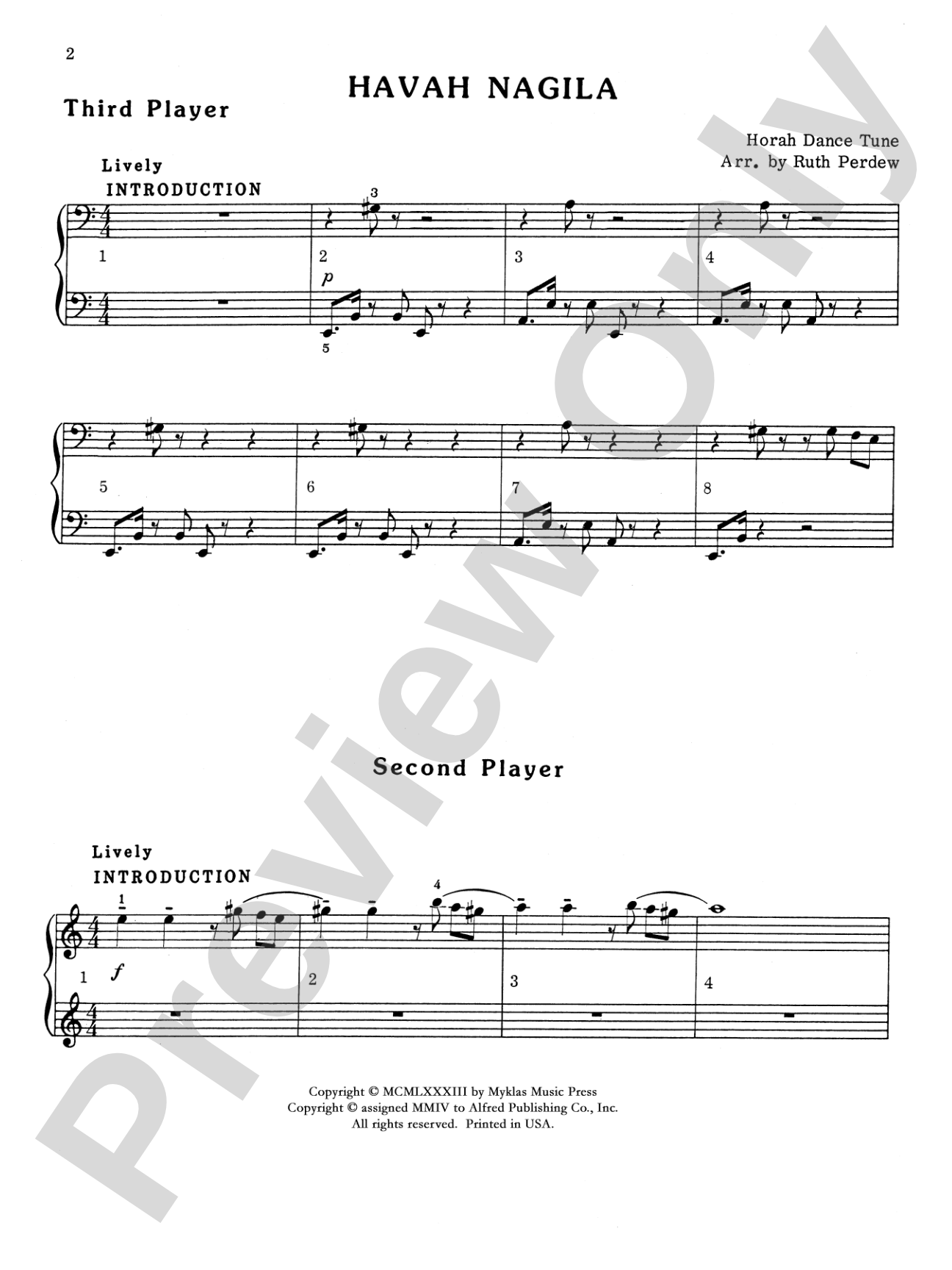
Havah Nagila - Piano Trio (1 Piano, 6 Hands) Sheet Music Preview

Havah Nagila - Piano Trio (1 Piano, 6 Hands): Piano

Arranged by Ruth Perdew

Level: Early Intermediate

Item: 00-PB-0000822

Digital Download
$4.99
Description
This arrangement of the traditional Hebrew folk song of celebration is for intermediate piano trio, one piano, six hands. The first and second players carry the familiar melody while the third player accompanies with a syncopated rhythmic motive. The parts are arranged in score form for ease in playing. A Federation Festivals 2016-2020 selection. A Federation Festivals 2020-2024 selection.

Havah Nagila - Piano Trio (1 Piano, 6 Hands): Piano isn't in MakeMusic Cloud just yet...but it could be. Let us know you'd like to see it, and you'll help shape what comes next. In the meantime, start a free trial and dive into thousands of interactive titles your students can play along with today.

Sample Audio
No sample audio found.
Sample Video
Additional Details
Publisher: Alfred Music
Page Count: 8
SKU: 00-PB-0000822

More about this title

Why we love this

Ruth Perdew's arrangement captures the infectious energy of this beloved folk song while solving a real scheduling problem: three pianists sharing one instrument in a way that feels natural and balanced. The syncopated accompaniment part gives the third player genuine musical responsibility instead of a token role, and the score format keeps all three players locked together without constant page turns.

What to expect

Joyful and rhythmically alive. The syncopated accompaniment keeps things moving and modern while honoring the traditional melody that rises above it. There's celebration in the sound without heaviness.

Who it's for

Three pianists of early intermediate ability who need meaningful shared repertoire that goes beyond simplified arrangements. This works for recitals, chamber music festivals, or studio showcases where you have multiple advanced students and limited performance opportunities.

How to get the most out of it

  • Let the third player's syncopated rhythmic motive sit slightly behind the beat; this creates the groove that makes the piece feel celebratory rather than merely bright.
  • Bring the melody out clearly in the first and second piano parts, but not at the expense of the accompaniment's rhythmic integrity. The three lines need to breathe as one texture.
  • Mark phrase boundaries in rehearsal so all three players understand where the melody peaks and releases. This shared phrasing keeps the energy from feeling scattered.

How to use it

Program this alongside other multicultural repertoire for a concert that explores traditional music across cultures, or feature it as a standalone chamber piece at a recital where you're showcasing ensemble work. Its eight pages and early intermediate level make it manageable for a spring or fall festival program.

Skills your students will build

  • Playing in three-part ensemble texture with clear role differentiation
  • Maintaining rhythmic precision while accompanying syncopated material
  • Balancing melody and accompaniment in a collaborative setting
  • Sight-reading and coordination from score format
  • Sustaining musical line across hand positions on a shared instrument

You May Also Like