Hava Nagila Sheet Music Preview

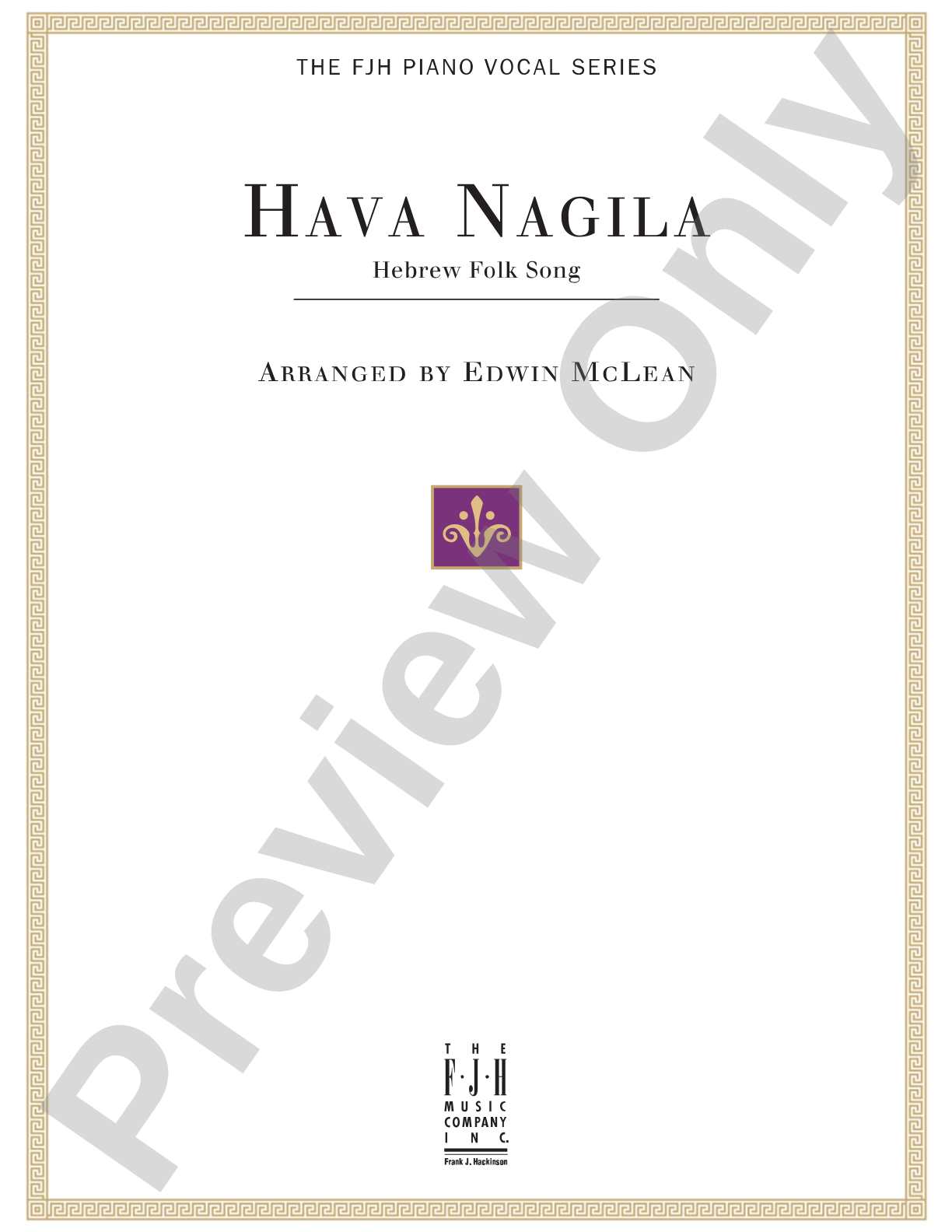
Hava Nagila: Piano/Vocal

Arranged by Edwin McLean

Item: 98-DPV3012

Digital Download
$2.95
Description
This lively traditional Hebrew folk song arranged for voice and piano, includes the traditional Hebrew lyrics as well as the English translations. The piano part is arranged to fully support the vocal part as well as stand on it's own as an instrumental solo if desired. Chord symbols are provided on top of the vocal line to facilitate possible variations in accompaniment patterns, or use of additional instruments.

Hava Nagila: Piano/Vocal isn't in MakeMusic Cloud just yet...but it could be. Let us know you'd like to see it, and you'll help shape what comes next. In the meantime, start a free trial and dive into thousands of interactive titles your students can play along with today.

Sample Audio
No sample audio found.
Sample Video
Additional Details
Series: The FJH Piano Vocal Series
Publisher: The FJH Music Company, Inc.
SKU: 98-DPV3012

More about this title

Why we love this

This arrangement strikes an ideal balance between accessibility and musicality. The piano writing is substantial enough to anchor the piece independently, yet it never overshadows the vocal line, making it equally valuable whether you're pairing it with a soloist or featuring it as an instrumental number. Chord symbols throughout open the door for creative flexibility, inviting students to explore jazz voicings, add percussion, or experiment with different accompaniment textures.

What to expect

The piece radiates warmth and joyful momentum, capturing the celebratory spirit of the traditional dance. The buoyant rhythmic figures in the piano create an irresistible lift, while the familiar melody invites immediate connection from listeners.

Who it's for

Singers preparing early recital material and pianists seeking repertoire that bridges solo and accompanying roles will find this arrangement practical and rewarding. It works equally well for students building confidence with text underlay and those exploring arrangements of world music traditions.

How to get the most out of it

  • Let the piano establish the rhythmic energy from the opening. A crisp, articulate touch in the accompaniment figures sets the folk dance character and lifts the vocal entrance.
  • Shape the vocal line with phrasing that honors the lyrical shape of each phrase rather than strictly adhering to bar lines. This approach feels more authentic to the folk tradition.
  • Use the chord symbols to consider modal or jazz inflections on repeat sections, keeping the energy fresh without departing from the traditional melody.
  • If performing as an instrumental solo, articulate the melody with clarity so listeners recognize the familiar tune immediately, then allow the accompaniment pattern to propel the rhythmic drive.

How to use it

This arrangement fits naturally into concerts celebrating cultural diversity, Jewish heritage, or world music traditions. It also serves as an excellent opener or closer to a recital, since its infectious energy and immediate recognizability engage audiences while the manageable technical demands allow singers to focus on ensemble balance and interpretation.

Skills your students will build

  • Performing music with Hebrew text and managing phonetic accuracy alongside musical phrasing
  • Coordinating vocal line independence with piano accompaniment patterns
  • Reading chord symbols and understanding their role in shaping harmonic texture
  • Interpreting folk music idioms and rhythmic flexibility within a metrical framework
  • Building confidence with material that works solo or as part of a larger performance context

You May Also Like