Haunted Places: Cello Sheet Music Preview

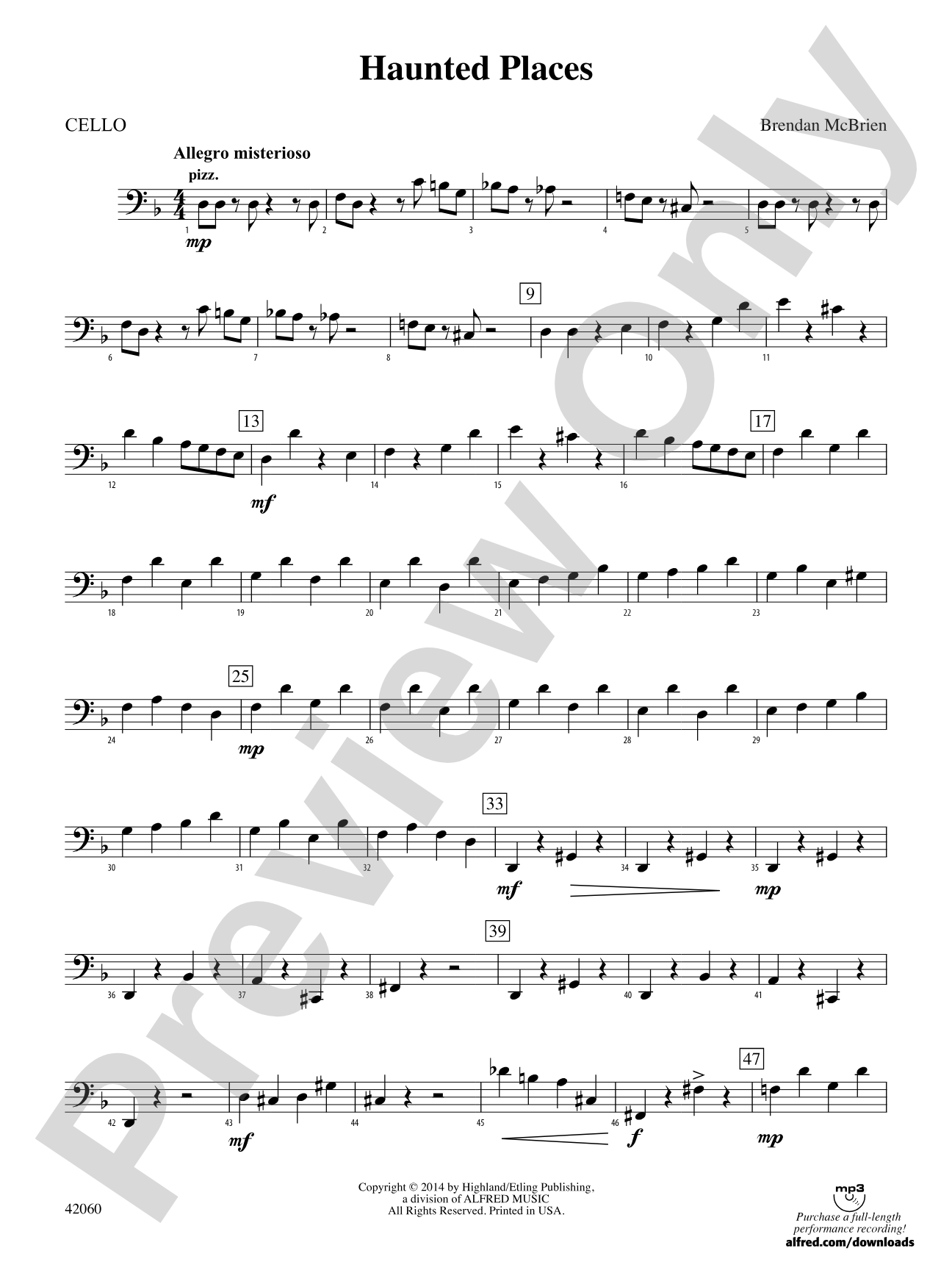
Haunted Places: Cello

By Brendan McBrien

Grade: 3

Item: 00-PC-0016452_VC1

Digital Download
$5.99
Description
Inspired by the overactive imagination of childhood, this piece examines the youthful fun of "scary places" that make our skin tingle! Enjoy this musical portrait of scary, abandoned dwellings, and of the spirits that for some frightful reason seem to inhabit them. (6:40) This title is available in MakeMusic Cloud.

Don't just read it, hear it, play along with it, and watch your students grow with it. In MakeMusic Cloud, Haunted Places: Cello comes alive with professional accompaniment, adjustable tempo, and built-in practice tools that turn solo practice into real progress.

Sample Audio
0:00
0:00
Sample Video
Additional Details
Series: Highland/Etling String Orchestra
Publisher: Alfred Music
Page Count: 124
SKU: 00-PC-0016452_VC1

More about this title

About the Composer: Brendan McBrien

Brendan McBrien

Brendan McBrien began his musical journey in Sunnyvale, California, where he picked up the French horn in 4th grade. He went on to earn both bachelor's and master's degrees in music composition and conducting from California State University, Long Beach, and spent over three decades as a professional French horn player performing with Los Angeles and Orange County orchestras, including work in television and film.

McBrien's compositions and arrangements for band and orchestra circulate globally through Alfred, Kendor, Kjos, and Wingert-Jones Music. He has shaped music education in Southern California as a clinician, adjudicator, and board member of the Southern California School Band and Orchestra Association. Since 1988, he has directed bands and orchestras at Rancho San Joaquin Middle School in Irvine and teaches music arranging at California State University, Long Beach. He received Middle School Teacher of the Year recognition from the Irvine Unified School District.

Why we love this

McBrien captures something genuine about how young musicians experience fear and imagination. Rather than heavy or genuinely frightening, the piece leans into playful spookiness, which makes it engaging for middle school orchestras without requiring dramatic emotional maturity. The novelty approach gives conductors room to work with students on colorful orchestration and character portrayal while keeping rehearsals fun.

What to expect

Playful unease underscores every moment, from creaking wooden floorboards to shadows dancing in the corner of your eye. The music ebbs between moments of genuine tension and the gleeful excitement of kids daring each other to explore a haunted house, capturing the thrill of controlled fear that defines childhood adventure.

Who it's for

Grade 3 string orchestras looking for repertoire that appeals to middle school sensibilities while remaining musically substantive. This works well for programs seeking a Halloween-season or fall concert piece that entertains audiences without requiring advanced technical facility.

How to get the most out of it

  • Encourage string players to explore bow control for tremolo passages and staccato figures that build the eerie atmosphere without losing clarity in the ensemble sound
  • Shape phrases to emphasize the storytelling arc; treat transitions between sections like moving from one spooky location to the next
  • Have students visualize the imagery during sectionals so their tone choices and phrasing reflect the emotional journey from curiosity to fright to relief

How to use it

Anchor this as the centerpiece of a fall or Halloween concert, or pair it with other novelty or character pieces at Grade 2-3 level to create a complete concert arc. Its six-minute-forty-second length gives it weight on a program without demanding excessive rehearsal time, freeing bandwidth for other learning objectives.

Skills your students will build

  • Playing tremolos with controlled tone and dynamic contrast
  • Executing staccato articulation across the ensemble with unified attack
  • Responding to conductor cues that shape narrative pacing and character changes
  • Coordinating pizzicato and arco techniques within the same section
  • Listening to and balancing parts in an arrangement that relies on layered effects and orchestral color

You May Also Like