
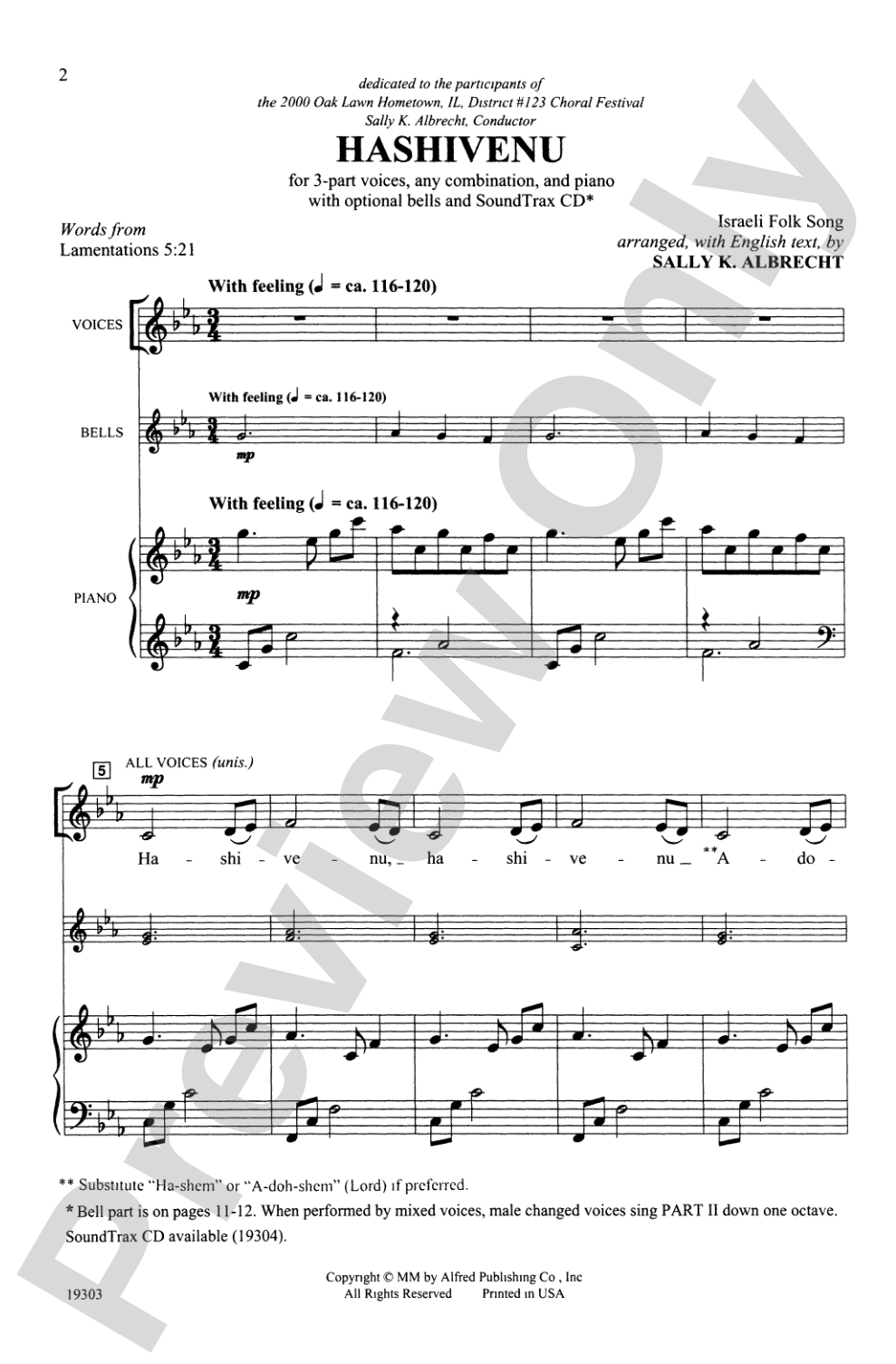

Hashivenu (Israeli Folk Song): 3-Part (any combination) Choral Octavo
Israeli Folk Song / arr. Sally K. Albrecht
Item: 00-PO-0002869
$2.25
Minimum order quantity: 20 copies
Pickup currently not available
Description
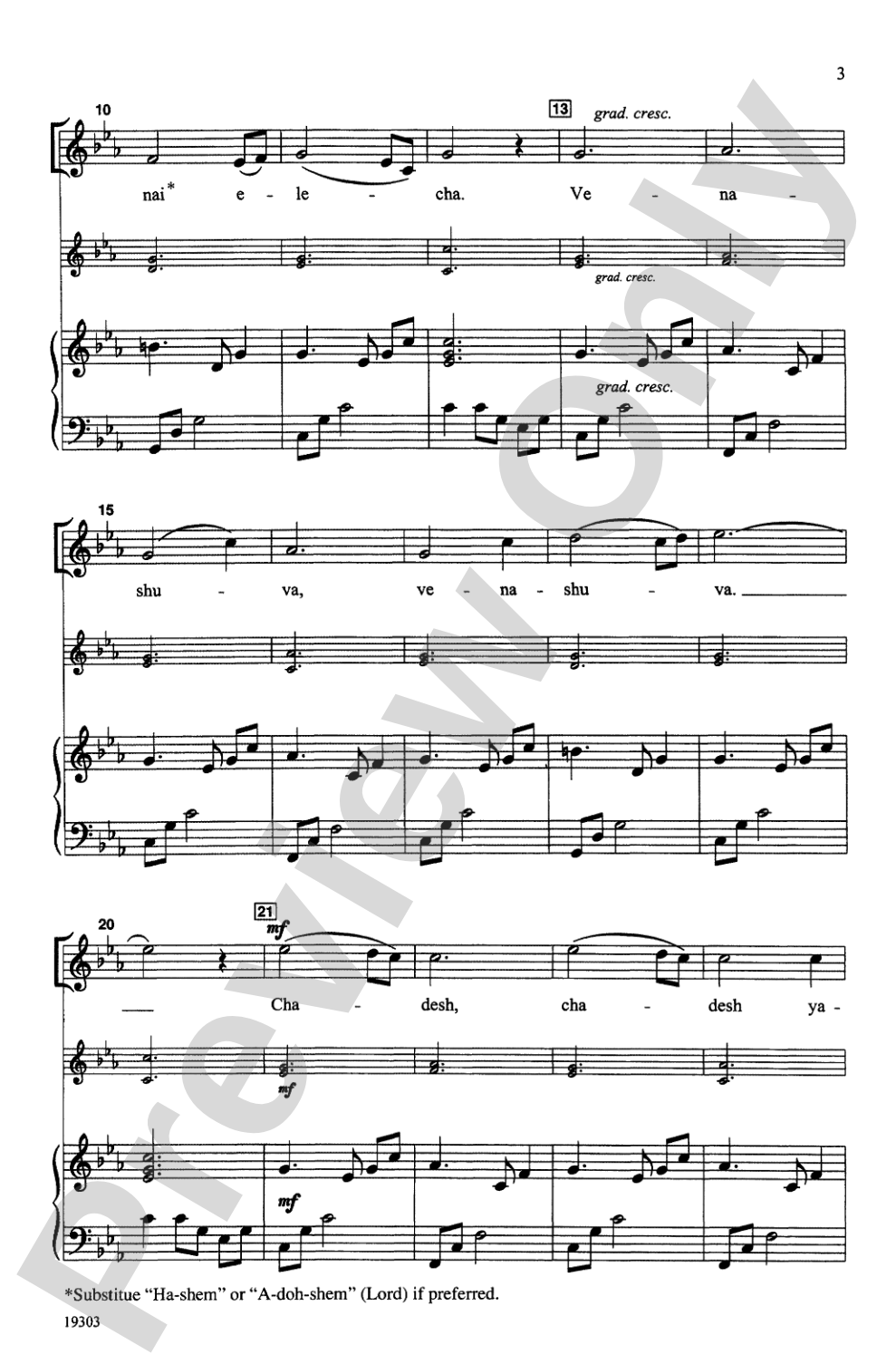
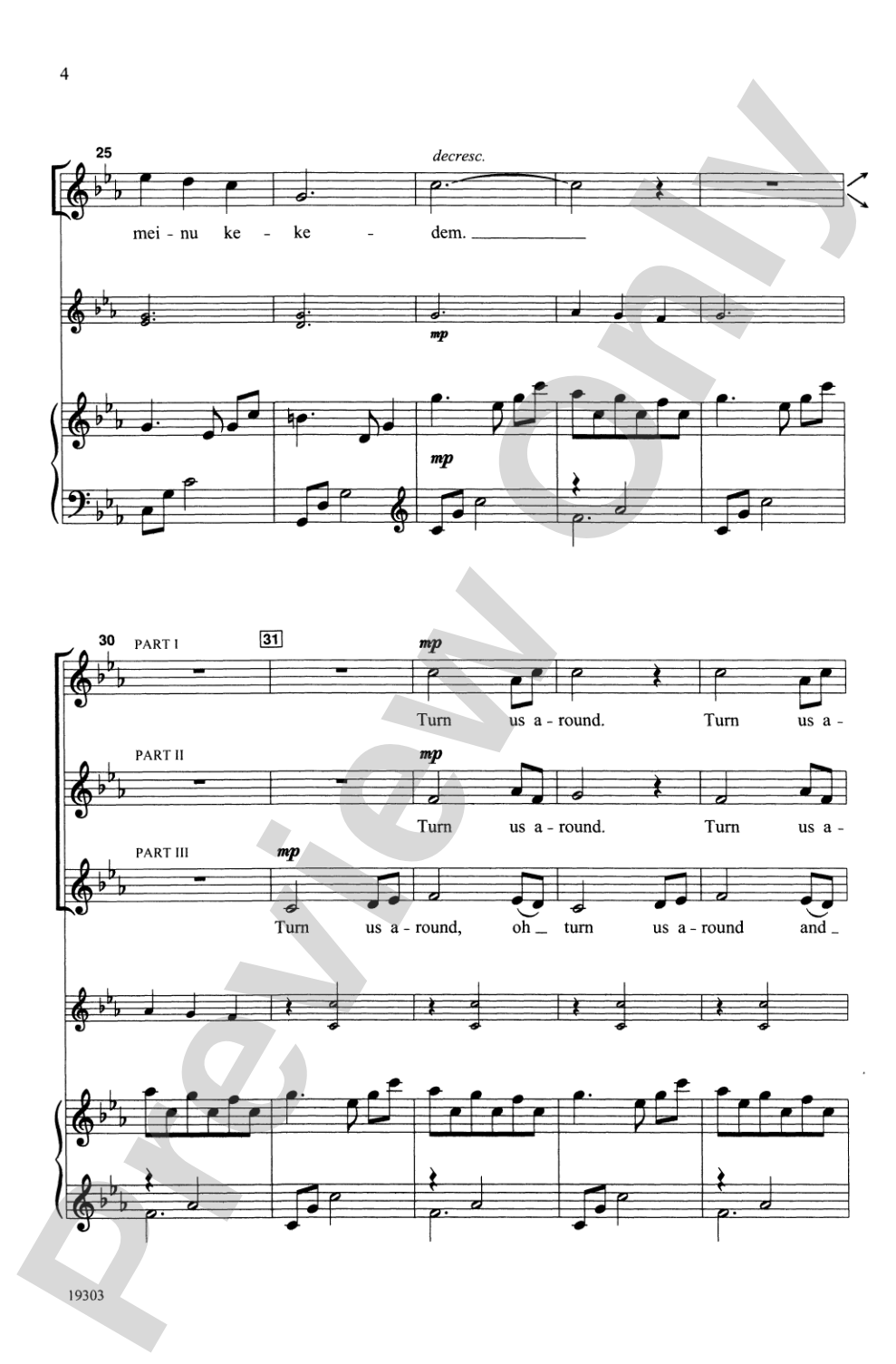
Why not sing a traditional Israeli folk song this year? Sally Albrecht presents this haunting, minor-key melody first in unison, then as a three-part round. Because it can be sung by any combination of three-part voices, it's ideal for any choir of any age, mixed, treble, or even male groups. Use it with one group this year, another next year. An optional bell part is included.


Hashivenu (Israeli Folk Song): 3-Part (any combination) Choral Octavo isn't in MakeMusic Cloud just yet...but it could be. Let us know you'd like to see it, and you'll help shape what comes next. In the meantime, start a free trial and dive into thousands of interactive titles your students can play along with today.
Request This Title
Tell us you want it.
Start Your Free Trial
Explore everything that's ready to play right now.
Sample Audio
1
Audio File
--:--
0:00
0:00
Sample Video
No sample videos found.
Additional Details
Series:
Alfred Archive Edition: Alfred Choral Designs
Publisher:
Alfred Music
Page Count:
12
SKU:
00-PO-0002869
Instrumentation:
Opt. Bells
More about this title
About the Arranger: Sally K. Albrecht

Sally K. Albrecht has shaped choral music education for over three decades as Director of School Choral, Vocal, and Elementary Publications at major educational publishers, most notably Alfred Music. A prolific composer and arranger with more than 600 choral works and 75 larger songbooks in print, she has been an annual ASCAP Special Music Award recipient since 1987 and conducted honor choirs at prestigious venues including Lincoln Center, Carnegie Hall, and The Kennedy Center.
Albrecht holds degrees from Rollins College (B.A. in Music and Theater, 1976), the University of Miami (M.A. in Drama, 1977; M.M. in Accompanying, 1979), and has taught at Oakland University, Jersey City State College, and Meredith College. She served as Chair of the Board of Trustees for Omicron Delta Kappa National Leadership Honor Society and received their Pillar of Leadership award. In 2021, she was honored with Distinguished Alumna Awards from both the University of Miami Frost School of Music and Rollins College.
Why we love this
Albrecht's treatment transforms a minor-key folk melody into something genuinely singable for multiple choir configurations without sacrificing musicality. The round structure gives even young singers an accessible entry into part singing while the unison opening builds community before dividing voices. Few arrangements at this level offer such flexibility across treble, mixed, and male choirs while remaining genuinely rewarding to perform.
What to expect
This arrangement captures the quiet power of a traditional Israeli melody through its minor tonality and round structure. The unison opening feels grounded and communal before voices gently separate, creating an almost meditative quality as the melody circles back on itself.
Who it's for
Any choir with singers ready for part singing, whether your group sings SAB, treble, or male voices. The flexibility in voicing makes this equally at home in a middle school mixed choir, a high school treble ensemble, or a community men's chorus. It's an ideal choice for choirs seeking accessible yet meaningful Jewish heritage repertoire.
How to get the most out of it
- Begin with careful attention to the unison section. Lock the pitch and blend before introducing the round structure so singers understand the melodic line they'll carry individually.
- Balance the parts in the round by having singers listen sideways (to the parts entering next) rather than just their own voice. This prevents one part from dominating.
- Use the optional bells part to reinforce the ethereal quality of the minor key and provide textural lift during the round sections.
- Shape phrases through the round by maintaining a gentle forward motion. The haunting character relies on sustained legit singing, not rhythmic precision.
How to use it
Program this during cultural diversity concerts or heritage-centered programs where it speaks authentically without requiring elaborate staging. Its twelve-page length makes it a substantial piece for a winter or spring concert without dominating your program. The optional bells and recorded accompaniment also make it practical for rehearsals where you want accompaniment support during the learning process.
Skills your students will build
- Singing in three-part round structure
- Maintaining pitch accuracy in independent voice parts
- Blend and balance in simultaneous melodic lines
- Phrasing in minor tonality
- Part independence while listening to other voices