

Hashivenu: 2-Part Choral Octavo
Hebrew Folk Song / arr. Ruth Morris Gray
Item: 00-PO-0007502
$2.30
Minimum order quantity: 20 copies
Pickup currently not available
Description
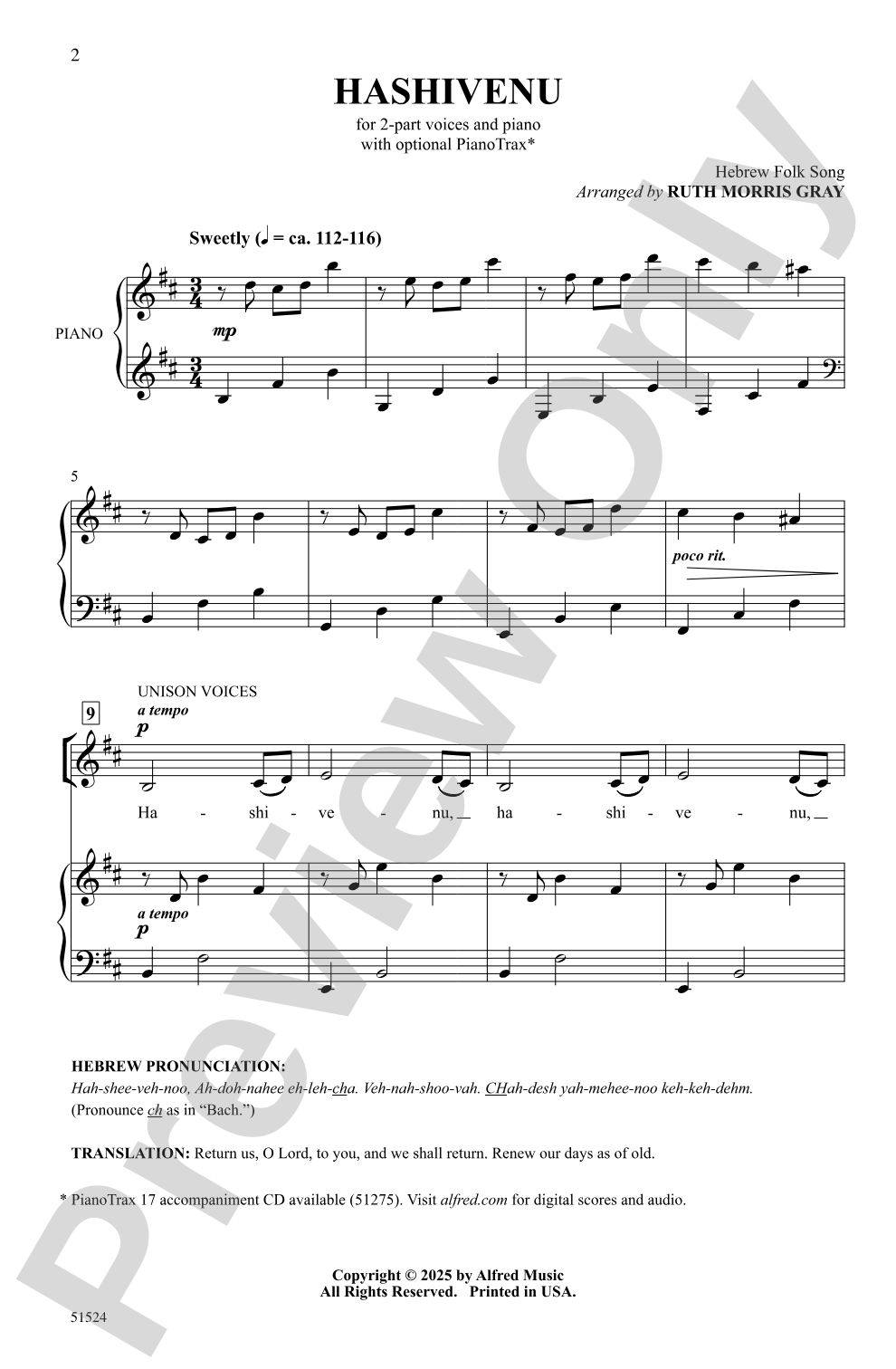
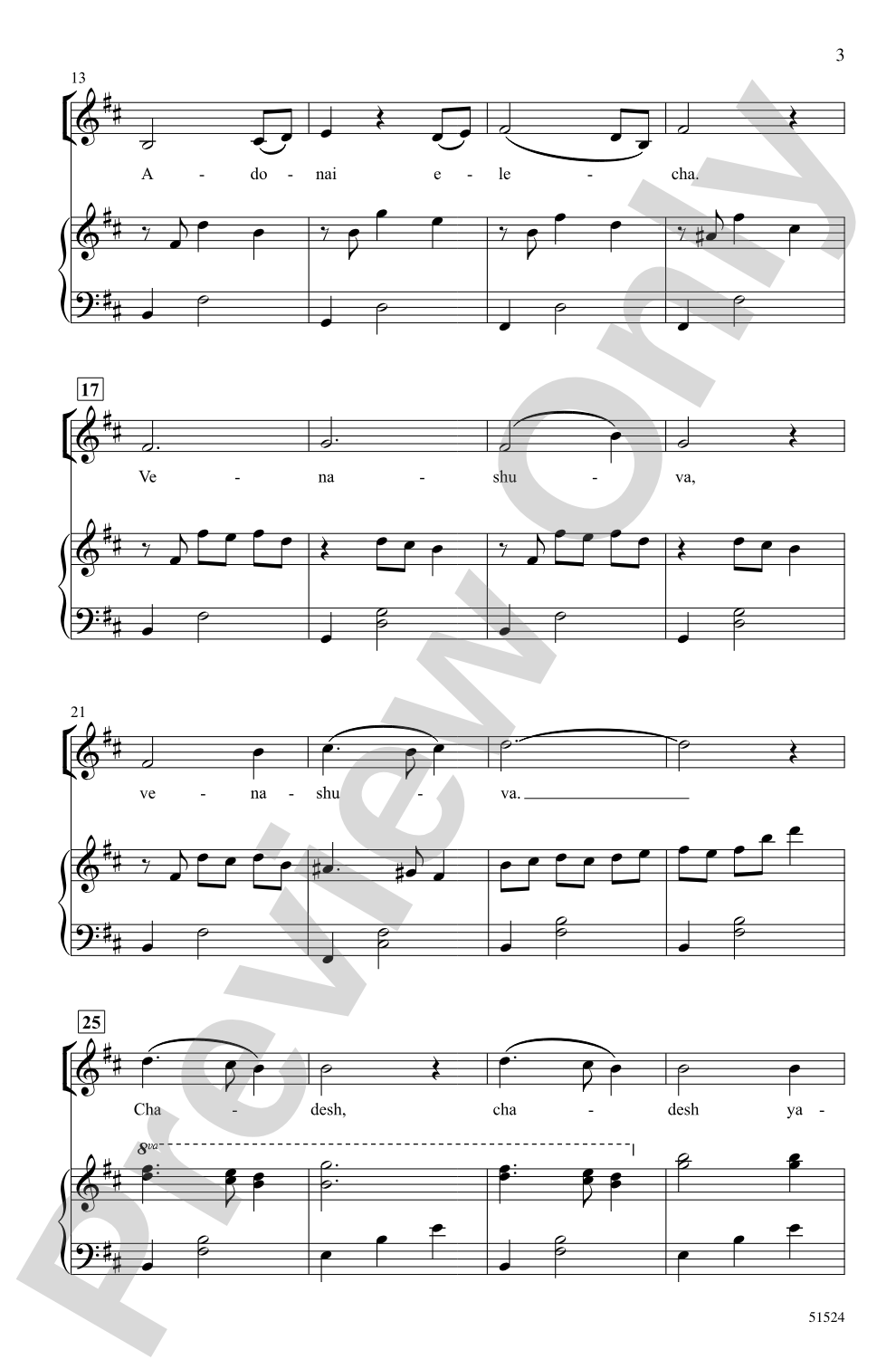
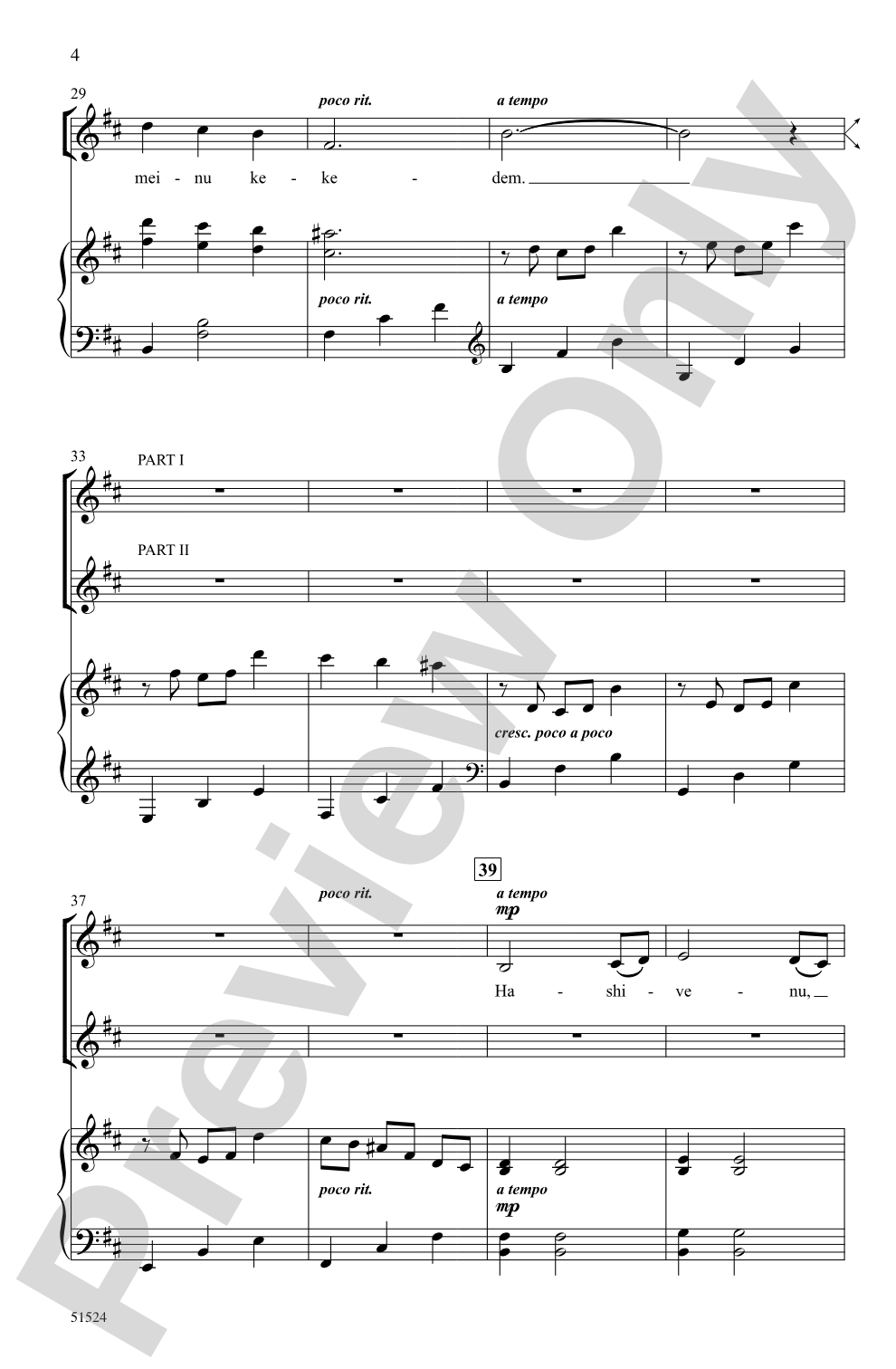
This beloved Hebrew canon is appropriate at the holidays or any time of year. As expected from a round, the traditional tune easily assembles into lavish layers. Ruth's artistic piano part clearly supports the voices and stays interesting with varied textures, warm minor-key sonorities, and plenty of expressive elements. Pronunciation and translation are included in the publication.


Discover MakeMusic Cloud: thousands of interactive titles your students can play along with today.
Sample Audio
1
Audio File
--:--
0:00
0:00
Sample Video
Additional Details
Series:
Alfred Choral Designs
Publisher:
Alfred Music
Page Count:
12
SKU:
00-PO-0007502
More about this title
About the Arranger: Ruth Morris Gray

Ruth Morris Gray directs the choir program at Rosemead High School in California, where she has led both instrumental and vocal ensembles since 2004. She holds degrees in piano performance and composition from Biola University and a master's degree in music composition from UC Santa Barbara, complemented by her California teaching credential.
With over 100 published choral compositions to her name, Gray has established herself as a distinctive voice in contemporary choral writing. Her arrangements balance accessibility with musical sophistication, a skill evident in how she crafts supporting piano parts that enhance rather than overshadow the singers.
Why we love this
Gray's piano writing transforms this traditional Hebrew canon into something genuinely special. The arrangement respects the melody's simplicity while the accompaniment creates harmonic depth through minor-key warmth and textural variety, giving singers something substantial to sing into rather than leaving them to carry the piece alone.
What to expect
Hashivenu carries the warm, reflective quality of a minor-key folk melody, building gentle complexity as the two parts weave together in canon. The piano accompaniment wraps around the voices with varied textures that evoke both intimacy and the resonance of communal singing.
Who it's for
This octavo works well for developing choirs looking to add meaningful choral literature beyond standard pop or show arrangements. The two-part voicing makes it accessible for younger singers or those newer to ensemble singing, while the musical substance in the arrangement and canon form keep it engaging for more experienced singers.
How to get the most out of it
- Balance the two parts evenly during the canon entries so the overlapping melody lines remain clear rather than blurring into a homogeneous sound.
- Use the minor-key sonorities to shape phrasing deliberately; Gray's harmonic choices suggest natural places to breathe and shape the line musically.
- Attend to the piano's expressive elements as interpretive cues; when the accompaniment shifts texture or harmony, it signals a moment worth emphasizing in the vocal line.
How to use it
Program this during a holiday concert celebrating Chanukah or Jewish heritage, or place it in a set of world music and folk repertoire at any concert season. Its brevity and emotional accessibility make it an ideal opener or closer, and its concert appeal also serves well in festival or competition settings.
Skills your students will build
- Canon singing and independent voice part maintenance
- Reading 2-part vocal scores with piano accompaniment
- Interpreting minor-key melodies with appropriate phrasing and tone
- Ensemble blend and balance between two entering voices