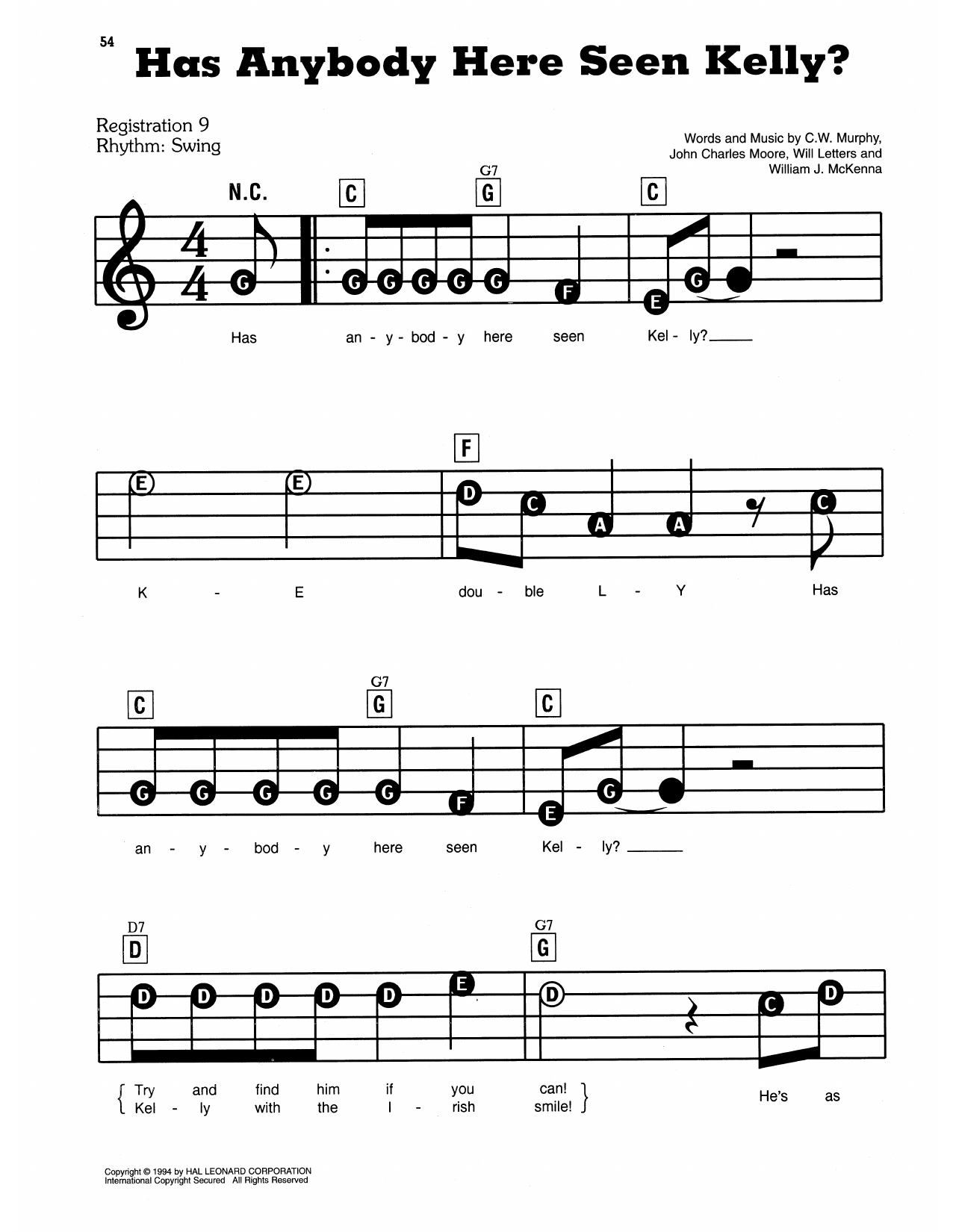
Has Anybody Here Seen Kelly? (from The Jolly Bachelors) Sheet Music Preview

Has Anybody Here Seen Kelly? (from The Jolly Bachelors): E-Z Play Today

As performed by Nora Bayes

Item: 35-DS01867834

Digital Download
$4.99
Description

Has Anybody Here Seen Kelly? (from The Jolly Bachelors): E-Z Play Today isn't in MakeMusic Cloud just yet...but it could be. Let us know you'd like to see it, and you'll help shape what comes next. In the meantime, start a free trial and dive into thousands of interactive titles your students can play along with today.

Sample Audio
No sample audio found.
Sample Video
Additional Details
Publisher: Hal Leonard
Page Count: 2
SKU: 35-DS01867834

More about this title

About the Artist: Nora Bayes

Nora Bayes was a vaudeville star and recording artist whose career spanned the early 20th century. She became famous for her theatrical charm and commanding stage presence, recording numerous novelty and comedy songs that captured the spirit of American popular music during the Jazz Age. Her ability to deliver comedic material with genuine warmth made her recordings beloved by audiences and influential in shaping the style of vocal performance that bridged vaudeville and early Broadway.

Why we love this

This E-Z Play arrangement captures the infectious energy and lighthearted charm of a classic novelty song without requiring advanced technique. The simplified notation makes it accessible to younger or intermediate pianists while preserving the song's vaudeville humor and melodic appeal, making it ideal for building confidence and interpretive skills on period material.

What to expect

This piece radiates the warmth and playful mischief of a seasoned performer working a room. The melody has an easy, conversational quality that feels like sharing a joke with friends, supported by straightforward harmonic accompaniment that keeps the focus on the character and charm of the original recording.

Who it's for

Intermediate pianists exploring American popular song repertoire and early 20th century vocal styles will find this accessible and rewarding. It works especially well for students building confidence with period material and those interested in vaudeville, jazz, or musical theater history.

How to get the most out of it

  • Keep the tempo bouncy and conversational; this song lives in the delivery, so let the rhythmic swing feel natural rather than metronomic.
  • Lean into the comedic character of the melody with slight rubato in the vocal phrases to suggest the original vaudeville performance style.
  • Balance clarity in the accompaniment so the melody can land clearly without overshadowing the harmonic support beneath it.

How to use it

Consider pairing this with other early American popular songs for a concert exploring vaudeville and novelty material from the 1910s and 1920s. It's an excellent choice for variety shows, cabaret-style recitals, or educational programs about the history of American musical theater and vocal performance.

Skills your students will build

  • Phrasing and interpretation of early 20th century vocal melody
  • Rhythmic clarity and swing in accompaniment figures
  • Balancing melodic prominence with supporting harmonic texture
  • Understanding vaudeville and novelty song style conventions

You May Also Like