Harvest Waltz for Trumpet/Cornet/Baritone TC and Piano Cover Image

Harvest Waltz for Trumpet/Cornet/Baritone TC and Piano: Trumpet, Solo with Piano, Solo with Piano

$5.99 USD
Sale price  $5.99 USD Regular price 
Skip to product information
Harvest Waltz for Trumpet/Cornet/Baritone TC and Piano Cover Image

Harvest Waltz for Trumpet/Cornet/Baritone TC and Piano: Trumpet, Solo with Piano, Solo with Piano

By Edmund J. Siennicki

Grade: 1

Item: 36-10510437

$5.99
Shipped

One moment…

Description
A perfect choice for a beginner to take to contest or recital, this work is written for many different instruments. The piano accompaniment can be performed by a first- or second-year private study middle-school level piano student also, making this an ideal piece for one piano student to accompany many different instruments. As it is on state lists for numerous instruments, Harvest Waltz is also found in the Competition Solos, Book 1 created by Floyd Harris and Edmund Siennicki.

Harvest Waltz for Trumpet/Cornet/Baritone TC and Piano: Trumpet, Solo with Piano, Solo with Piano isn't in MakeMusic Cloud just yet...but it could be. Let us know you'd like to see it, and you'll help shape what comes next. In the meantime, start a free trial and dive into thousands of interactive titles your students can play along with today.

Sample Pages

No sample pages found.

Sample Audio
No sample audio found.
Sample Video
Additional Details
Series: LudwigMasters Brass Series
Publisher: Keiser Productions, Inc.
ISBN10: 1-62-156469-X
ISBN13: 978-1-62-156469-0
UPC: 676737685287
SKU: 36-10510437
Instrumentation: Trumpet/Cornet/Baritone TC Solo and Piano

More about this title

About the Composer: Edmund J. Siennicki
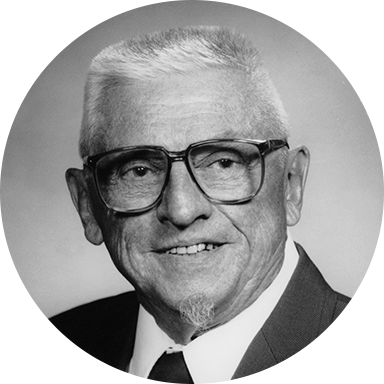
Edmund J. Siennicki

Edmund J. Siennicki grew up in Cleveland, Ohio, where a pivotal childhood encounter with pianist Ignacy Jan Paderewski shaped his musical direction. He earned his Bachelor's degree from Kent State University, where he composed Fight on for KSU, a march still performed at university football games. In 1994, the School of Music honored him with the Distinguished Alumnus Award.

Siennicki pursued advanced study at Teachers College, Columbia University, earning his MA while studying composition with Herbert Elwell and electronic music with Sergio Barroso. He consulted with Vincent Persichetti on his compositional work. A bassoonist and pianist by training, Siennicki spent much of his teaching career in Cleveland's junior high schools and also held faculty positions at Michigan and Kent State University. His catalog includes roughly 200 published compositions, and his work has earned recognition in National School Orchestra composition contests and consecutive ASCAP awards over two decades.

Why we love this

Siennicki understood exactly what beginning trumpet students need: a lyrical, accessible piece that still sounds mature in performance. The waltz character gives the melody natural phrasing without demanding advanced technique, and the piano part sits well for younger accompanists, so you can field this piece across multiple brass players with a single capable pianist.

What to expect

Warm and unpretentious, like a melody that could have drifted across a harvest celebration a century ago. The waltz rhythm carries the music forward naturally, and the piano support creates an intimate partnership rather than an overwhelming accompaniment.

Who it's for

Beginning trumpet, cornet, or baritone TC students preparing for their first solo competition or recital. The straightforward technical demands and singable melody suit players who have solid single-line reading skills but are still building confidence in performance contexts.

How to get the most out of it

  • Shape the opening phrase with a gentle swell on the longer notes; the waltz character rewards breathing room rather than pushing the tempo.
  • Coordinate with your pianist on the tempo from the start. Waltz time can feel different between partners, so mark it clearly and do a measure or two together before the student enters.
  • Listen for the underlying harmonic motion in the piano; it anchors the melodic line and helps the soloist stay centered when the accompaniment thickens.

How to use it

Program this early in a recital to build student confidence, or save it for a mixed brass showcase where multiple soloists perform the same piece in succession with one pianist. Its presence on state contest lists makes it an especially smart choice in the months leading up to competition season.

Skills your students will build

  • Phrase shaping in 3/4 meter
  • Sustaining tone quality over longer note values
  • Communication and ensemble balance with an accompanist
  • Steady tempo maintenance in waltz rhythm
  • Basic ornamentation interpretation (if any turn figures appear in the melody)

You May Also Like