Harvest Waltz for Bassoon and Piano Cover Image

Harvest Waltz for Bassoon and Piano: Bassoon, Solo with Piano

$5.99 USD
Sale price  $5.99 USD Regular price 
Skip to product information
Harvest Waltz for Bassoon and Piano Cover Image

Harvest Waltz for Bassoon and Piano: Bassoon, Solo with Piano

By Edmund J. Siennicki

Grade: 1

Item: 36-10430437

$5.99
Shipped

One moment…

Description
A perfect choice for a beginner to take to contest or recital, this work is written for many different instruments. The piano accompaniment can be performed by a first- or second-year private study middle-school level piano student also, making this an ideal piece for one piano student to accompany many different instruments. As it is on state lists for numerous instruments, Harvest Waltz is also found in the Competition Solos, Book 1 created by Floyd Harris and Edmund Siennicki.

Harvest Waltz for Bassoon and Piano: Bassoon, Solo with Piano isn't in MakeMusic Cloud just yet...but it could be. Let us know you'd like to see it, and you'll help shape what comes next. In the meantime, start a free trial and dive into thousands of interactive titles your students can play along with today.

Sample Pages

No sample pages found.

Sample Audio
No sample audio found.
Sample Video
Additional Details
Series: LudwigMasters Woodwind Series
Publisher: Keiser Productions, Inc.
ISBN10: 1-62-156465-7
ISBN13: 978-1-62-156465-2
UPC: 676737685638
SKU: 36-10430437
Instrumentation: Detailed Instrumentation: Bassoon and Piano

More about this title

About the Composer: Edmund J. Siennicki
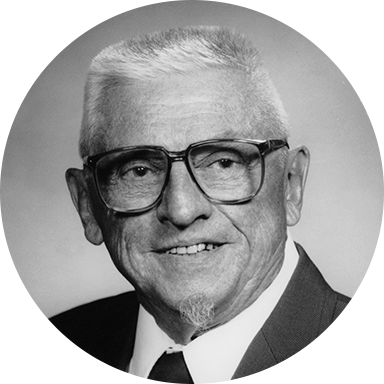
Edmund J. Siennicki

Edmund J. Siennicki (born 1920) grew up in Cleveland, Ohio, where a formative conversation with pianist Ignacy Jan Paderewski at age 12 shaped his musical direction. He earned his Bachelor's degree from Kent State University, where he composed Fight on for KSU, a march still performed at the university's football games. His graduate training included study at Teachers College, Columbia University, where he worked in composition with Herbert Elwell, electronic music with Sergio Barroso, and collaborated with Vincent Persichetti.

Siennicki built a dual career as both a performer and composer, with particular mastery of the bassoon and piano. His compositions have earned recognition in the National School Orchestra composition contests, and he held residencies at the MacDowell Colony on two separate occasions. He spent much of his teaching career in Cleveland's junior high schools while also serving on faculty at Michigan State University and Kent State University. With approximately 200 published compositions and sustained recognition from ASCAP over two decades, Siennicki continues to compose and present clinics in schools.

Why we love this

Siennicki wrote this piece specifically for young performers moving toward their first contest or recital experience, and it shows in every measure. The piano accompaniment sits comfortably within first- or second-year private study reach, which opens the door to meaningful collaboration with an emerging pianist rather than requiring a seasoned accompanist. Because this work appears on state lists for multiple instruments, a single piano student can support an entire studio of beginning wind players through contest season.

What to expect

Harvest Waltz captures the gentle, nostalgic character of turn-of-the-century salon music. The piece unfolds with graceful phrasing and transparent textures, inviting the bassoon to sing with warmth while the piano provides delicate harmonic color and rhythmic support.

Who it's for

Beginning bassoonists preparing for their first solo performance at contest or recital, typically in grades 4-6. The accessible range and rhythmic clarity make it ideal for students who have finished their first year of study and are ready to perform beyond their method book. The piece also works beautifully for a young piano student seeking meaningful collaborative experience with a woodwind peer.

How to get the most out of it

  • Shape the melodic phrases with gentle direction; the waltz rhythm invites natural phrasing rather than mechanical counting.
  • Coordinate closely with your pianist on tempo and breath placement before the first rehearsal to establish confidence in both parts.
  • Balance resonance with clarity in the middle and lower register, where the accompaniment provides harmonic support rather than doubling the melody.

How to use it

Include this in a recital set alongside other early-level bassoon solos to showcase growth and musicality alongside technical studies. It also works well in a school concert pairing a studio of young wind players, each performing the piece with the same pianist, to demonstrate how different instruments carry the same melody with distinct character.

Skills your students will build

  • Sustained phrasing in the middle register
  • Collaboration and ensemble listening with a pianist
  • Waltz rhythm and triple-meter phrasing
  • Control of tone quality across moderate dynamic range
  • Performance confidence in a recital or contest setting

You May Also Like