Harry's Wondrous World (from Harry Potter and the Chamber of Secrets): Bassoon Sheet Music Preview

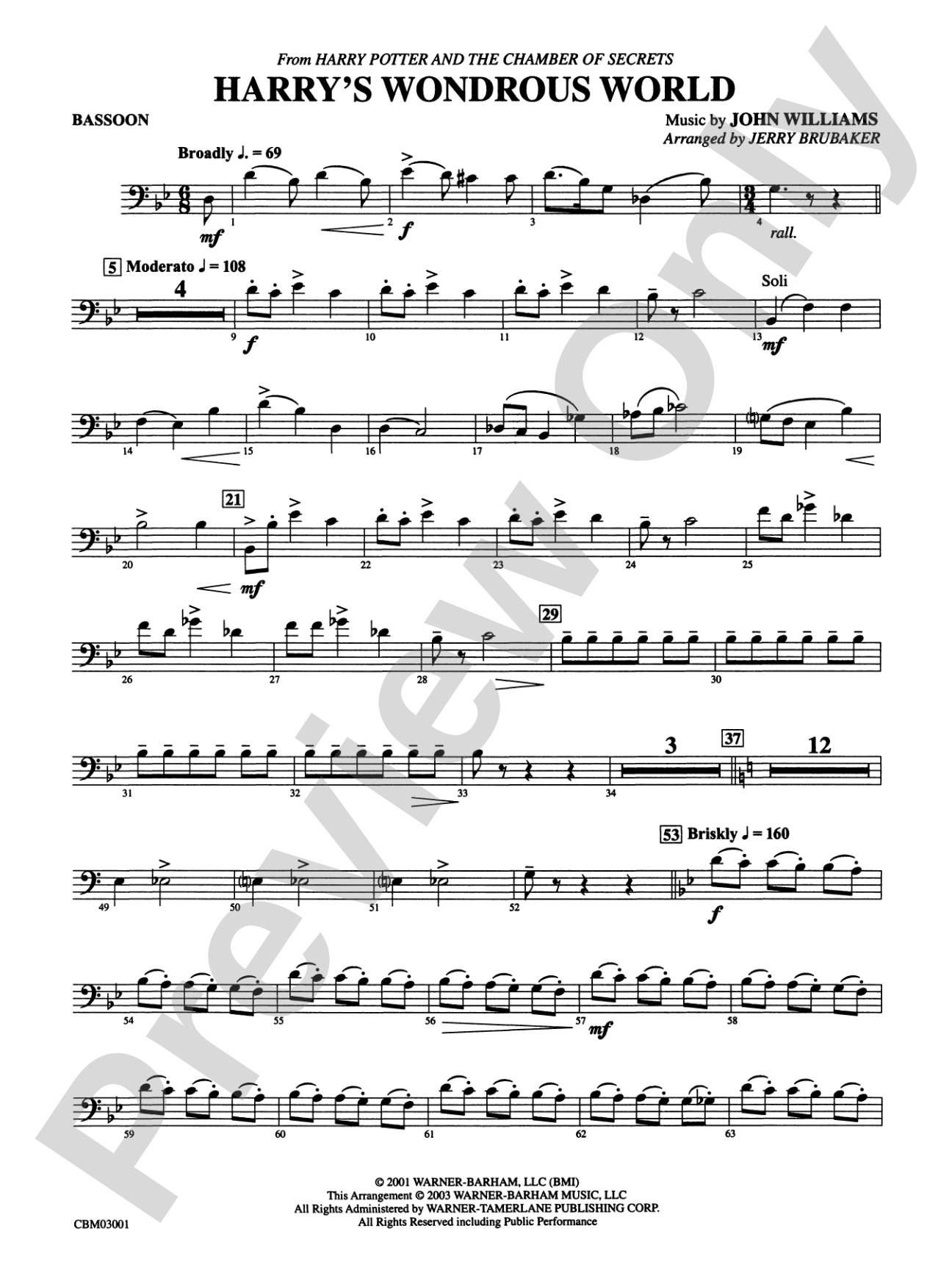
Harry's Wondrous World (from Harry Potter and the Chamber of Secrets): Bassoon

By John Williams / arr. Jerry Brubaker

Grade: 3 (Medium Easy)

Item: 00-PC-0002325_B1

Digital Download
$3.00
Description
This melody was used in the Harry Potter films and true to the composer's original intent. Here's an impressive Jerry Brubaker arrangement that will thrill your audiences and students alike. The arrangement has a variety of textures and dynamics, yet is recognizable to everyone who has seen either of the blockbuster films. Complete your program with this scrumptious arrangement. (3:25)

For educational usage/non-profit performances only; for professional arrangements, visit our rental library at alfred.com/rental.

Don't just read it, hear it, play along with it, and watch your students grow with it. In MakeMusic Cloud, Harry's Wondrous World (from Harry Potter and the Chamber of Secrets): Bassoon comes alive with professional accompaniment, adjustable tempo, and built-in practice tools that turn solo practice into real progress.

Sample Audio
No sample audio found.
Sample Video
Additional Details
Series: Pop Concert Band
Publisher: Alfred Music
Page Count: 250
SKU: 00-PC-0002325_B1

More about this title

About the Composer: John Williams

John Williams stands among the most performed composers in film history, with an output that spans seven decades of cinema. His gift for melody and orchestration has shaped how audiences experience storytelling on screen, from Star Wars to Schindler's List to the Harry Potter series. In the classroom and on the concert stage, his music remains accessible yet sophisticated, offering students a bridge between popular culture and serious musical study.

Why we love this

Jerry Brubaker's arrangement captures the wonder and forward momentum of Williams's original without oversimplifying the harmonic language or orchestration. Band directors appreciate how the varied textures keep the piece engaging for both players and listeners while remaining achievable at Grade 3. The melody is instantly recognizable to student musicians and audiences alike, which builds confidence and draws genuine enthusiasm into the rehearsal room.

What to expect

The piece opens with a sense of discovery and childlike wonder, suggesting enchantment and mystery. As textures layer and harmonies shift, you feel the sweep of a larger world unfolding, noble and slightly magical, without ever losing its intimate melodic core.

Who it's for

Conductors seeking a crowd-pleasing program piece that doesn't demand virtuosic chops from individual players or the ensemble. Students at the Grade 3 level gain exposure to film scoring and orchestration while building confidence on material that resonates with audiences beyond the concert hall.

How to get the most out of it

  • Balance the melodic line across sections so it sings even when multiple instruments share the phrase. Brubaker's scoring often distributes the tune, so careful attention to dynamic shading prevents it from getting lost in the texture.
  • Shape the opening with a gentle swell to establish the theme's lyrical quality before the texture thickens. This early moment sets the emotional tone for the whole arrangement.
  • Match articulation within each section precisely. Williams's style relies on clarity and definition, so inconsistent tonguing or bowing will muddy the effect.
  • Use the three-minute-and-twenty-five-second runtime to plan your pacing in rehearsal. Make sure the ensemble understands where the texture shifts occur so transitions feel intentional rather than abrupt.

How to use it

Pair this with other film music or orchestral favorites to create a thematic program around "Music in Motion Pictures" or "Hollywood Classics." The arrangement works equally well as a concert opener to engage the audience immediately or as a heartfelt closer that lets the melody resonate in memory. Time it for fall programs when the Harry Potter films are fresh in students' and audiences' minds.

Skills your students will build

  • Balancing melody within a full harmonic texture
  • Shaping sustained phrases with dynamic contour
  • Executing clean section transitions across changing orchestrations
  • Interpreting film music and recognizing compositional intent across media

You May Also Like