
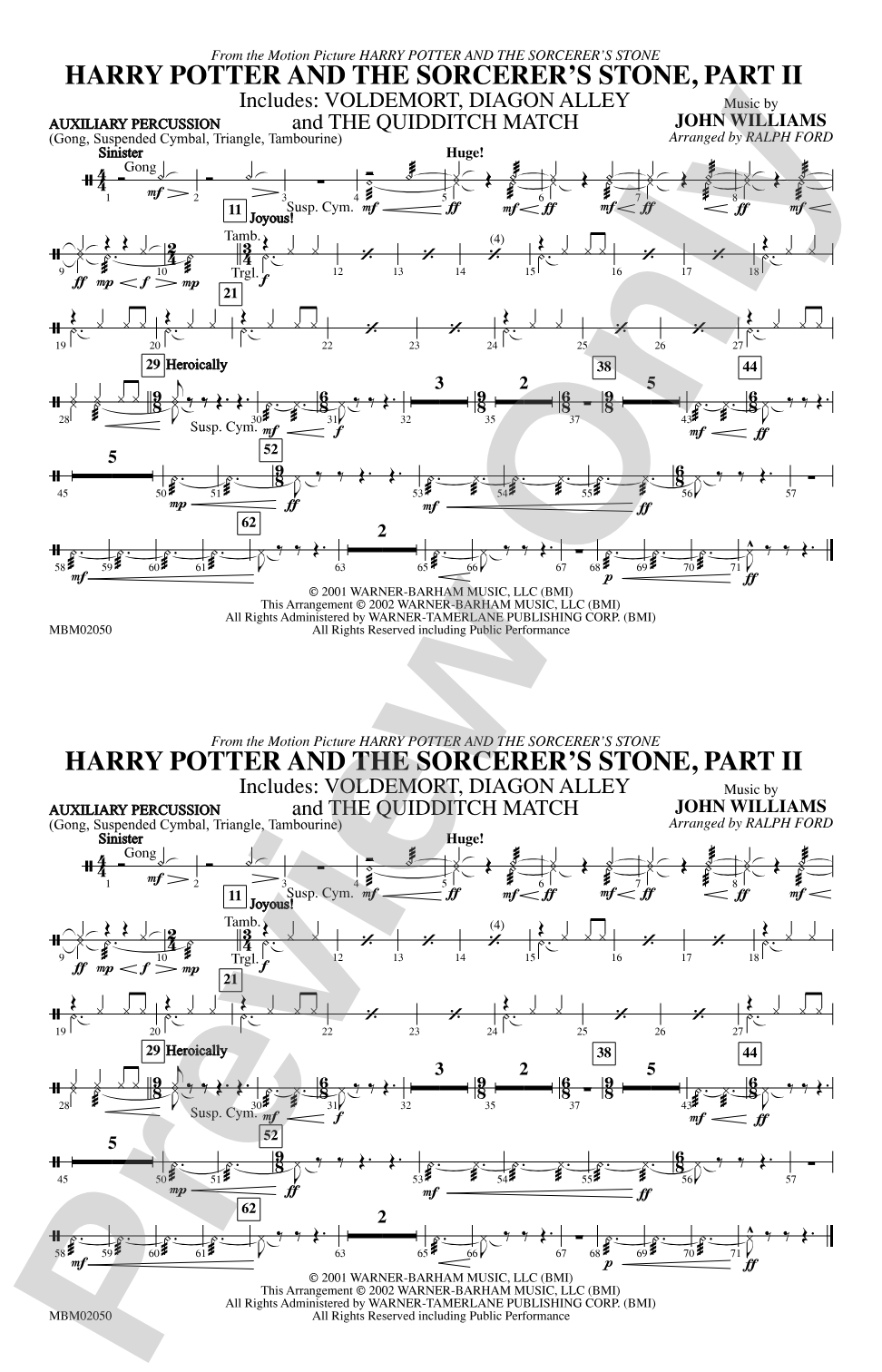

Harry Potter and the Sorcerer's Stone, Part II: Auxiliary Percussion
Featuring: Voldemort / Diagon Alley / The Quidditch Match
Music by John Williams / arr. Ralph Ford
Grade: 2.5 (Medium Easy)
Item: 00-PC-0018365_APC
$3.00
Pickup currently not available
Description
Part 2 of our Harry Potter show contains excellent visual potential for both band and color guard. Ralph Ford has done a superb job varying the colors and textures throughout the arrangement. Fabulous! (2:00)


Don't just read it, hear it, play along with it, and watch your students grow with it. In MakeMusic Cloud, Harry Potter and the Sorcerer's Stone, Part II: Auxiliary Percussion comes alive with professional accompaniment, adjustable tempo, and built-in practice tools that turn solo practice into real progress.
Open in the Player
Jump straight in and assign it today.
Start Your Free Trial
Open this title and explore the full library in minutes.
Sample Audio
1
Audio File
--:--
0:00
0:00
Sample Video
No sample videos found.
Additional Details
Series:
Warner Bros. Marching Band
Publisher:
Alfred Music
Page Count:
196
SKU:
00-PC-0018365_APC
More about this title
About the Composer: John Williams
John Williams stands among the most consequential film composers in cinema history, with a catalog spanning seven decades and scores for some of the most beloved films ever made. His gift for memorable melody, orchestral color, and thematic development has shaped how generations of musicians understand the relationship between music and narrative. For music educators, Williams' work offers an ideal entry point into compositional craft: his themes are singable, his orchestrations reward careful listening, and his structural clarity teaches how music can drive emotion and storytelling.
Why we love this
Ralph Ford's arrangement captures the signature Williams magic without requiring advanced technique, making this accessible for most marching programs while preserving the sweep and character that made the film's score unforgettable. The variety of textures and color changes throughout Part II give your color guard meaningful visual material to work with, and the Grade 2.5 level means your section leaders can execute it cleanly while still delivering impact on the field.
What to expect
This music carries the wonder and adventure of the Harry Potter narrative: moments of mystery and discovery alternate with triumphant, heroic passages that feel earned rather than imposed. The orchestration shimmers and shifts, creating an almost magical quality as different instrument groups come into prominence, much like following a character's journey through shifting scenes and emotions.
Who it's for
Marching bands at the Grade 2.5 level seeking repertoire that challenges musicality without requiring advanced technical facility. Programs looking for crowd-friendly repertoire tied to recognizable media will find an ideal fit here, especially those with developing color guard units that benefit from clear visual-musical alignment.
How to get the most out of it
- Balance the melodic lines between your trumpet and woodwind sections; Williams' themes work best when the listener can follow a single clear voice while harmony and countermelody support underneath.
- Mark your drill precisely for the transitions between color changes. Ford's orchestration shifts will feel incomplete if the visual design doesn't align with where the musical weight moves.
- Attend to the rhythmic clarity in passages that feature alternating textures. Even simple rhythms can blur if your ensemble isn't locked together; use sectional rehearsal to lock the snare line and bass line first, then layer in harmony.
- Shape phrases generously. This isn't march-time music with constant energy; lean into Williams' dynamic arcs and allow softer sections to breathe before building to the next swell.
How to use it
Program this as the centerpiece of a fall or spring show built around film and fantasy themes. Pair it with Part I for a cohesive two-movement statement, or use it alongside other film scores at similar difficulty levels to build a concert around recognizable, accessible repertoire that engages your audience without requiring them to read program notes.
Skills your students will build
- Balancing melody against moving accompaniment figures
- Executing dynamic shape across phrases longer than 4 bars
- Maintaining rhythmic precision during orchestration changes and color transitions
- Interpreting articulation and style cues that serve thematic content rather than march conventions