
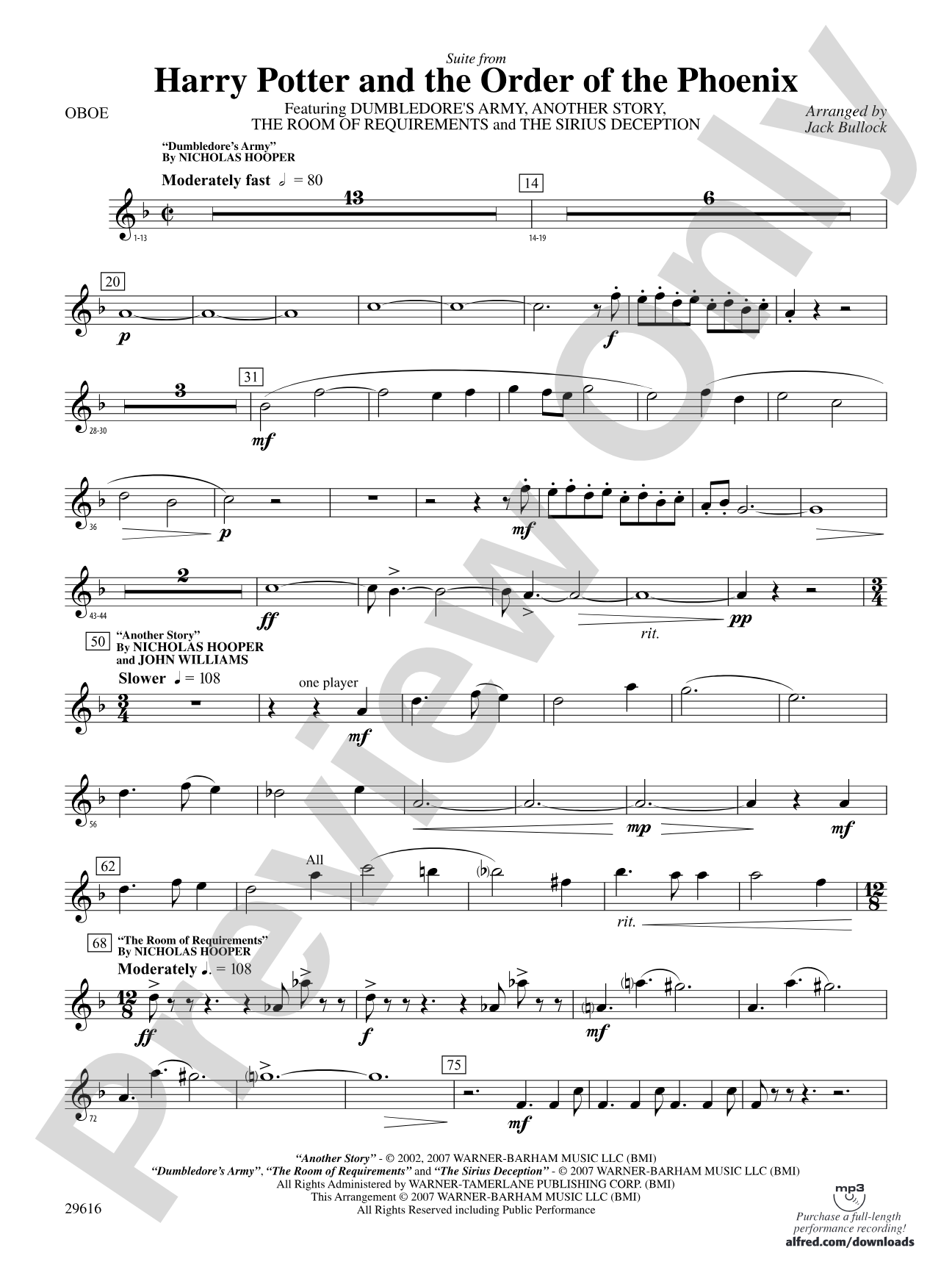

Harry Potter and the Order of the Phoenix, Suite from: Oboe
Featuring: Dumbledore’s Army / Another Story / The Room of Requirements / The Sirius Deception
Music by John Williams and Nicholas Hooper / arr. Jack Bullock
Grade: 3 (Medium Easy)
Item: 00-PC-0015700_O1
$5.99
Pickup currently not available
Description
Relive the magic, mystery and wonder with Harry Potter and the Order of the Phoenix. Themes include "Dumbledore's Army," "Another Story," "The Room of Requirements" and "The Sirius Deception." Another wonderful installment to the concert band literature from the blockbuster film score. (5:31)
For educational usage/non-profit performances only; for professional arrangements, visit our rental library at alfred.com/rental.


For educational usage/non-profit performances only; for professional arrangements, visit our rental library at alfred.com/rental.
Don't just read it, hear it, play along with it, and watch your students grow with it. In MakeMusic Cloud, Harry Potter and the Order of the Phoenix, Suite from: Oboe comes alive with professional accompaniment, adjustable tempo, and built-in practice tools that turn solo practice into real progress.
Open in the Player
Jump straight in and assign it today.
Start Your Free Trial
Open this title and explore the full library in minutes.
Sample Audio
1
Audio File
--:--
0:00
0:00
Sample Video
No sample videos found.
Additional Details
Series:
Pop Concert Band
Publisher:
Alfred Music
Page Count:
212
SKU:
00-PC-0015700_O1
More about this title
About the Composer: John Williams
John Williams stands among the most prolific and celebrated film composers of our time, with a career spanning over six decades and encompassing some of cinema's most iconic scores. His work for the Harry Potter series demonstrates his gift for creating thematic material that captures wonder, danger, and the emotional core of each installment while remaining orchestrally sophisticated and accessible to student musicians.
Williams' approach to film scoring emphasizes memorable melody and orchestral color, principles that translate beautifully to concert band arrangements. His influence on music education extends far beyond licensing; generations of young musicians encounter his compositions as gateways to understanding how underscore supports narrative and character development.
Why we love this
Jack Bullock's arrangement captures the cinematic scope of these themes without overwhelming a Grade 3 ensemble. The suite balances accessibility with musical substance, giving students exposure to sophisticated harmonic language and thematic development while keeping individual parts playable. Audiences recognize these iconic melodies instantly, which makes the piece a natural draw for family concerts and school events.
What to expect
These four themes evoke the emotional landscape of the fifth film: the stirring determination of the resistance movement, the intrigue of hidden spaces, the warmth of student solidarity, and the shadow of betrayal. The music moves between moments of inspiration and moments of introspection, creating a narrative arc that feels complete despite its concert band arrangement.
Who it's for
Concert bands at the upper middle school through early high school level will find this suite engaging and achievable. Directors seeking repertoire that appeals to student musicians and audiences alike will appreciate both the recognizable material and the opportunity to develop interpretation within a musically literate framework.
How to get the most out of it
- Study the recorded film versions of these themes first. Listening to the original orchestration helps musicians understand the emotional intent behind each phrase and informs articulation choices and dynamic shape.
- Balance the melody across sections with clarity. These themes deserve prominence, so ensure woodwind soloists have adequate accompaniment support without being buried.
- Shape the transitions between themes deliberately. The five-minute arc moves through distinct moods; use tempo stability and clear sectional releases to guide listeners through the journey.
- Attend to the harmonic color in sustained passages. Even Grade 3 voicing benefits from slightly warmer tone and careful intonation, particularly in the emotional moments that define the Order of the Phoenix narrative.
How to use it
This suite works beautifully as a concert centerpiece, particularly for programs themed around adventure, fantasy, or contemporary film. It pairs well with other movie music of similar difficulty and creates natural appeal for family audiences and student performers who connect with the source material. Consider programming it mid-concert where its dramatic arc and thematic richness can command full attention.
Skills your students will build
- Tracking thematic material across multiple instrumental voices and transformations
- Dynamic contrast and phrasing to support cinematic storytelling
- Ensemble balance when melody moves between sections
- Reading and executing articulation that reflects orchestral technique
- Maintaining musical shape across sustained harmonic passages