Harry Potter and the Half-Blood Prince, Concert Suite from: 2nd Percussion Sheet Music Preview

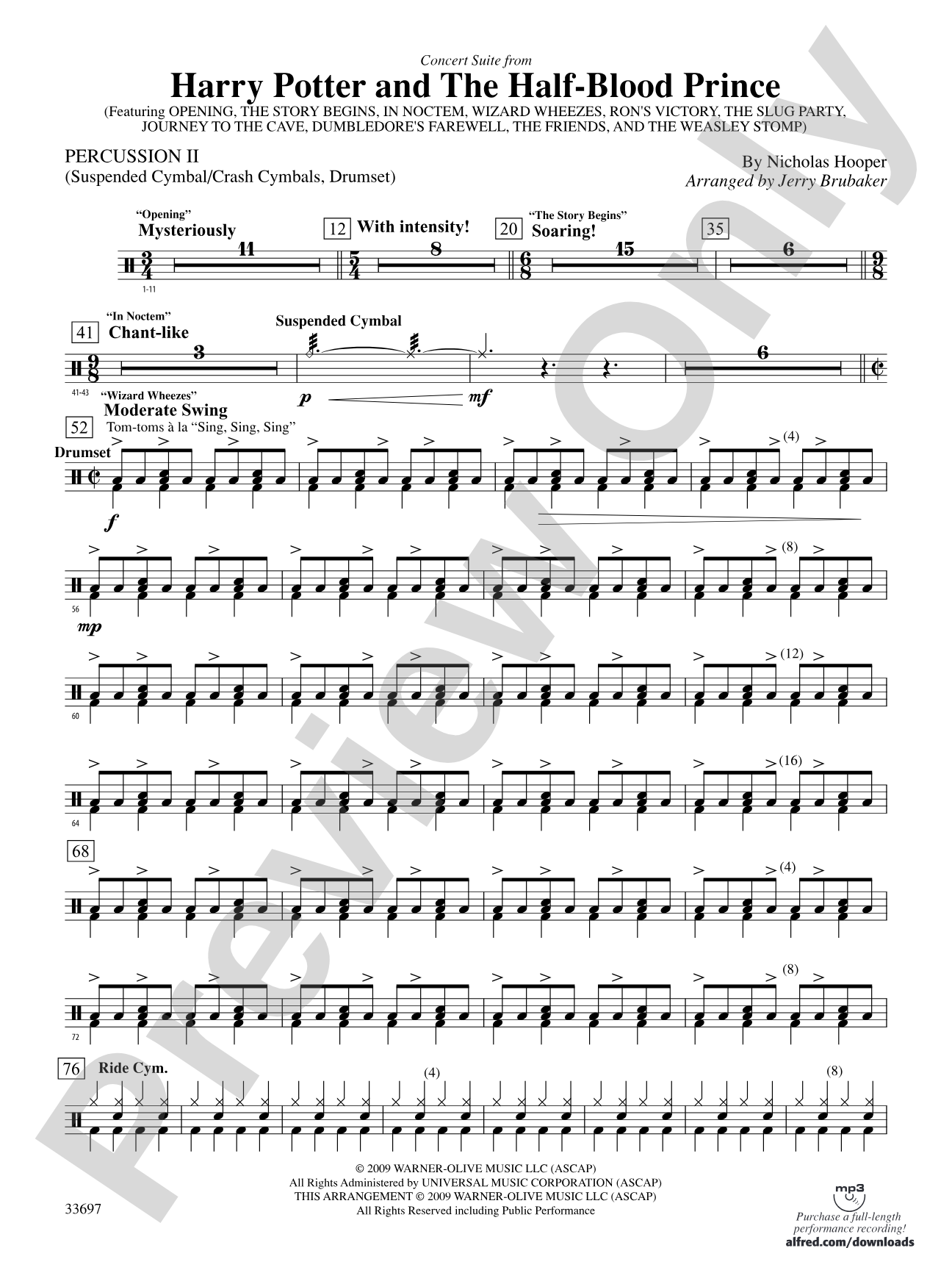
Harry Potter and the Half-Blood Prince, Concert Suite from: 2nd Percussion

Featuring: Opening / The Story Begins / In Noctem / Wizard Wheezes / Ron's Victory / The Slug Party / Journey to the Cave / Dumbledore's Farewell / The Friends / The Weasley Stomp

By Nicholas Hooper / arr. Jerry Brubaker

Grade: 4.5

Item: 00-PC-0015756_PC2

Digital Download
$3.00
Description
An astounding suite comprised of themes from the latest adventures of Harry and his friends! Thrill to the music including Opening, The Story Begins, In Noctem, Wizard Wheezes, Ron's Victory, The Slug Party, Journey to the Cave, Dumbledore's Farewell, The Friends and The Weasley Stomp. Perfect for advanced high school or community orchestras!

For educational usage/non-profit performances only; for professional arrangements, visit our rental library at alfred.com/rental.

Don't just read it, hear it, play along with it, and watch your students grow with it. In MakeMusic Cloud, Harry Potter and the Half-Blood Prince, Concert Suite from: 2nd Percussion comes alive with professional accompaniment, adjustable tempo, and built-in practice tools that turn solo practice into real progress.

Sample Audio
0:00
0:00
Sample Video
Additional Details
Series: Pop Concert Full Orchestra
Publisher: Alfred Music
Page Count: 232
SKU: 00-PC-0015756_PC2

More about this title

About the Composer: Nicholas Hooper

Nicholas Hooper composed the orchestral scores for the final four Harry Potter films, bringing the wizarding world to vivid musical life during its most dramatic chapters. His work on these soundtracks demonstrates a keen ability to craft memorable themes that capture character and emotion while supporting large-scale cinematic storytelling.

Why we love this

Jerry Brubaker's arrangement captures the narrative arc and character moments that made these films resonate, not just the bombastic set pieces. Advanced orchestras get real musical substance here: intricate sectional writing, dynamic range that demands control, and a suite that tells a story musicians actually want to rehearse and audiences genuinely enjoy.

What to expect

A journey through moments both intimate and grand. You'll encounter the sweeping drama of a cave descent, the whimsy of magical mischief, the sting of loss, and the warmth of friendship. The orchestration shifts constantly, giving different sections their moment in the spotlight.

Who it's for

Advanced high school orchestras and community ensembles seeking concert repertoire that excites both players and audiences. This suite works for orchestras comfortable with Grade 4.5 demands: solid intonation, secure rhythmic reading across multiple meters, and expressive range.

How to get the most out of it

  • Balance the thematic material across sections carefully. Many themes pass between strings, woodwinds, and brass; mark these handoffs in parts so the melodic line remains clear through transitions.
  • Use tempo consistency as your foundation. With nine distinct movements in this suite, establishing rock-solid tempo choices early in rehearsal prevents pacing from fragmenting.
  • Shape the Dumbledore's Farewell movement with particular attention to dynamics and breath. This reflective moment needs space and restraint to land emotionally.
  • Lock the rhythmic precision in The Weasley Stomp and Wizard Wheezes. These sections have driving energy that dissipates if ensemble attacks aren't unified.

How to use it

Program this as a feature in a winter or spring concert where you want a full-length centerpiece that connects with a broad audience. It pairs well with classical standards on the same program; the emotional and stylistic variety of the suite gives programmers flexibility in building a compelling evening.

Skills your students will build

  • Reading and executing rapid section changes and meter transitions
  • Balancing prominent thematic material across different instrumental families
  • Sustaining ensemble control during extended dynamic and tempo ranges
  • Interpreting character-driven musical expression in a narrative context
  • Achieving precision in rhythmically complex passages across full orchestra

You May Also Like