Harry Potter and the Deathly Hallows, Part 2, Suite from: 1st B-flat Trumpet Sheet Music Preview

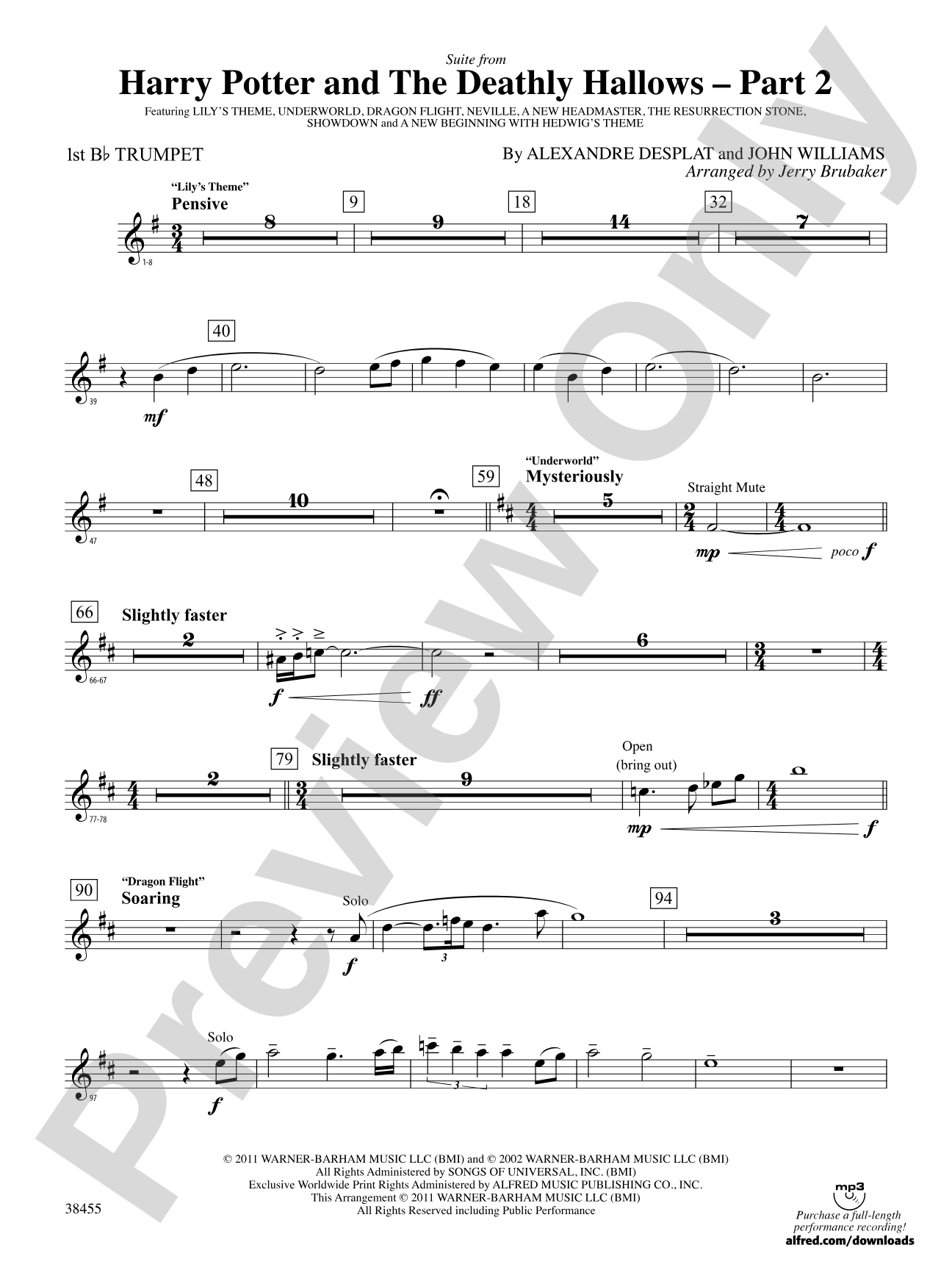
Harry Potter and the Deathly Hallows, Part 2, Suite from: 1st B-flat Trumpet

Featuring: Lily’s Theme / Underworld / Dragon Flight / Neville / A New Headmaster / The Resurrection Stone / Showdown / A New Beginning with Hedwig's Theme

By Alexandre Desplat and John Williams / arr. Jerry Brubaker

Grade: 4

Item: 00-PC-0015810_T1

Digital Download
$3.00
Description
Perfect for advanced and community orchestras, this lovely piece commemorates the conclusion to the timeless Harry Potter movies in a dramatic way. The harp sets the tone! Share the emotions and drama from the stage!

For educational usage/non-profit performances only; for professional arrangements, visit our rental library at alfred.com/rental.

Don't just read it, hear it, play along with it, and watch your students grow with it. In MakeMusic Cloud, Harry Potter and the Deathly Hallows, Part 2, Suite from: 1st B-flat Trumpet comes alive with professional accompaniment, adjustable tempo, and built-in practice tools that turn solo practice into real progress.

Sample Audio
0:00
0:00
Sample Video
Additional Details
Series: Pop Concert Full Orchestra
Publisher: Alfred Music
Page Count: 226
SKU: 00-PC-0015810_T1

More about this title

About the Composer: Alexandre Desplat

Alexandre Desplat has established himself as one of the most prolific and respected film composers of the past two decades. His work on the Harry Potter franchise demonstrates his mastery of orchestral writing, creating themes that are simultaneously accessible to general audiences and rich enough to sustain repeated listening across multiple films.

Desplat's approach to composition balances melody-driven writing with sophisticated harmonic language. His ability to underscore dramatic moments while maintaining emotional clarity makes his scores particularly valuable for educational ensembles seeking repertoire with narrative weight and audience recognition.

Why we love this

This suite captures the sweeping dramatic arc of the final film without requiring a massive pit or unwieldy instrumentation. Jerry Brubaker's orchestration respects Desplat's original intentions while making the work genuinely playable for advanced community orchestras, which is increasingly rare in popular film music arrangements. The harp writing alone gives your ensemble a sonic signature that audiences will recognize immediately.

What to expect

Sweeping and cinematic, with moments of intimate beauty punctuated by powerful orchestral swells. The writing evokes both the wonder and darkness of the source material, moving from ethereal harp textures to driving, full-orchestra passages that land with genuine impact.

Who it's for

Advanced community orchestras and college ensembles seeking contemporary repertoire with popular appeal. This arrangement works equally well for orchestras performing a film music concert or schools looking to program something that excites both players and audiences without requiring professional licensing.

How to get the most out of it

  • Balance the harp's opening statement carefully; it should speak clearly without overwhelming the ensemble's entrance. Many conductors find success bringing the harp down slightly in the mix during tutti passages.
  • Attend to the film's pacing when you rehearse. This suite moves through several emotional territories, and maintaining clarity of line between sections prevents the piece from feeling rushed or draggy.
  • Secure your principal string players early in rehearsal to establish the thematic material. Their confidence in the main melodies will anchor the rest of the orchestra through the dramatic climaxes.

How to use it

Program this as the centerpiece of a film music concert, or use it to conclude a general concert where you want to leave the audience with something recognizable and emotionally resonant. The suite's length and dramatic shape also make it ideal as a standalone closing piece during a gala or community performance.

Skills your students will build

  • Balancing independent melodic lines across multiple sections
  • Responding to harp articulation and tone color as a textural anchor
  • Managing dynamic contrast through large-scale dramatic arcs
  • Executing clean section entries in complex, overlapping passages

You May Also Like