Harry at Hogwarts (from Harry Potter and the Goblet of Fire): 2nd B-flat Trumpet Sheet Music Preview

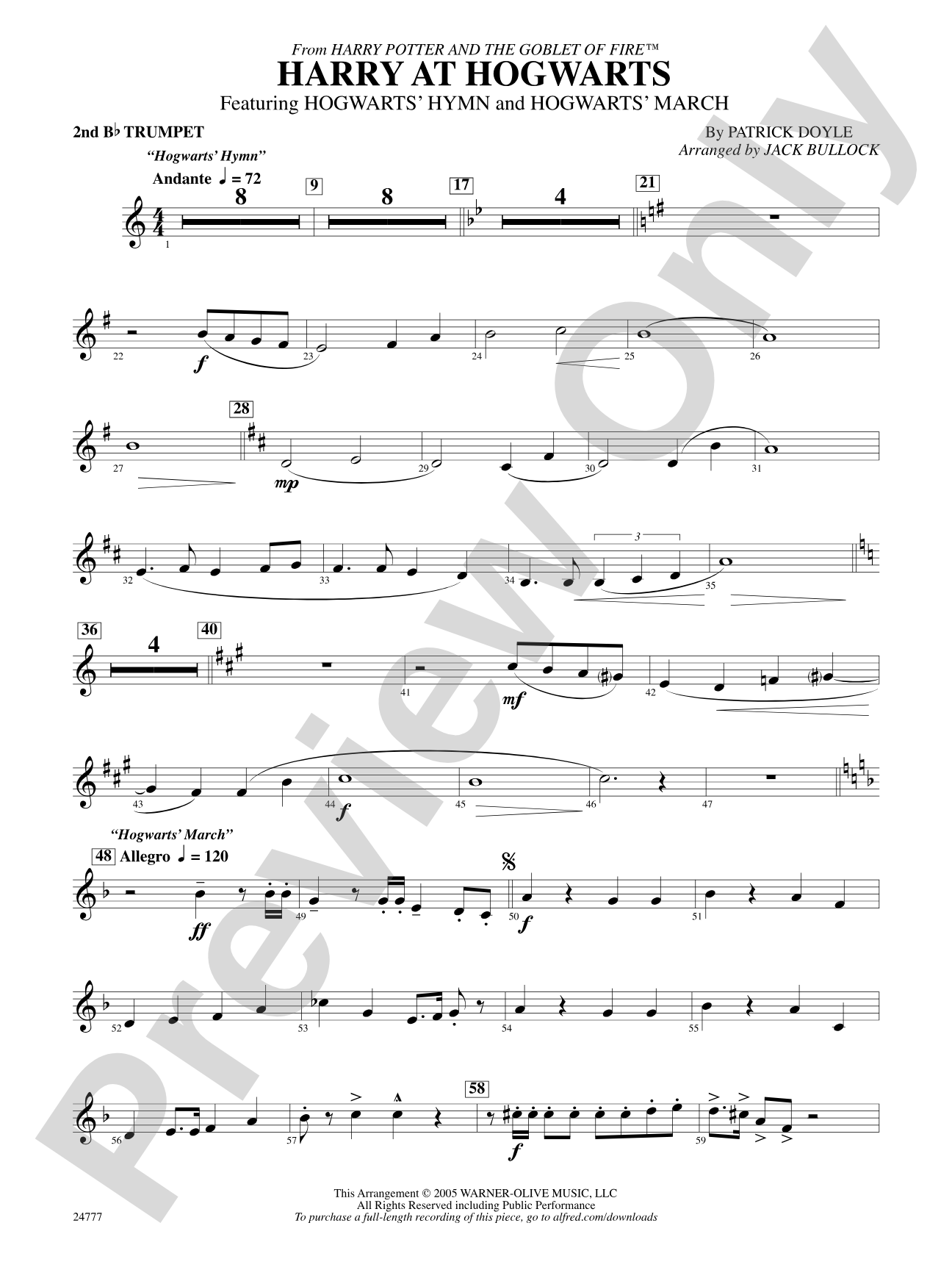
Harry at Hogwarts (from Harry Potter and the Goblet of Fire): 2nd B-flat Trumpet

Featuring: Hogwarts' Hymn / Hogwarts' March

By Patrick Doyle / arr. Jack Bullock

Grade: 3 (Medium Easy)

Item: 00-PC-0015647_T2

Digital Download
$3.00
Description
They've all read the books, now you can add these two wonderful new themes from Harry Potter and the Goblet of Fire™ to your concert band's program. Jack Bullock's arrangement of these two revered Patrick Doyle melodies is called "Harry at Hogwarts'." Containing both "Hogwarts' Hymn" and "Hogwarts' March," it's a dynamic addition to any concert.

For educational usage/non-profit performances only; for professional arrangements, visit our rental library at alfred.com/rental.

Don't just read it, hear it, play along with it, and watch your students grow with it. In MakeMusic Cloud, Harry at Hogwarts (from Harry Potter and the Goblet of Fire): 2nd B-flat Trumpet comes alive with professional accompaniment, adjustable tempo, and built-in practice tools that turn solo practice into real progress.

Sample Audio
0:00
0:00
Sample Video
Additional Details
Series: Pop Concert Band
Publisher: Alfred Music
Page Count: 228
SKU: 00-PC-0015647_T2

More about this title

About the Composer: Patrick Doyle

Patrick Doyle has composed music for over 60 films, earning multiple award nominations for his orchestral film scores. His work spans drama, fantasy, and family entertainment, with a gift for creating memorable melodic themes that resonate across diverse audiences. Doyle's compositions for the Harry Potter films are among his most recognized works, blending classical orchestration with contemporary film scoring techniques that translate remarkably well to concert settings.

Why we love this

Jack Bullock's arrangement captures the emotional scope of Doyle's original themes while respecting the acoustic realities of student bands. The pairing of a hymn and march gives you programming flexibility, whether you're building toward a climactic finale or creating a standalone concert moment that resonates with audiences who know these films.

What to expect

The hymn movement carries reverence and majesty, with warm harmonies that feel both intimate and ceremonial. The march erupts with energy and forward momentum, capturing the spirit of Hogwarts' tradition and triumph.

Who it's for

Concert bands at the intermediate level will find this Grade 3 arrangement accessible yet musically substantial. Directors programming family-friendly or Halloween concerts will appreciate music that speaks to student musicians and audiences alike, especially in communities where the Harry Potter films hold cultural significance.

How to get the most out of it

  • Balance the sustained melodic lines in 'Hogwarts' Hymn' by rotating which section carries the theme; this prevents fatigue and keeps the line singing across dynamic shifts.
  • Lock the march section's rhythmic foundation with your low brass and bass line before rehearsing the upper voices; precision here makes the entire band sound tighter.
  • Shape both pieces with clear phrase architecture rather than playing straight through; identify the natural breath points and use them to reset dynamics and articulation for maximum impact.
  • Work the transition between the hymn and march as a distinct musical moment, not a seam; this is where your ensemble control becomes apparent to the audience.

How to use it

Use this as an anchor piece in a pop music or film music concert, either as a standalone feature or paired with other movie themes at the same grade level. The hymn works as a poignant concert opener, while the march pairs well as a confident finale that leaves audiences satisfied.

Skills your students will build

  • Sustaining long melodic lines while maintaining tone quality and intonation
  • Balancing dynamic control between featured and supporting sections
  • Executing clean articulation changes within a single phrase
  • Coordinating rhythmic precision in march-style passages with dotted figures and syncopation
  • Responding to conductor cues that shape emotional architecture across two contrasting movements

You May Also Like