
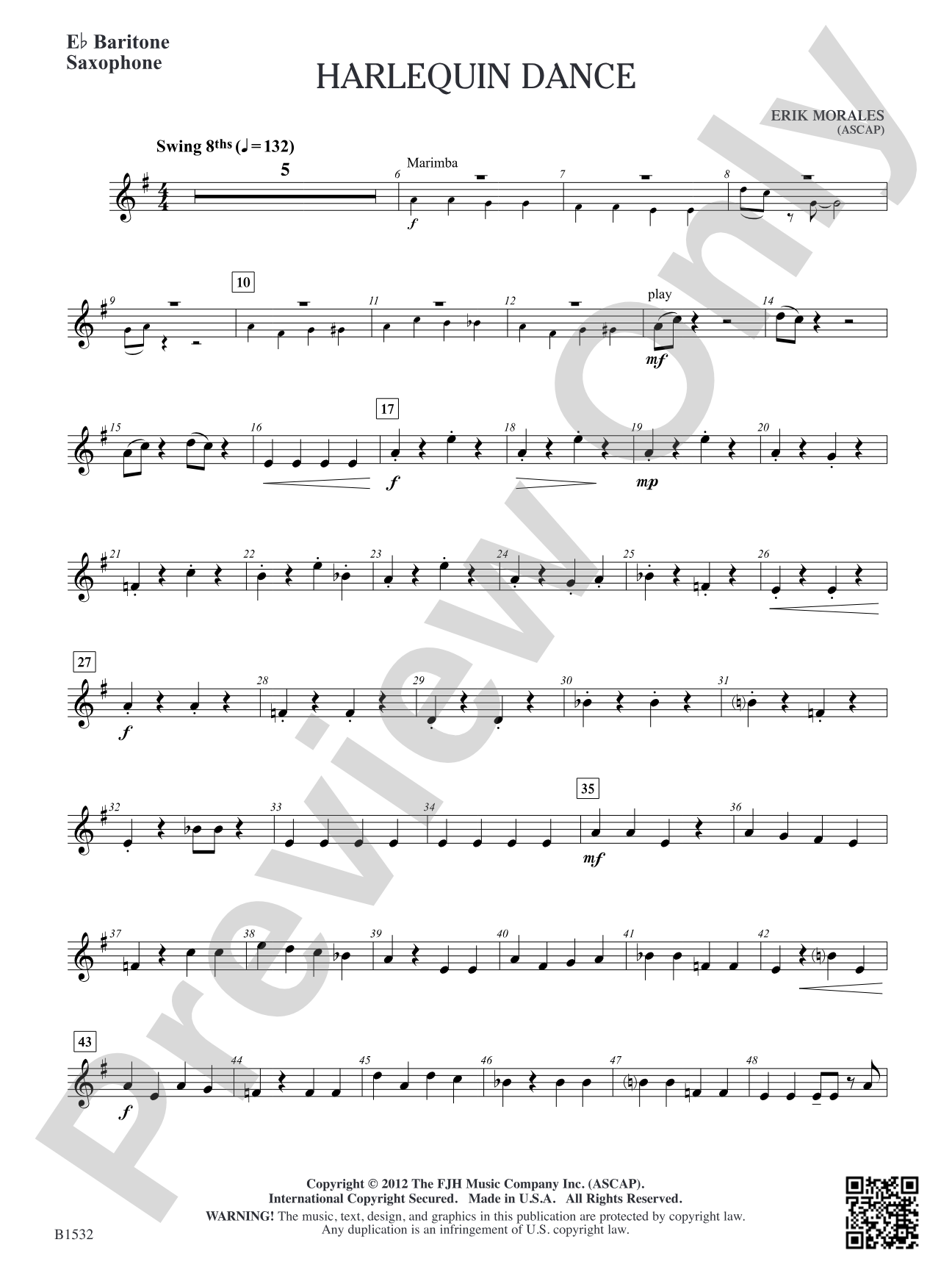

Harlequin Dance: E-flat Baritone Saxophone
By Erik Morales
Grade: 2.5
Item: 98-PC-DB1532_BTX
$7.00
Pickup currently not available
Description
This entertaining work is an exuberant and fun introduction to jazz and the art of swing for young bands. Not your typical jazz chart, this work has plenty of development and creative use of textures and orchestration. Colorful percussion writing enhances the playful melody. Proof positive that swing music can be serious and great fun too!


Don't just read it, hear it, play along with it, and watch your students grow with it. In MakeMusic Cloud, Harlequin Dance: E-flat Baritone Saxophone comes alive with professional accompaniment, adjustable tempo, and built-in practice tools that turn solo practice into real progress.
Open in the Player
Jump straight in and assign it today.
Start Your Free Trial
Open this title and explore the full library in minutes.
Sample Audio
1
Audio File
--:--
0:00
0:00
Sample Video
No sample videos found.
Additional Details
Series:
FJH Young Band
Publisher:
The FJH Music Company, Inc.
SKU:
98-PC-DB1532_BTX
More about this title
About the Composer: Erik Morales

Erik Morales has built a prolific composing career spanning classical, jazz, and commercial idioms, with over 150 published works performed by ensembles worldwide. Born in New York City in 1966, he studied composition at Florida International University and earned his bachelor's degree from the University of Louisiana, Lafayette in 1989. His arranging work began immediately after high school when a former band director commissioned him to write for a marching band, launching a career that has included regular commissions from schools and organizations across the country.
As a trumpet player, Morales has contributed substantially to the trumpet repertoire. His trumpet ensemble works have won first place honors at the 2006 and 2008 National Trumpet Competitions, and his Concerto for Trumpet in C and Piano received its premiere at the 2009 International Trumpet Guild conference. A 2016 inductee into the Louisiana Association for Jazz Education's Hall of Fame, Morales consistently balances artistic ambition with educational accessibility, making his music equally rewarding for developing ensembles and sophisticated audiences.
Why we love this
Morales treats swing as a genuine compositional language rather than a novelty gimmick. The piece genuinely develops musically across its arc while keeping the energy high and the fun unmistakable, giving your students something substantial to sink their teeth into without sacrificing the infectious spirit that makes this work so engaging.
What to expect
Bright and rollicking, with the kind of playful sophistication that comes from orchestration choices rather than cheap effects. The swing rhythm propels the piece forward while colorful percussion textures keep your ear engaged, creating something that feels both celebratory and genuinely musical.
Who it's for
Grade 2.5 bands ready to explore jazz vocabulary and swing articulation in a well-crafted, musically substantial setting. This piece works for groups seeking an entertaining concert number that doesn't sacrifice compositional depth or offer pedagogical value.
How to get the most out of it
- Establish the swing eighth-note feel early in rehearsal by having the band listen to a recorded example of classic swing phrasing; lock this feel before tackling individual parts.
- Balance the melody between sections to keep the playful character front and center; resist the urge to let any one voice overwhelm the orchestration.
- Give the percussion section time to explore the colorful rhythmic figures and textures, as they drive much of the character; these parts reward careful listening and precise coordination.
- Shape the piece with clear phrase architecture rather than maintaining a single dynamic level throughout; the development sections benefit from purposeful musical direction and contrast.
How to use it
Program this as a spring concert opener or mid-concert palate cleanser between more serious works; its accessible energy and jazz idiom fit naturally alongside other light concert fare while demonstrating that swing belongs in the repertoire of developing musicians. The piece also works well as a teaching tool early in the year when introducing jazz rhythmic concepts to younger or less experienced ensembles.
Skills your students will build
- Swing eighth-note articulation and phrasing
- Jazz-influenced rhythmic interpretation and feel
- Balancing melody and counter-melody across sections
- Responding to colorful orchestration and textural variety
- Musical characterization within a novelty concert work