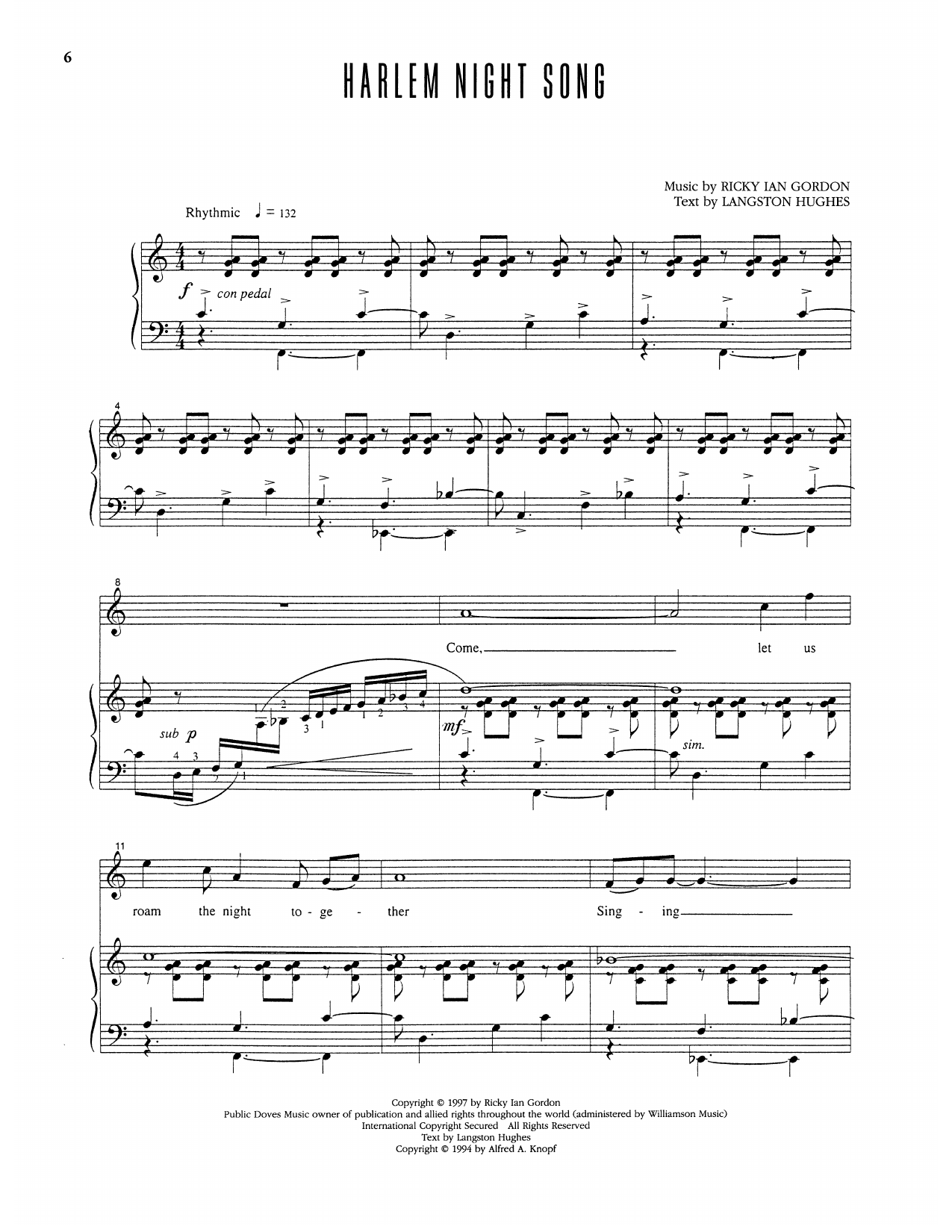
Harlem Night Song Sheet Music Preview

Harlem Night Song: Piano Vocal

By Ricky Ian Gordon

Item: 35-DS01940591

Digital Download
$5.99
Description

Harlem Night Song: Piano Vocal isn't in MakeMusic Cloud just yet...but it could be. Let us know you'd like to see it, and you'll help shape what comes next. In the meantime, start a free trial and dive into thousands of interactive titles your students can play along with today.

Sample Audio
No sample audio found.
Sample Video
Additional Details
Publisher: Hal Leonard
Page Count: 5
SKU: 35-DS01940591

More about this title

About the Composer: Ricky Ian Gordon

Ricky Ian Gordon is an American composer and pianist whose catalog spans opera, art song, chamber music, and vocal works for concert stages. His compositions marry theatrical sensibility with lyrical invention, drawing on American vernacular traditions and contemporary classical idioms. Gordon's output demonstrates consistent engagement with text setting and the human voice across genres, making him a significant voice in contemporary American composition.

Why we love this

Gordon crafts a song that feels both intimate and immediate, with piano writing that supports rather than overwhelms the vocal line. The piece gives singers room to shape the text while offering enough harmonic interest to keep pianists engaged; this balance makes it rewarding for both collaborative partners.

What to expect

The piece evokes the quieter hours of an urban night, reflective and observant rather than bombastic. There's a conversational quality to the vocal line paired with harmonies that shift subtly, creating an atmosphere of introspection layered over the bustle of city life.

Who it's for

This song works for advanced high school singers, college voice students, and professional vocalists looking to add contemporary American repertoire to their recital programs. It suits pianists comfortable with modern idioms who want to collaborate on material beyond standard art song collections.

How to get the most out of it

  • Shape the vocal line around the text's natural cadences rather than forcing phrase endings into metronomic blocks. Gordon's accompaniment will follow your phrasing if you commit to it.
  • Pay attention to register shifts in the piano part; they often mark emotional turning points and should land with clarity without overshadowing the voice.
  • Consider the harmonic language contemporary without being austere. Let some dissonance breathe and resolve, resisting the impulse to sand down tension too early.

How to use it

Pair this with other contemporary American vocal works to build a recital segment that showcases 21st-century song writing, or slot it into a program of diverse art song where its modern sensibility bridges classical tradition and contemporary practice. It also serves well as a performance vehicle for juries, competitions, or studio recitals where vocalists want to demonstrate range beyond traditional art song.

Skills your students will build

  • Interpreting contemporary harmonic language and tonal ambiguity
  • Balancing text clarity with musical phrasing in modern idioms
  • Collaborating with a pianist on repertoire requiring sensitive ensemble listening
  • Building familiarity with 21st-century American song literature

You May Also Like