
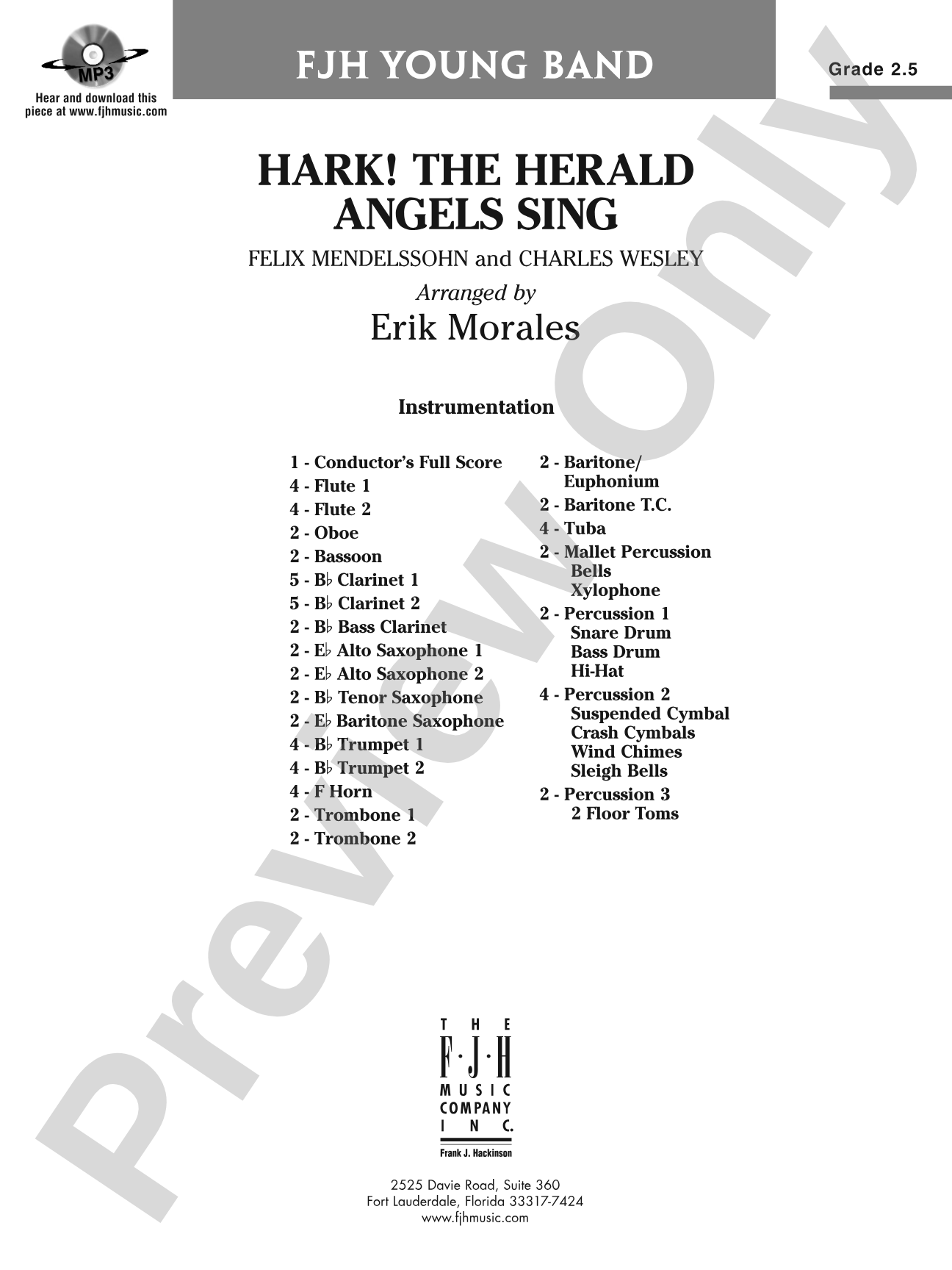

Hark! The Herald Angels Sing: Score: Concert Band
By Felix Mendelssohn and Charles Wesley / arr. Erik Morales
Grade: 2.5
Item: 98-DB1381S
$6.00
Pickup currently not available
Description
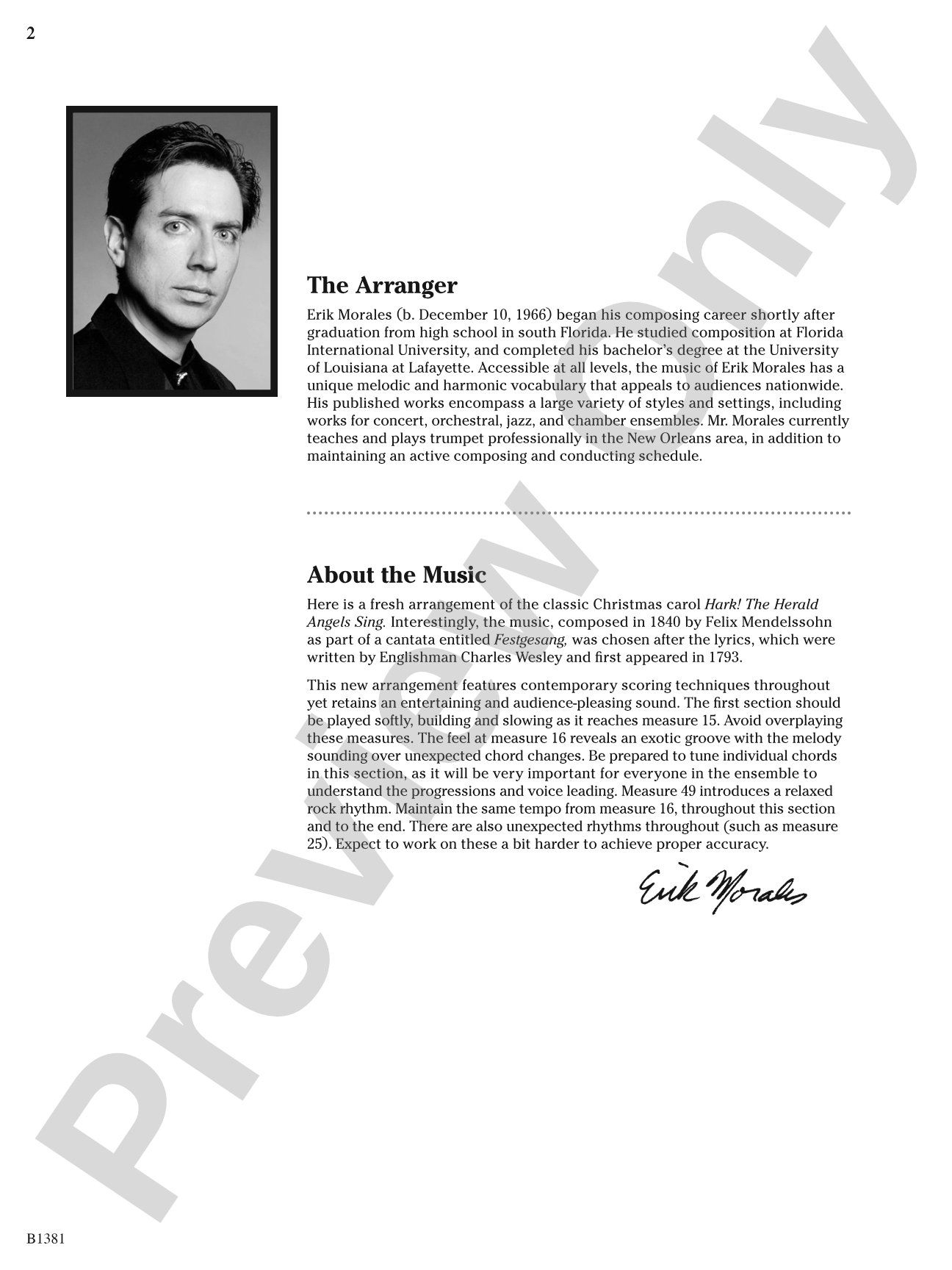
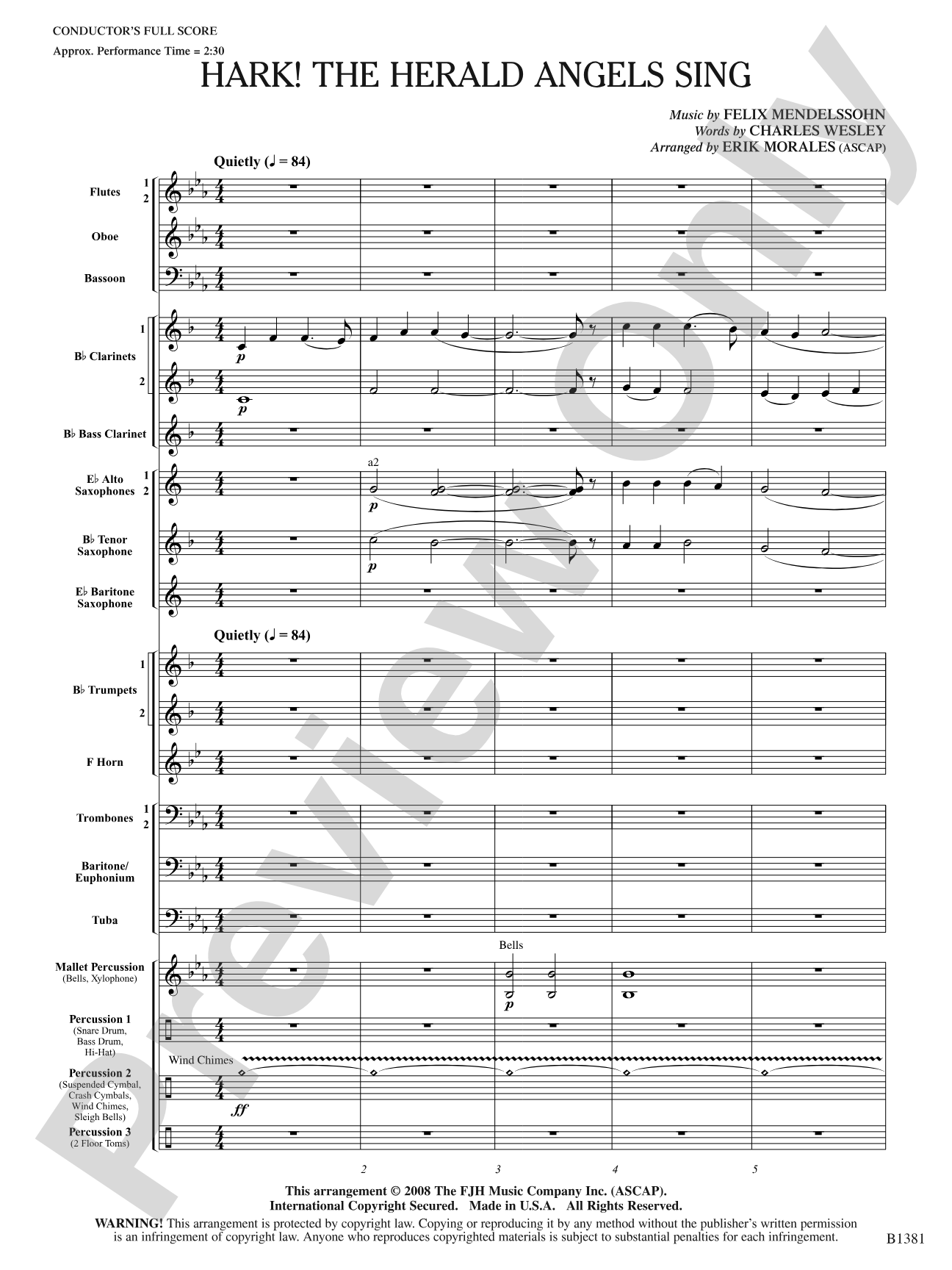
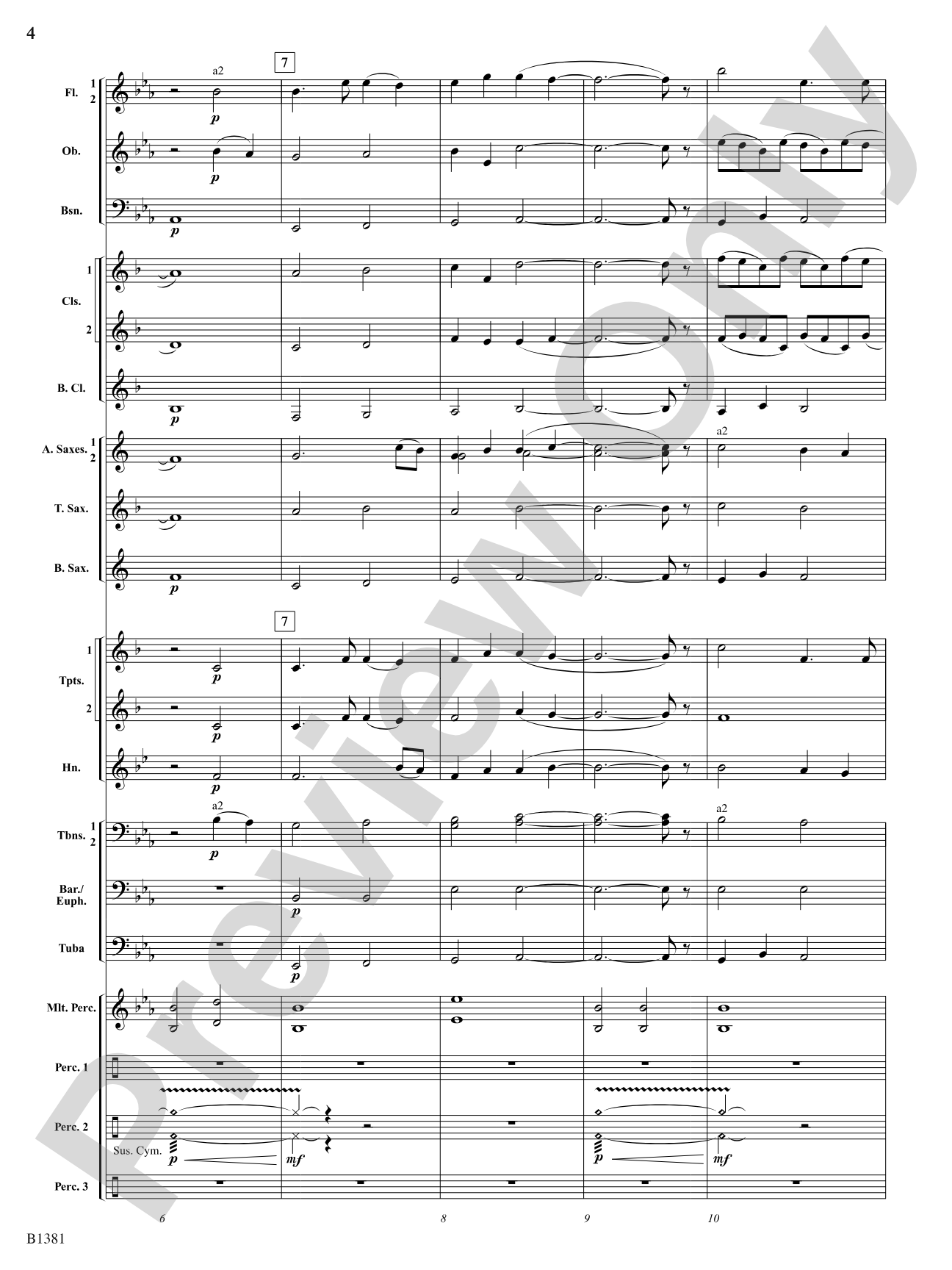
Here is a fresh and welcome arrangement of a classic Christmas carol that is the perfect choice for directors looking for something different and extremely compelling. Beginning with a lyrical approach coupled with interesting harmonies, the arrangement quickly takes on an exotic feel with percussion while displaced rhythms give the melody a unique and contemporary twist. Outstanding writing and an ideal selection for the lighter portion of a concert without having to resort to generic "pop-sounding" arrangements.


Hark! The Herald Angels Sing: Score: Concert Band isn't in MakeMusic Cloud just yet...but it could be. Let us know you'd like to see it, and you'll help shape what comes next. In the meantime, start a free trial and dive into thousands of interactive titles your students can play along with today.
Request This Title
Tell us you want it.
Start Your Free Trial
Explore everything that's ready to play right now.
Sample Audio
No sample audio found.
Sample Video
No sample videos found.
Additional Details
Series:
FJH Young Band
Publisher:
The FJH Music Company, Inc.
SKU:
98-DB1381S
More about this title
About the Composer: Felix Mendelssohn
Felix Mendelssohn (1809-1847) was a German composer whose gifts for melody and orchestration shaped Romantic music across multiple genres. His ability to write singable, luminous lines while maintaining harmonic sophistication made him a favorite of both concert halls and music educators, and his works remain central to the repertoire for young musicians learning orchestration and musical form.
Mendelssohn's influence on choral music is particularly significant; his hymn tune for "Hark! The Herald Angels Sing" has become inseparable from Charles Wesley's text, and the marriage of the two is now canonical in Christmas music worldwide. His gift for writing music that is both intellectually coherent and emotionally direct makes this melody an ideal foundation for creative reinterpretation.
Why we love this
Erik Morales respects the dignity of Mendelssohn's original melody while refusing to let it sit passively in the arrangement. The journey from restrained lyricism to percussion-driven rhythmic energy keeps the piece engaging without veering into novelty, and at Grade 2.5, it remains accessible while still offering real compositional substance for students to learn from.
What to expect
The piece opens with elegant restraint, giving the familiar carol room to breathe and reveal its harmonic depth. When the percussion enters and rhythms begin to displace, the mood shifts into something contemporary and inviting, like discovering a new side of a song you thought you knew completely.
Who it's for
Directors who program a Christmas concert but want to avoid a recycled collection of generic arrangements. This works equally well for bands seeking to balance lighter fare with more sophisticated writing, and for students who benefit from hearing how a single melody can be reimagined completely without losing its identity.
How to get the most out of it
- Balance the opening lyrical section carefully so the ensemble doesn't overshadow the melody; this vulnerability makes the later rhythmic transformation more impactful.
- Lock in the displaced rhythms with your percussion section first. Their confidence will anchor the band's confidence when the texture becomes busier.
- Let the exotic percussion colors shine without drowning out the harmonic movement underneath. They're spice, not the main ingredient.
- The transition between lyrical and contemporary sections benefits from a slight lift in energy without rushing the tempo itself.
How to use it
Slot this into the second half of a holiday concert where audiences expect something traditional but your band deserves something more interesting to play. It pairs well with both serious seasonal works and lighter fare, making it flexible for mixed programming.
Skills your students will build
- Balancing lyrical melody with ensemble texture
- Playing displaced rhythmic patterns while maintaining pulse
- Responding to sudden changes in orchestration and density
- Listening to and integrating unfamiliar percussion colors into concert band sonority