
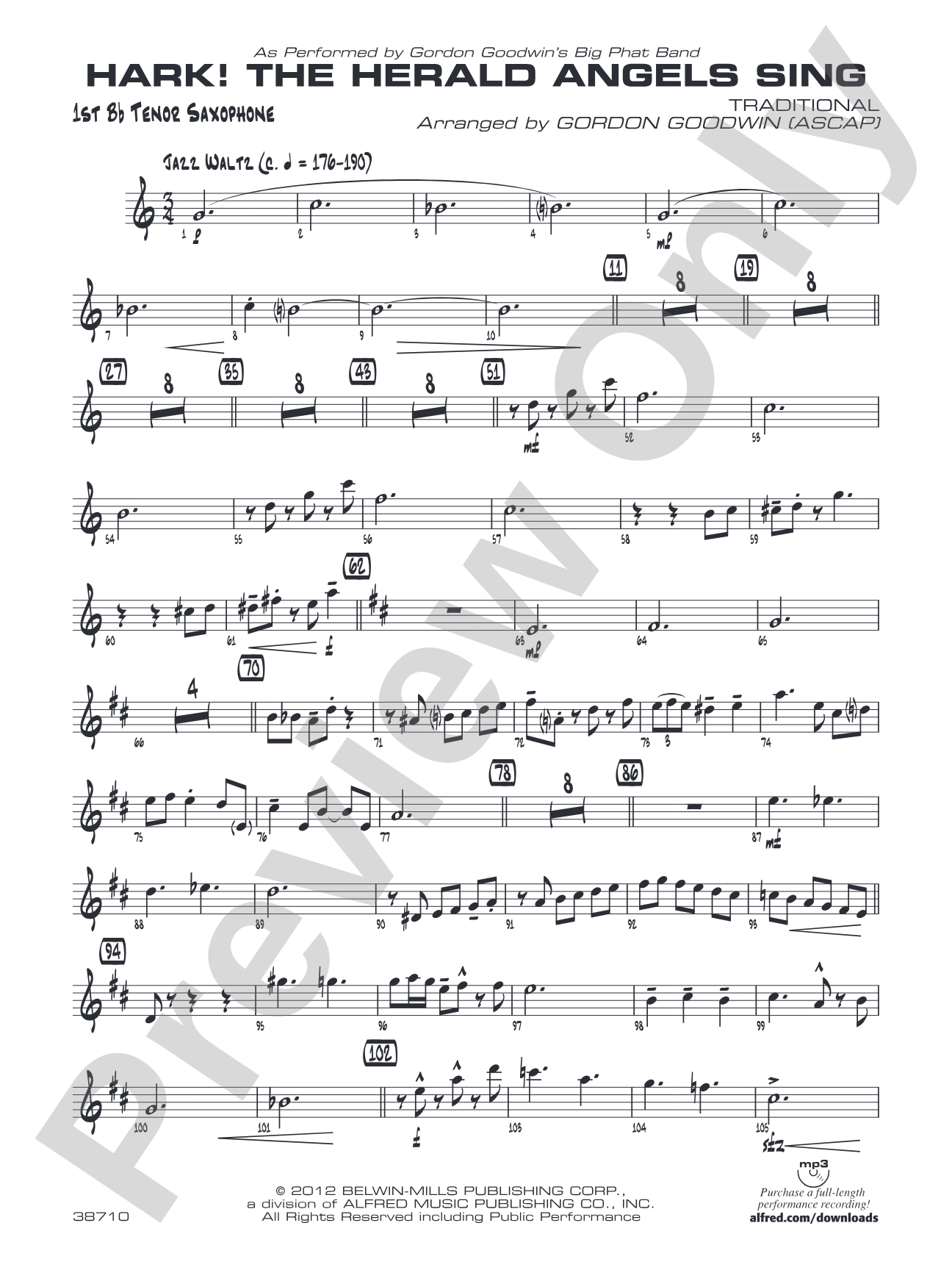

Hark! The Herald Angels Sing: B-flat Tenor Saxophone
As Performed by Gordon Goodwin's Big Phat Band
Traditional / arr. Gordon Goodwin
Grade: 5 (Advanced / Difficult)
Item: 00-PC-0017237_TX1
$5.99
Pickup currently not available
Description
Gordon Goodwin gives this easy-to-play holiday chart a jazz waltz treatment. Features include: a soprano sax part (alternate alto 1 part), a 2nd alto part with flute (alternate 2nd alto sax-only) and solo space for soprano (alto), alto 2, and tenor 1. Lead trumpet range is only to high D. This title is available in MakeMusic Cloud.


Don't just read it, hear it, play along with it, and watch your students grow with it. In MakeMusic Cloud, Hark! The Herald Angels Sing: B-flat Tenor Saxophone comes alive with professional accompaniment, adjustable tempo, and built-in practice tools that turn solo practice into real progress.
Open in the Player
Jump straight in and assign it today.
Start Your Free Trial
Open this title and explore the full library in minutes.
Sample Audio
1
Audio File
--:--
0:00
0:00
Sample Video
Additional Details
Series:
Gordon Goodwin Series
Publisher:
Alfred Music
Page Count:
86
SKU:
00-PC-0017237_TX1
More about this title
About the Arranger: Gordon Goodwin

Gordon Goodwin's compositional voice emerged early: by age five, he was transcribing complete pieces from his imagination, and at thirteen he wrote his first big band chart, Hang Loose. This trajectory launched him into the film and television industry, where his orchestrations have shaped soundtracks for blockbusters including Bad Boys II, Con Air, Gone in 60 Seconds, and Remember the Titans, earning him three Emmy Awards and multiple Grammy nominations along the way.
As founder and leader of Gordon Goodwin's Big Phat Band since 2000, he has balanced his cinematic work with a deep commitment to big band jazz. His arranging craft serves artists across multiple genres, from Christina Aguilera and Quincy Jones to Ray Charles and Johnny Mathis. He has conducted major symphony orchestras across North America and Europe, bringing his distinctive voice to both concert halls and jazz clubs.
Why we love this
Goodwin's jazz waltz treatment transforms a familiar carol into something genuinely fresh without sacrificing accessibility. Grade 5 ensembles get a chart with real sophistication in the harmony and solo opportunities, yet the lead trumpet ceiling at high D and straightforward voicing make it entirely playable for most groups. This is the rare holiday piece that will sound polished in performance and feel rewarding to rehearse.
What to expect
Elegant and swinging. The waltz framework gives the piece a lilting, dance-like quality, while Goodwin's jazz harmonies add sophistication beneath the surface. It feels both reverent and spirited, as if the carol is being reinterpreted by musicians who love both its tradition and its potential for reinvention.
Who it's for
Jazz ensembles at the advanced high school or strong middle school level seeking a substantial holiday arrangement that respects both the liturgical weight of the carol and the playful possibilities of jazz. Directors who want to program something recognizable for holiday concerts but refuse to settle for generic or overly simplified versions.
How to get the most out of it
- Lock the waltz feel early in rehearsals by emphasizing the three-beat pulse; the swing quality lives in the articulation and phrasing, not the underlying meter.
- Balance the solo sections generously in the mix. The soprano, alto 2, and tenor 1 solos are opportunities for players to shine individually, so encourage confident comping from the rhythm section during these passages.
- Shape the phrase endings with slight ritardandos to honor the hymnic roots of the melody while maintaining the jazz sensibility of the arrangement.
- Use the alternate parts strategically. If your alto section is stronger than your flute players, the alto 2 sax-only option keeps the voicing intact without sacrificing blend.
How to use it
This works beautifully as a program centerpiece in a winter concert, particularly one that mixes holiday repertoire with substantive jazz material. It pairs well alongside swing standards or contemporary jazz compositions, providing a bridge between sacred tradition and ensemble identity. Consider programming it as a closer, where its blend of accessibility and artistry can leave audiences satisfied.
Skills your students will build
- Swing articulation and phrasing in a waltz meter (3/4 time)
- Jazz comping rhythms and interaction between soloists and accompaniment
- Reading and performing from conductor score and individual parts
- Solo improvisation and melody interpretation with stylistic nuance
- Balancing hymnic reverence with contemporary jazz sensibilities