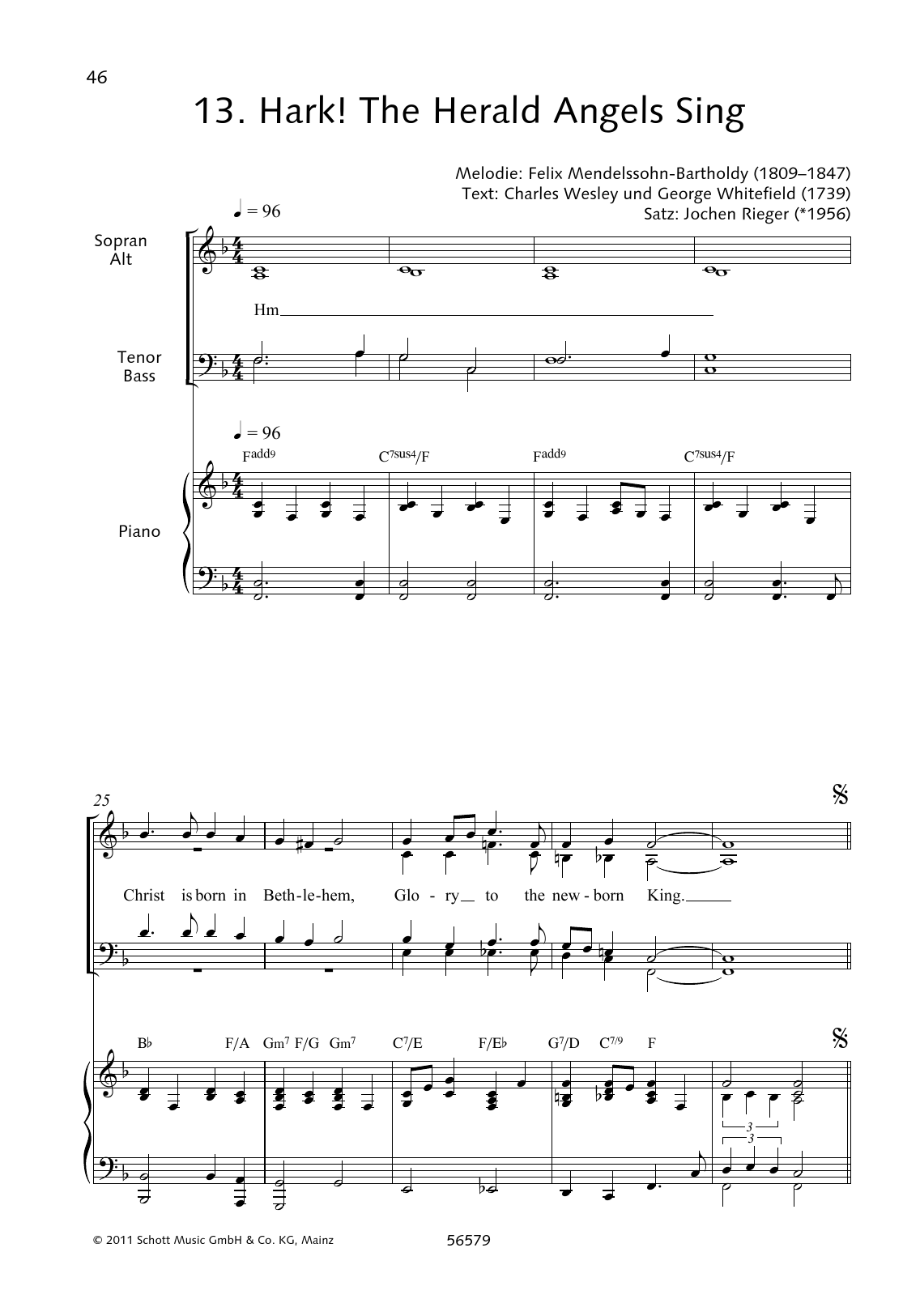
Hark! The Herald Angels Sing Sheet Music Preview

Hark! The Herald Angels Sing: Choral Octavo

Arranged by Felix Mendelssohn Bartholdy / Edited by Jochen Rieger / Edited by Charles Wesley; George Whitefield

Item: 35-DS00372006

Digital Download
$2.99

One moment…

Description

Hark! The Herald Angels Sing: Choral Octavo isn't in MakeMusic Cloud just yet...but it could be. Let us know you'd like to see it, and you'll help shape what comes next. In the meantime, start a free trial and dive into thousands of interactive titles your students can play along with today.

Sample Audio
No sample audio found.
Sample Video
Additional Details
Publisher: Hal Leonard
Page Count: 3
SKU: 35-DS00372006

More about this title

About the Arranger: Felix Mendelssohn Bartholdy

Felix Mendelssohn Bartholdy (1809-1847) was a German composer whose gift for sacred music shaped choral repertoire for generations. His arrangement of this beloved hymn demonstrates his ability to honor a familiar melody while enriching it with sophisticated harmony and contrapuntal writing, making it accessible to singers at multiple levels.

Mendelssohn's approach to choral music balanced his Romantic sensibilities with structural clarity, and this arrangement reflects both qualities. His settings became standard in rehearsal rooms worldwide because they challenge singers musically without requiring virtuosic technical demands.

Why we love this

Mendelssohn's harmonization transforms this well-known carol into something singers actively engage with rather than simply sing through. The voice leading reveals itself over rehearsals, rewarding careful attention to part independence and ensemble balance.

What to expect

The piece radiates warmth and devotion without sentimentality. Mendelssohn's harmonic language creates moments of surprising harmonic color that give the familiar text new emotional resonance, while the overall shape remains singable and direct.

Who it's for

This arrangement serves choirs seeking a substantial carol with musical depth beyond a simple homophonic setting. It works equally well for mixed voice ensembles, women's choirs, or men's choirs, and sits comfortably for singers with modest range who still want to tackle meaningful repertoire.

How to get the most out of it

  • Shape the melody through the harmonic progression rather than treating each phrase as isolated. The arrangement creates momentum from verse to verse when phrasing follows Mendelssohn's voice leading, not just the textual cadences.
  • Distinguish between moments of full four-part homophony and passages where inner voices become more active. This dynamic shifts the vocal texture and keeps the performance from feeling static.
  • Balance the inner voices carefully in rehearsal. Many singers default to supporting the soprano melody, but Mendelssohn writes countermelodies worth hearing.
  • Consider the weight and speed of vibrato, especially in sustained passages. A lighter, more controlled vibrato honors the Romantic harmonic language while maintaining clarity.

How to use it

Reserve this for a winter or holiday concert where you want to offer audiences something more than a collection of familiar carols. It pairs beautifully with lighter choral selections or contemporary holiday pieces, providing musical substance without requiring extended rehearsal time if your choir has fundamental ensemble skills in place.

Skills your students will build

  • Balancing multiple melodic lines in mixed voicing
  • Following harmonic progressions through chromatic movement
  • Maintaining phrase shape across longer, sustained passages
  • Adjusting vibrato and tone quality for Romantic-era repertoire

You May Also Like