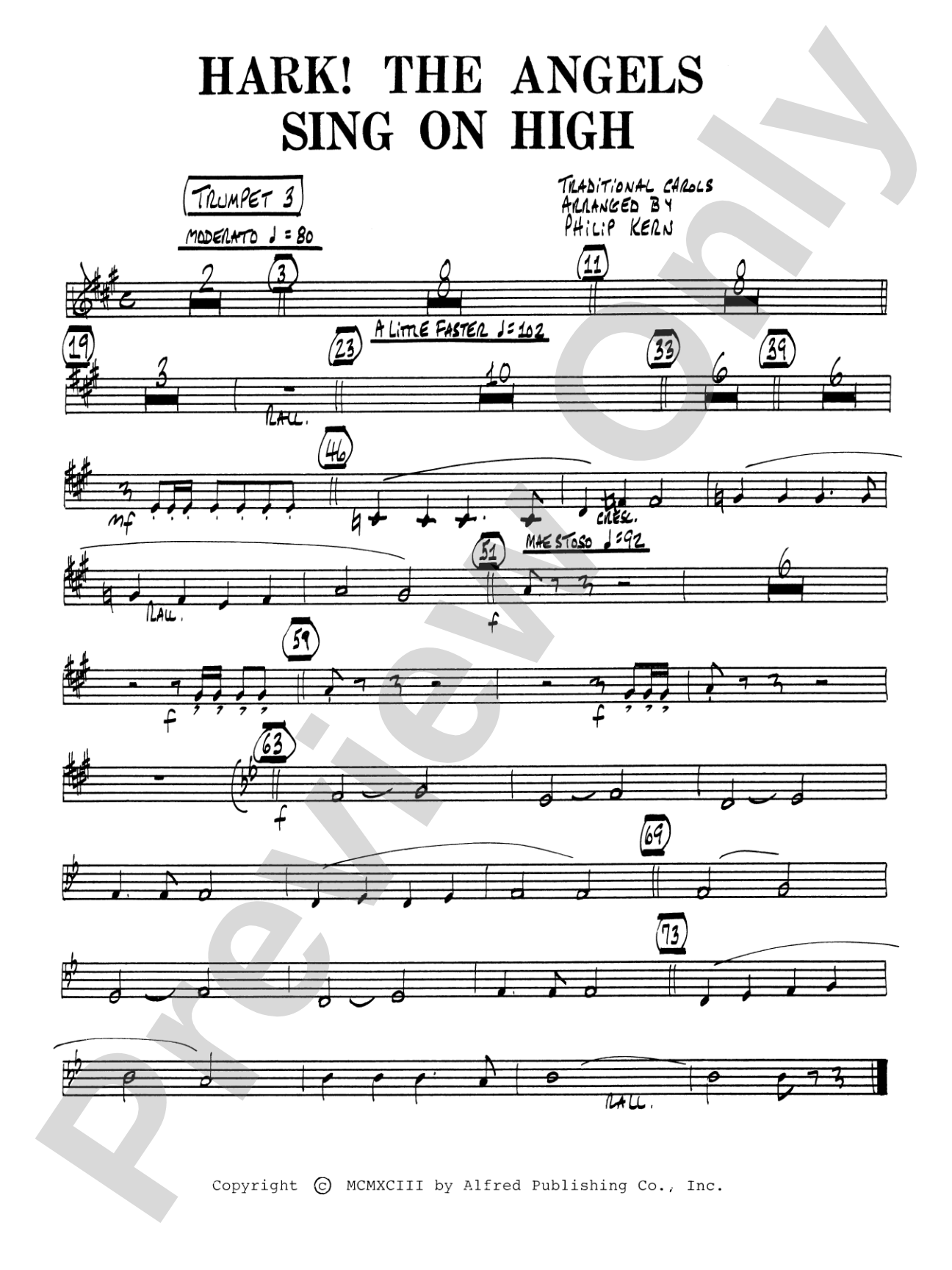
Hark! The Angels Sing on High: 3rd B-flat Trumpet Sheet Music Preview

Hark! The Angels Sing on High: 3rd B-flat Trumpet: Choral SoundPax

Arr. Philip Kern

Item: 00-PC-0001924_T3

Digital Download
$3.00
Description
Philip Kern has combined two Christmas classics ("Hark! The Herald Angels Sing" and "Angels We have Heard on High") into one very special arrangement. The gentle opening, with harp-like accompaniment, builds with the intertwining of the melodies and interplay between male and female voice parts. Optional parts for brass and percussion, or use the SoundTrax. A wonderful sequel to Kern's "Still the Holiest Night." InstruPax includes: director's score, 3 trumpets, 2 trombones, percussion.

Don't just read it, hear it, play along with it, and watch your students grow with it. In MakeMusic Cloud, Hark! The Angels Sing on High: 3rd B-flat Trumpet: Choral SoundPax comes alive with professional accompaniment, adjustable tempo, and built-in practice tools that turn solo practice into real progress.

Sample Audio
No sample audio found.
Sample Video
Additional Details
Series: Alfred Choral Designs
Publisher: Alfred Music
Page Count: 15
SKU: 00-PC-0001924_T3
Instrumentation: 3 trumpets, 2 trombones, percussion, score

More about this title

About the Arranger: Philip Kern

Philip Kern has established himself as a trusted arranger of choral music for churches and schools, with a particular gift for reimagining familiar hymns and carols into fresh, singable pieces. His arrangements balance accessibility with musical sophistication, creating works that sound fuller and more engaging than their modest technical demands suggest.

Why we love this

Kern's pairing of these two beloved melodies feels inevitable once you hear it, yet the execution is anything but obvious. The harp-like accompaniment in the opening sets a reverent tone before the voice parts begin their conversation, and the optional brass and percussion parts give you real flexibility for programming: intimate with voices alone, or fuller and more festive with instruments added.

What to expect

This arrangement opens with quiet reverence, the harp-like accompaniment creating a sense of gentle wonder before voices enter. As the familiar melodies weave together and the optional brass joins in, the piece builds into something warm and celebratory, grounding the spiritual message of both carols in a musical texture that feels both timeless and immediate.

Who it's for

Directors preparing a Christmas program who want an arrangement that sounds polished and substantial without requiring singers to master complex harmonic writing. Choirs with mixed voice sections will find the male/female voice interplay engaging to learn, and directors with optional brass and percussion players can tailor the instrumentation to what's available.

How to get the most out of it

  • Balance the harp-like accompaniment in the opening so it supports rather than overwhelms the vocal entrance; think of it as creating space for the singers to be heard clearly.
  • When the two melodies intertwine, mark in your score where each voice part has the primary line versus harmonic support; this clarity in rehearsal prevents the overlapping melodies from becoming muddy.
  • If using the optional brass parts, experiment with bringing them in partway through rather than at the full beginning; the gradual textural buildup is part of what makes this arrangement special.
  • Record a rehearsal run-through after you've shaped the dynamic arc from the gentle opening through the full interplay of voices and instruments; this helps singers hear how their part sits within the whole.

How to use it

Use this as a centerpiece in a Christmas concert's second half, after you've established a quieter, more reflective mood with other selections. Its optional instrumentation makes it equally effective in a church service or a school concert, and its connection to Kern's "Still the Holiest Night" means you could program both pieces to create a thematic anchor around the incarnation message.

Skills your students will build

  • Blending two melodic lines while maintaining harmonic awareness
  • Dynamic shaping across a longer form that builds gradually
  • Coordinating voice parts with optional instrumental doubling and countermelody
  • Sustaining tone quality through the interplay of male and female voice sections

You May Also Like