Hark for Duke's Trumpets Cover Image

Hark for Duke's Trumpets: Jazz Ensemble Conductor Score

$15.00 USD
Sale price  $15.00 USD Regular price 
Skip to product information
Hark for Duke's Trumpets Cover Image

Hark for Duke's Trumpets: Jazz Ensemble Conductor Score

aka Hark! The Duke's Trumpets

By Billy Strayhorn / ed. Jeff Lindberg

Grade: 4 (Medium Advanced / Difficult)

Item: 00-33378S

$15.00
Shipped

One moment…

Description
Also known as "Hark! The Duke's Trumpets" and composed and arranged by Billy Strayhorn for the Duke Ellington Orchestra in 1956, this classic arrangement has no trumpets---just saxes and rhythm section. Edited by Jeff Lindberg.

Hark for Duke's Trumpets: Jazz Ensemble Conductor Score isn't in MakeMusic Cloud just yet...but it could be. Let us know you'd like to see it, and you'll help shape what comes next. In the meantime, start a free trial and dive into thousands of interactive titles your students can play along with today.

Sample Pages

No sample pages found.

Sample Audio
No sample audio found.
Sample Video
Additional Details
Series: Belwin Jazz Legend Series
Publisher: Alfred Music
Page Count: 12
UPC: 038081385303
SKU: 00-33378S

More about this title

About the Composer: Billy Strayhorn
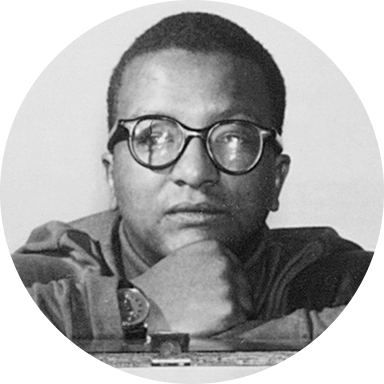
Billy Strayhorn

Billy Strayhorn (1915-1975) stands among the most prolific jazz composers of the 20th century, yet his name remained far less visible than his music deserved. Born in Dayton, Ohio, Strayhorn's collaboration with Duke Ellington began in 1939 and shaped the sound of one of jazz's greatest orchestras. His harmonic sophistication and melodic gift produced some of jazz's most enduring standards, from "Take the 'A' Train" (the Ellington Orchestra's theme since the 1940s) to "Lush Life," which Strayhorn composed at just sixteen years old.

Strayhorn's influence extends across generations of jazz artists. His compositions have been recorded by everyone from Ella Fitzgerald and Sarah Vaughan to John Coltrane and Sonny Rollins, establishing him as one of the most performed jazz composers in history. Despite decades of public anonymity, his harmonic language and compositional craft remain the gold standard for both jazz standards and orchestral writing. Strayhorn's decision to live openly as a Black gay man during an era of profound social restriction speaks to the courage that informed his artistic vision.

Why we love this

This arrangement captures the Ellington Orchestra's sophisticated voicing and rhythmic command while remaining accessible to Grade 4 ensembles. The title's clever irony (a Duke Ellington piece with no trumpets) forces conductors and players to rethink ensemble balance, requiring saxes and rhythm section to carry full harmonic and melodic weight. It's a masterclass in orchestration that teaches your ensemble how sectional independence creates textural richness.

What to expect

Elegant and swinging, this piece radiates the refined taste that defines Ellington's orchestra sound. Despite the absence of trumpets, the arrangement never feels sparse; instead, the saxophones and rhythm section create a rich harmonic tapestry that feels both intimate and full.

Who it's for

This conductor score is designed for directors leading Grade 4 jazz ensembles with solid fundamental skills and the ability to manage complex voicings and rhythmic syncopation. It works best for ensembles comfortable with authentic jazz idioms and ready to dig into Ellington-style sophistication.

How to get the most out of it

  • Shape the saxophone lines with legit jazz phrasing rather than classical approach. The ensemble voices need to breathe as a section, mirroring how a solo section would phrase and breathe together.
  • Pay close attention to rhythmic precision in the rhythm section. At this level, time feel can drift when students are concentrating on their individual parts; lock the tempo and groove early in rehearsals before layering ensemble complexity.
  • Strayhorn's harmonies demand tuning discipline, especially in the softer ensemble passages. Voice clusters require careful balance and slight adjustments as players warm into the piece.

How to use it

Program this in a concert celebrating swing-era jazz or devoted entirely to Strayhorn's compositions. It pairs naturally with other Ellington Orchestra pieces and can anchor a set demonstrating how orchestration creates identity in jazz.

Skills your students will build

  • Reading saxophone voicings across multiple chord extensions and alterations
  • Executing swing rhythms and syncopation with ensemble precision
  • Balancing sectional blend without relying on trumpet weight
  • Responding to jazz conducting and rubato while maintaining groove
  • Performing Ellington-style articulation and phrasing as a section unit

You May Also Like