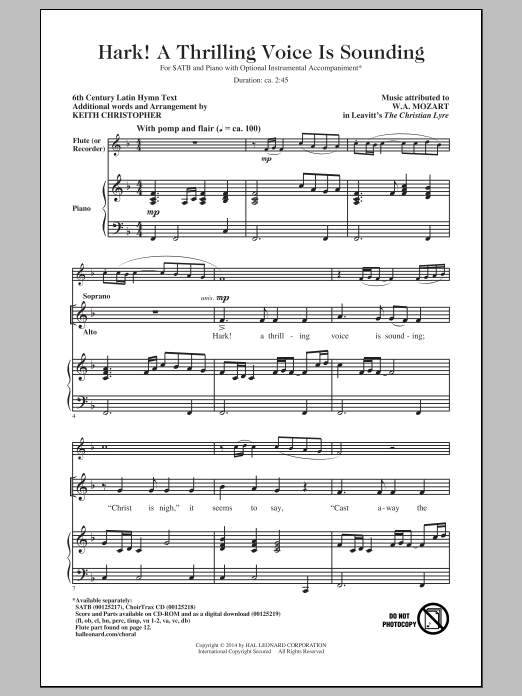
Wolfgang Amadeus Mozart (1756–1791) stands as one of history's most prolific and influential composers, producing over 600 works across every major genre during his short life. His sacred music, written for both liturgical and concert settings, demonstrates the same melodic genius and structural clarity that define his operas and symphonies. Mozart's choral works remain essential to the sacred repertoire, offering singers access to the elegant vocal writing and harmonic sophistication that made him a master of the form.
For music educators, Mozart's sacred compositions provide ideal teaching material. His lines are singable yet refined, his harmonies reward careful listening, and his structural logic teaches students how to build coherence across larger forms. These qualities made his sacred music valued during his own time and continue to make it valuable in the classroom and concert hall.