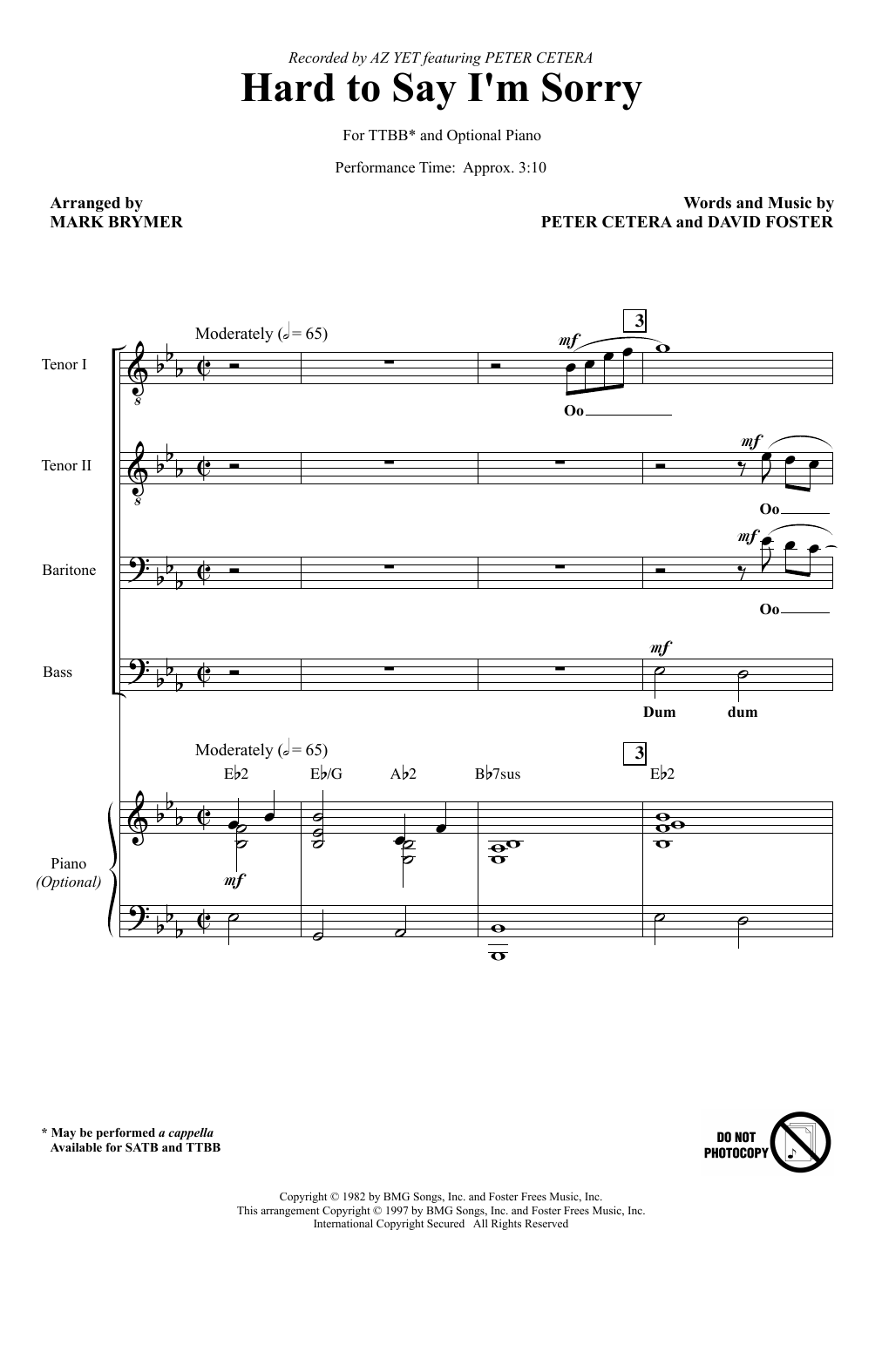
Hard To Say I'm Sorry (feat. Peter Cetera) (arr. Mark Brymer) Sheet Music Preview

Hard To Say I'm Sorry (feat. Peter Cetera) (arr. Mark Brymer): TTBB Choral Octavo

As performed by Az Yet / Arranged by Mark Brymer

Item: 35-DS00473539

Digital Download
$2.99
Description

Hard To Say I'm Sorry (feat. Peter Cetera) (arr. Mark Brymer): TTBB Choral Octavo isn't in MakeMusic Cloud just yet...but it could be. Let us know you'd like to see it, and you'll help shape what comes next. In the meantime, start a free trial and dive into thousands of interactive titles your students can play along with today.

Sample Audio
No sample audio found.
Sample Video
Additional Details
Publisher: Hal Leonard
Page Count: 14
SKU: 35-DS00473539

More about this title

About the Artist: Az Yet

Az Yet rose to prominence in the 1990s as a male vocal group known for their polished R&B harmonies and emotional delivery. The ensemble became fixtures on contemporary radio through their interpretations of popular ballads and uptempo grooves, earning recognition for their ability to blend tight voicings with genuine musicality. Their arrangement sensibility and vocal sophistication made them natural ambassadors for the pop repertoire that continues to engage modern choirs.

Why we love this

Mark Brymer's arrangement captures the warmth and vulnerability of this Chicago classic while tailoring it specifically for men's voices. The flexible voicing options (TB/TTB/TBB/TTBB) let you use this regardless of your section strengths, and the 14-page score includes all the sophisticated harmonies that made the original resonate without demanding excessive technical range.

What to expect

The piece carries the tenderness and regret of the original, built on major key warmth and gentle harmonic movement. Singers experience the vulnerability of admitting a mistake through music that feels immediate and accessible, not distant or academic.

Who it's for

Male and mixed choirs looking for repertoire that speaks to contemporary tastes without sacrificing musicianship. This arrangement works equally well for groups building confidence in popular music or established choirs wanting something current that their singers will connect with personally.

How to get the most out of it

  • Balance the melody between your first tenors and baritones; this isn't a piece where the top line should dominate. Let the interior harmonies breathe and support the emotional arc.
  • The arrangement likely features moments that echo the original's lush production. Lean into dynamic shaping rather than pushing volume; sensitivity here pays off more than power.
  • If your section sizes are uneven, test the optional voicings in rehearsal early. Knowing which configuration works best for your ensemble's balance will save time down the road.
  • Record a section rehearsal to catch blend issues. Men's choirs often struggle with tuning in slower ballads, and playback reveals problems that live singing can mask.

How to use it

Pair this with other 1980s and 1990s pop standards to create a concert section that showcases your choir's contemporary range. It also works as a closing number or encore if you want to end with something the audience will recognize and enjoy immediately.

Skills your students will build

  • Singing jazz-inflected harmony voicings with accurate intonation
  • Shaping phrases in ballad tempos with dynamic control
  • Blending interior voices so they support rather than compete with melody
  • Interpreting pop and R&B vocal inflection within ensemble context

You May Also Like