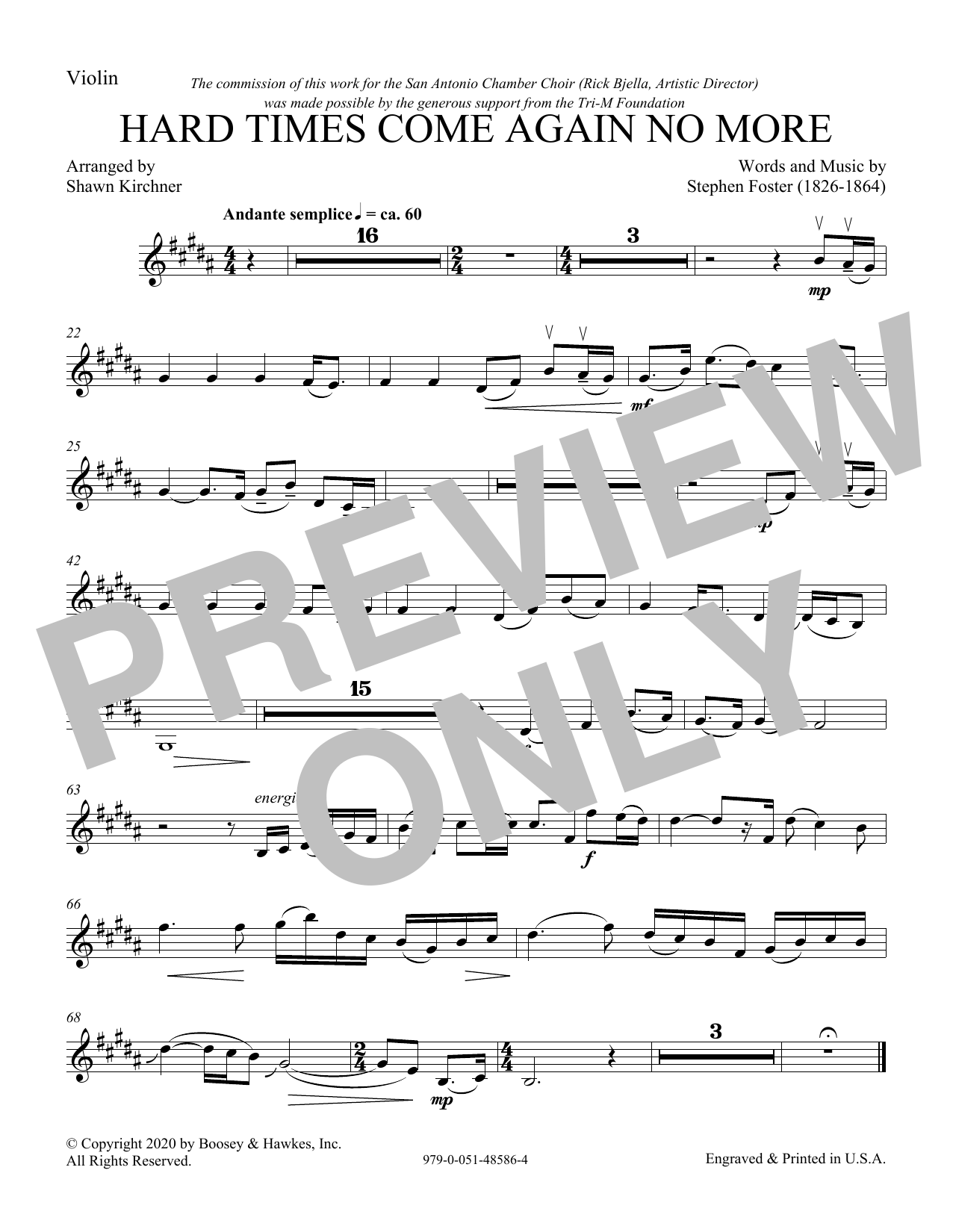
Hard Times Come Again No More (arr. Shawn Kirchner) Sheet Music Preview

Hard Times Come Again No More (arr. Shawn Kirchner): Choral Instrumental Pak

By Stephen Foster / Arranged by Shawn Kirchner

Item: 35-PK00477360

Digital Download
$5.00

Buy Extra Parts (Digital PDF Download)

Parts Added to Cart!

Description
A banjo-like piano accompaniment and expressive fiddle stylings lend folk authenticity to this plaintive and moving choral setting of Stephen Foster's classic song "Hard Times Come Again No More." The text is set in simplicity and in fullness, by turns, as the expression of the words demand, with individual vocal parts always retaining a naturalness of line that create a rich, harmonic composite when combined with the other parts.

Hard Times Come Again No More (arr. Shawn Kirchner): Choral Instrumental Pak isn't in MakeMusic Cloud just yet...but it could be. Let us know you'd like to see it, and you'll help shape what comes next. In the meantime, start a free trial and dive into thousands of interactive titles your students can play along with today.

Sample Audio
No sample audio found.
Sample Video
Additional Details
Publisher: Hal Leonard
SKU: 35-PK00477360

More about this title

About the Composer: Stephen Foster

Stephen Foster (1826-1864) stands as America's first major songwriter, composing more than 200 songs that became the soundtrack of the 19th century. His gift was an uncanny ability to write melodies that felt inevitable, paired with lyrics that captured the emotional tenor of everyday life. Foster's work spans minstrel songs, parlor ballads, and spirituals; his influence on American popular song and folk traditions remains immeasurable, with melodies like "Oh! Susanna" and "Camptown Races" still recognized worldwide.

Why we love this

Kirchner's arrangement honors Foster's melody while wrapping it in folk textures that feel both historically informed and immediate. The interplay between vocal simplicity and instrumental color gives your singers a genuine folk song experience without sacrificing harmonic sophistication, making this a standout choice when you want substance alongside accessibility.

What to expect

Weathered and warm, like sitting on a front porch at dusk. The arrangement creates space for reflection while the folk instrumentation reminds you this song belongs to everyday people, not concert halls. Singing it should feel like you're passing a piece of American history forward, note by note.

Who it's for

Choirs seeking authentic folk material with arranging craft and depth. Works equally well for concert ensembles, community choirs, and festival presentations where Foster's legacy matters to your programming.

How to get the most out of it

  • Allow the banjo-like piano accompaniment to establish the folk character in the introduction; your singers will naturally find the right conversational tone when they hear that authentic pulse underneath.
  • Shape phrases around the lyrical content rather than mechanical phrasing. Words like "hard times" and "come again" need breath and weight that simple bar-line divisions won't provide.
  • Blend the fiddle stylings as an interpretive voice rather than decorative; the arrangement suggests rubato and slight timing flexibility, so resist locking everything to a metronomic grid.
  • Explore dynamic contrast between the "simplicity and fullness" sections Kirchner built into the setting. Let those moments of sparse texture really breathe before the harmony thickens.

How to use it

Pair this with other American folk or spiritual arrangements to build a program around Foster's influence on the nation's musical identity. It also works powerfully as a closing number when you want the concert to end with quiet dignity rather than theatrical flourish.

Skills your students will build

  • Sustaining lyrical intensity across longer phrases without oversinging
  • Responding to rhythmic flexibility and rubato in ensemble settings
  • Balancing vocal independence with harmonic blend in sectional arrangements
  • Understanding how accompaniment style shapes interpretive choices

You May Also Like