Harbor Lights Sheet Music Preview

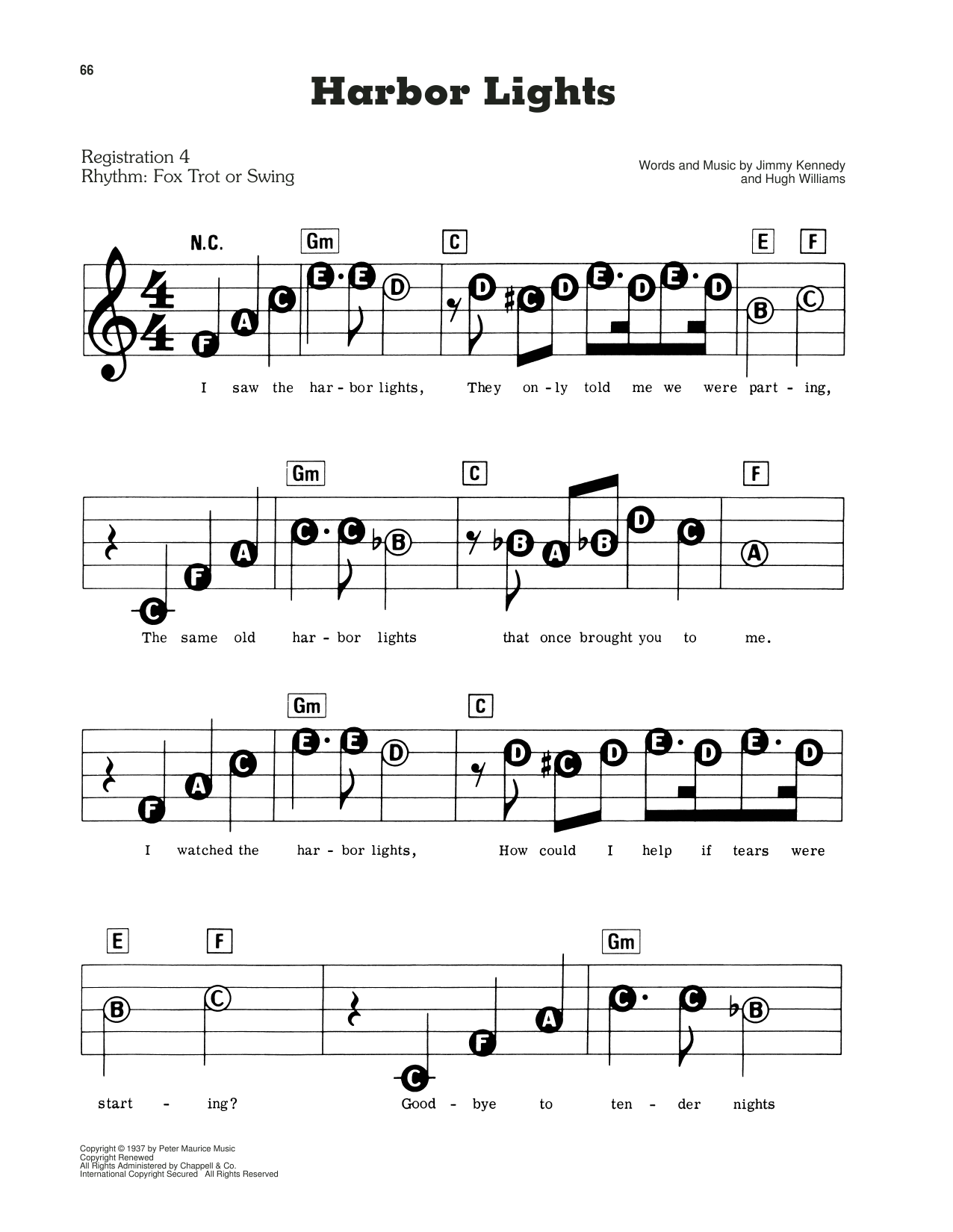
Harbor Lights: E-Z Play Today

As performed by Willie Nelson

Item: 35-DS00454471

Digital Download
$4.99
Description

Harbor Lights: E-Z Play Today isn't in MakeMusic Cloud just yet...but it could be. Let us know you'd like to see it, and you'll help shape what comes next. In the meantime, start a free trial and dive into thousands of interactive titles your students can play along with today.

Sample Audio
No sample audio found.
Sample Video
Additional Details
Publisher: Hal Leonard
Page Count: 2
SKU: 35-DS00454471

More about this title

About the Artist: Willie Nelson

Willie Nelson stands as one of American music's most influential songwriters and performers, with a career spanning over seven decades. His compositions have become standards in jazz, pop, and country repertoire, known for their emotional directness and sophisticated harmonic sensibility. Nelson's ability to craft memorable melodies over complex chord changes makes his work invaluable for developing pianists learning to balance simplicity with musical depth.

Why we love this

This E-Z Play arrangement captures the wistful quality of Nelson's composition without sacrificing musicality. The two-page format makes it accessible for students building confidence with standards, while the melody and harmony reward careful phrasing and dynamic control.

What to expect

The piece carries a reflective, nostalgic quality with the gentle persistence of memory. Warm harmonies and a singable melody create an intimate atmosphere that feels both accessible and subtly sophisticated.

Who it's for

Student pianists who are ready to move beyond basic folk arrangements and explore jazz and pop standards. This works well for those developing sight-reading skills in a practical context with songs they can hear performed professionally.

How to get the most out of it

  • Honor the rubato inherent in the melody; this isn't a tune that benefits from metronomic precision. Let the phrasing breathe.
  • Pay attention to how the harmony supports the vocal line. Each chord change should feel intentional rather than decorative.
  • Consider the recorded version for pacing reference, but trust your own interpretation of the emotional arc.

How to use it

Include this in a standards unit alongside other classic American songbook material, or program it as a solo piano piece that bridges classical technique with contemporary popular repertoire. It pairs naturally with vocal-instrumental combinations if you're building a cabaret-style recital.

Skills your students will build

  • Reading chord changes in jazz/pop notation
  • Balancing melody and accompaniment textures
  • Interpretive phrasing in a song form
  • Dynamic control and emotional expression within a simple arrangement

You May Also Like