Harbor Lights: Piano/Vocal/Chords Digital Sheet Music

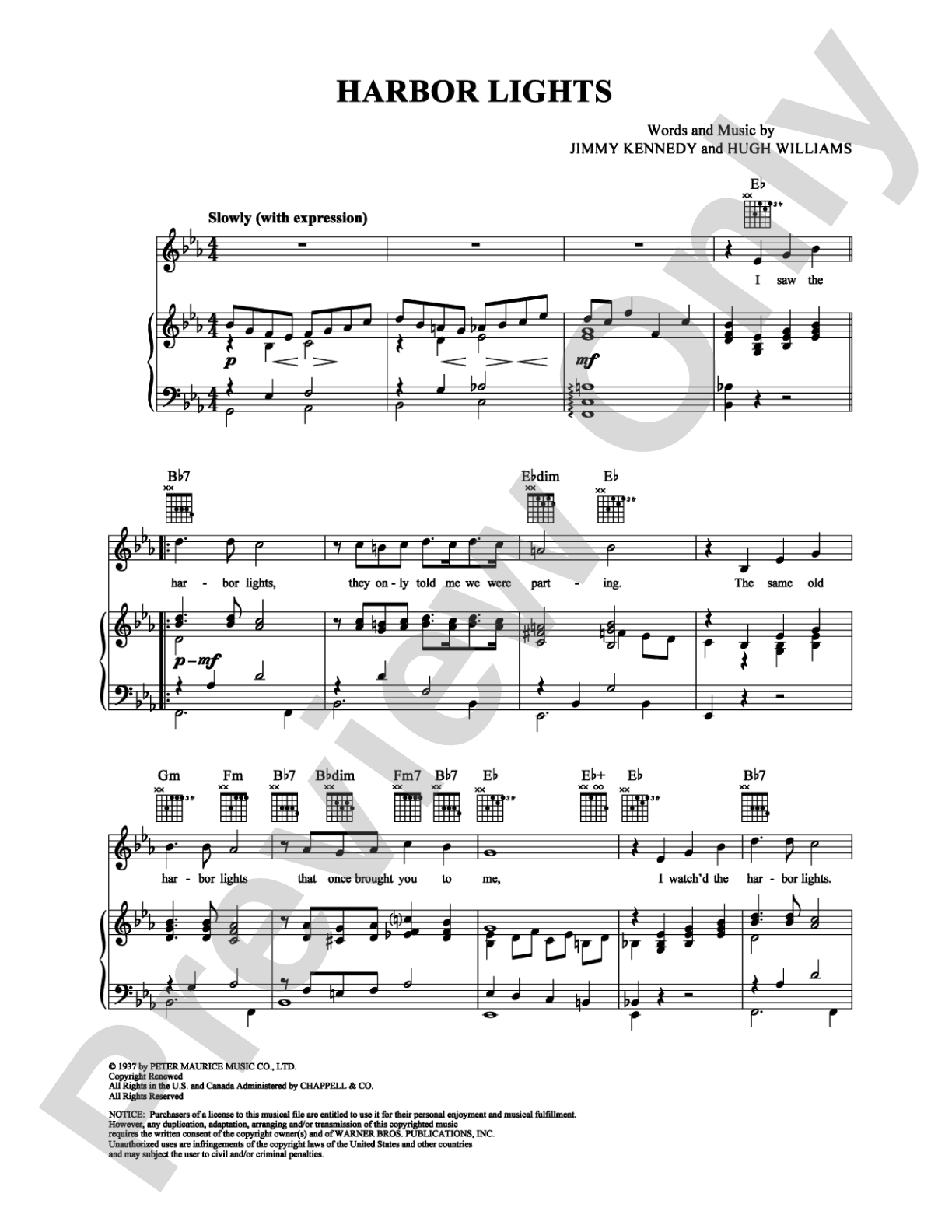
Harbor Lights: Piano/Vocal/Chords Digital Sheet Music

The Platters, Hugh Williams, Jimmy Kennedy

Item: 00-PS-0007847

Digital Download
$3.99
Description

Harbor Lights: Piano/Vocal/Chords Digital Sheet Music isn't in MakeMusic Cloud just yet...but it could be. Let us know you'd like to see it, and you'll help shape what comes next. In the meantime, start a free trial and dive into thousands of interactive titles your students can play along with today.

Sample Audio
No sample audio found.
Sample Video
Additional Details
SKU: 00-PS-0007847

More about this title

About the Artist: The Platters

The Platters redefined vocal harmony in the 1950s, bringing a polished, sophisticated sound to popular music that influenced generations of singers. Their recordings of standards and original compositions showcased tight ensemble singing, impeccable intonation, and an ability to convey emotional depth through group voicing that made them one of the most successful recording acts of their era.

Why we love this

Harbor Lights sits perfectly at the intersection of accessibility and musical substance. The melody is memorable enough that students and audiences connect instantly, while the chord changes and vocal arrangement offer genuine interpretive choices for singers and pianists working together.

What to expect

Harbor Lights carries the warmth and polish of classic 1950s vocal pop, with enough harmonic interest to keep both singers and pianists engaged. The piece invites intimate, expressive singing while the chord progression suggests rich harmonic possibilities for creative accompaniment.

Who it's for

Singers preparing solo or small ensemble arrangements, pianists accompanying vocalists in rehearsal or performance, and music students learning to work with chord symbols and lead sheets. This digital resource works for anyone building skills in popular song interpretation and piano-vocal collaboration.

How to get the most out of it

  • Shape the vocal line through long phrases rather than breaking at obvious lyrical punctuation; let the melody breathe naturally across the harmonic progression.
  • Use the chord symbols to explore voicing options on piano that support (not compete with) the vocal melody; consider whether fuller block chords or sparse accompaniment better suits your interpretation.
  • Lock the tempo early in rehearsal and maintain it consistently; the piece's effectiveness depends on steady phrasing rather than dramatic tempo shifts.
  • Balance vocal projection so the melody cuts through the piano accompaniment without forcing; this is a conversation between two musicians, not a vocal solo with background music.

How to use it

Program this as a solo feature for a singer with strong intonation and musicality, or use it as a rehearsal tool for developing your students' ability to read lead sheets and interpret chord symbols. It also works well as a contemporary-meets-classic pairing with other standards in a cabaret-style recital program.

Skills your students will build

  • Reading and interpreting chord symbols in a popular song context
  • Balancing vocal melody with piano accompaniment
  • Sustaining long phrases with consistent intonation
  • Making expressive choices within a standard harmonic framework
  • Collaborative communication between vocalist and pianist

You May Also Like