Happy We Sheet Music Preview

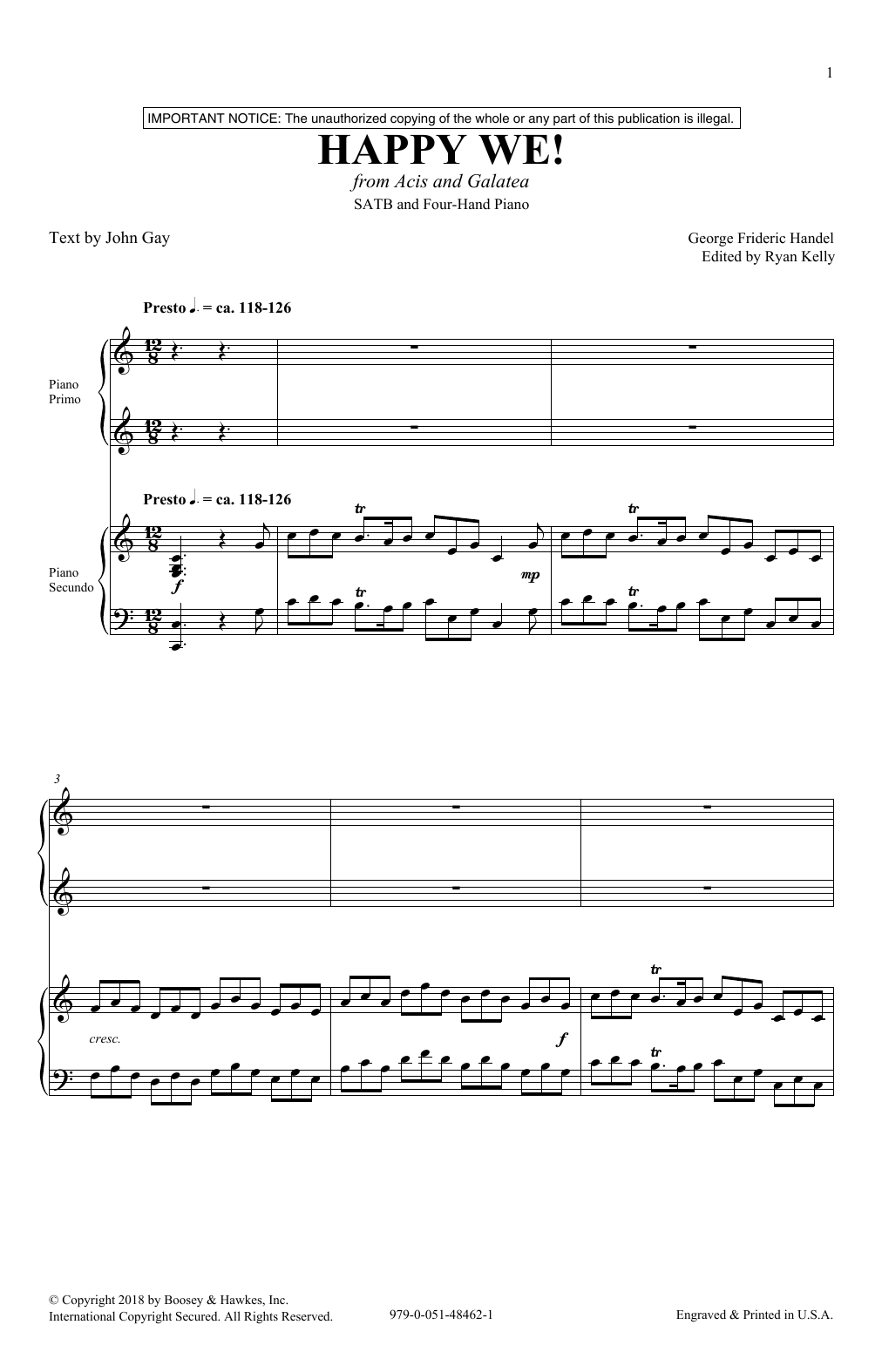
Happy We: SATB Choral Octavo

As performed by G. F. Handel / Arranged by Ryan Kelly

Item: 35-DS00410794

Digital Download
$2.99
Description

Happy We: SATB Choral Octavo isn't in MakeMusic Cloud just yet...but it could be. Let us know you'd like to see it, and you'll help shape what comes next. In the meantime, start a free trial and dive into thousands of interactive titles your students can play along with today.

Sample Audio
No sample audio found.
Sample Video
Additional Details
Publisher: Hal Leonard
Page Count: 9
SKU: 35-DS00410794

More about this title

About the Artist: G. F. Handel

George Frideric Handel (1685-1759) stands as one of the Baroque era's most prolific and commercially successful composers. His gift for memorable melody and dramatic expression made him a master of opera, oratorio, and instrumental music alike, and his works remain central to the choral repertoire centuries after his death.

Handel's genius lay in his ability to craft music that satisfies both the performer and the audience. His vocal writing sits comfortably in the voice, his harmonies are rich yet transparent, and his structural instincts are impeccable. For music educators, his output offers an endless supply of accessible yet sophisticated material that students genuinely enjoy singing.

Why we love this

Ryan Kelly's arrangement preserves the melodic charm Handel was famous for while making it practical for mixed choirs of moderate ability. The piece lands in that rare sweet spot where singers feel successful without sacrificing harmonic interest or the brightness that defines this music.

What to expect

There's genuine optimism in this music. The title itself signals brightness and contentment, and Handel delivers with melody that feels both elegant and immediately singable. The harmonic language is warm without being heavy, creating an emotional directness that audiences find refreshing.

Who it's for

This arrangement suits festival and contest choirs who want a substantial Handel piece without the scale of a full chorus or oratorio excerpt. It works equally well as a confident concert opener or as a secondary selection that displays both style and ensemble control.

How to get the most out of it

  • Shape the melody with gentle dynamic contour rather than punchy accents; Handel's lines breathe better with long-line thinking than with over-articulation.
  • Balance the inner parts carefully so the harmonic movement supports rather than obscures the soprano line.
  • Keep the tempo moving steadily; Baroque music gains energy from consistent pulse, not from rushing.

How to use it

Pair this with other Baroque or early Classical repertoire to build a thematic concert, or use it to anchor a program that mixes eras since Handel's accessibility makes it an ideal gateway piece for audiences less familiar with choral music. At nine pages, it's substantial enough to stand alone as a statement but light enough to pair with a larger work.

Skills your students will build

  • Baroque phrasing conventions (long lines, minimal vibrato)
  • SATB voice independence and blend
  • Reading and performing in Baroque harmonic language
  • Shaping melody without over-expression

You May Also Like