Happy Together Sheet Music Preview

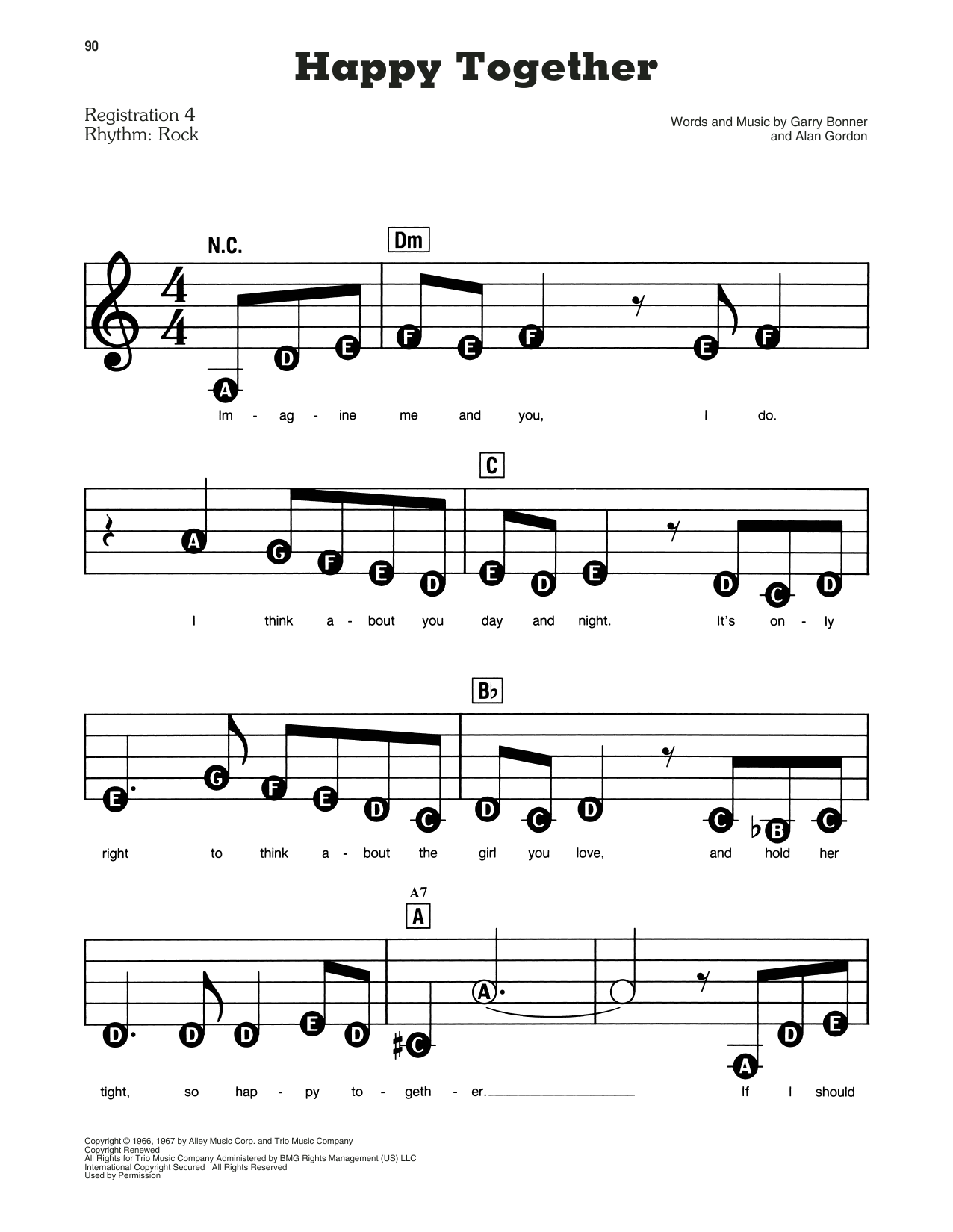
Happy Together: E-Z Play Today

As performed by The Turtles

Item: 35-DS00447811

Digital Download
$4.99
Description

Happy Together: E-Z Play Today isn't in MakeMusic Cloud just yet...but it could be. Let us know you'd like to see it, and you'll help shape what comes next. In the meantime, start a free trial and dive into thousands of interactive titles your students can play along with today.

Sample Audio
No sample audio found.
Sample Video
Additional Details
Publisher: Hal Leonard
Page Count: 2
SKU: 35-DS00447811

More about this title

About the Artist: The Turtles

The Turtles emerged from the mid-1960s Los Angeles pop scene with a gift for crafting infectious melodies and tight vocal harmonies. Led by Howard Kaylan and Mark Volman, the group became masters of the pop single, delivering some of the era's most memorable and radio-friendly tracks. Their music combined rock sensibilities with pop accessibility, making them ideal models for understanding commercial songwriting and arrangement in an educational context.

Why we love this

This arrangement captures what made the original so irresistible: a buoyant melody, straightforward harmonic progression, and genuine warmth. Students grasp immediately why this song endured, and the two-page format means you can teach it without overwhelming beginners or wasting rehearsal time with excessive complexity.

What to expect

Sunny and unforced, with a natural lilt that invites listeners into its world. The song feels conversational rather than showy, built on the premise that genuine affection needs no elaborate backdrop.

Who it's for

Pianists at the early intermediate level who are ready to move beyond strict etude work will find this accessible and satisfying. It works equally well for students learning to interpret pop standards or for classroom ensemble performances in a school setting.

How to get the most out of it

  • Keep the tempo steady and slightly brisk; rushing dulls the song's cheerful character while dragging makes it feel sluggish.
  • Shape the melody phrase by phrase rather than playing it mechanically; treat each section like you're singing the words even on an instrumental.
  • Let the accompaniment breathe; resist the urge to play every note with equal weight. Support the melody without muddying it.
  • Notice where the harmony shifts and use subtle dynamic changes to highlight those moments without disrupting the overall lightness.

How to use it

Pair this with other 1960s pop standards to create a nostalgic set, or use it as a palate cleanser between heavier classical or jazz fare. It also works beautifully in a popular music unit where students explore how melodic simplicity and harmonic clarity drive commercial appeal.

Skills your students will build

  • Balancing melody and accompaniment texture
  • Phrasing in pop idiom (understanding rubato and natural speech rhythm)
  • Voice leading across chord changes in major keys
  • Sustaining rhythmic steadiness without metrical rigidity

You May Also Like