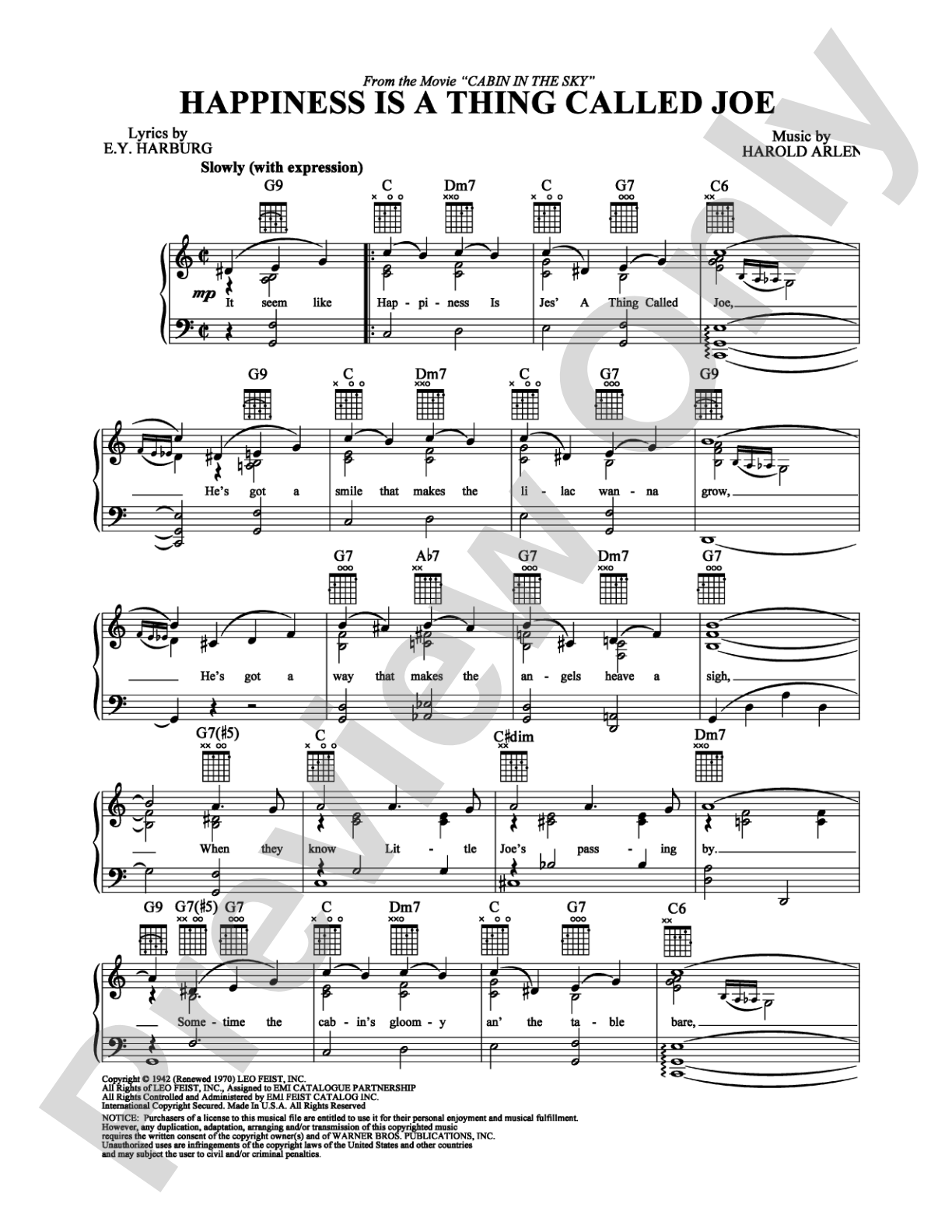
Happiness is a Thing Called Joe: Piano/Vocal/Chords Digital Sheet Music

Happiness is a Thing Called Joe: Piano/Vocal/Chords Digital Sheet Music

Harold Arlen

Item: 00-PS-0000534

Digital Download
$3.99
Description

Happiness is a Thing Called Joe: Piano/Vocal/Chords Digital Sheet Music isn't in MakeMusic Cloud just yet...but it could be. Let us know you'd like to see it, and you'll help shape what comes next. In the meantime, start a free trial and dive into thousands of interactive titles your students can play along with today.

Sample Audio
No sample audio found.
Sample Video
Additional Details
SKU: 00-PS-0000534

More about this title

Why we love this

This standard swings with genuine warmth and optimism, offering pianists and singers a chance to dig into jazz-influenced harmony and rhythmic sophistication without overcomplicating the melody. The included chord symbols make it accessible for pianists who want to learn how to comp changes authentically, while the vocal line remains singable and expressive for performers of all backgrounds.

What to expect

Warm, intimate, and genuinely affectionate. The piece radiates quiet joy without sentimentality, capturing the contentment of everyday happiness. The melody is singable and conversational, while the harmonic language underneath adds sophistication and invites the pianist into a collaborative role.

Who it's for

Pianists who sing or accompanists working with vocalists will find this standard rewarding at the intermediate level and beyond. It suits performers building a jazz or pop standards repertoire and works well for singers exploring classic American songwriting with more harmonic depth than simple lead sheets provide.

How to get the most out of it

  • Shape the melody with rubato rather than rigidity; the lyric "Happiness is a thing called Joe" should feel conversational and genuine, not metronomic.
  • Use the chord symbols to explore comping styles beyond block chords. Rootless voicings and syncopated rhythmic figures bring out the swing feel.
  • Balance the vocal line so it sits comfortably over the piano texture; the accompaniment should support and color the singer's phrases, not compete with them.
  • Pay attention to the harmonic movement under sustained notes; let chord changes breathe and give the lyrics room to land.

How to use it

Program this as a solo performance in cabaret or jazz recital settings, or use it as an accompaniment piece if you have a vocalist preparing a standards-focused concert. It also works well in a mixed program that bridges classical and popular music, giving audiences a chance to hear elegant songwriting outside the classical canon.

Skills your students will build

  • Reading and interpreting jazz chord symbols and rootless voicings
  • Balancing accompaniment texture with vocal phrasing
  • Singing with stylistic awareness in jazz and standards repertoire
  • Developing conversational phrasing and rhythmic flexibility in melody

You May Also Like