Hansel and Gretel: Piano Sheet Music Preview

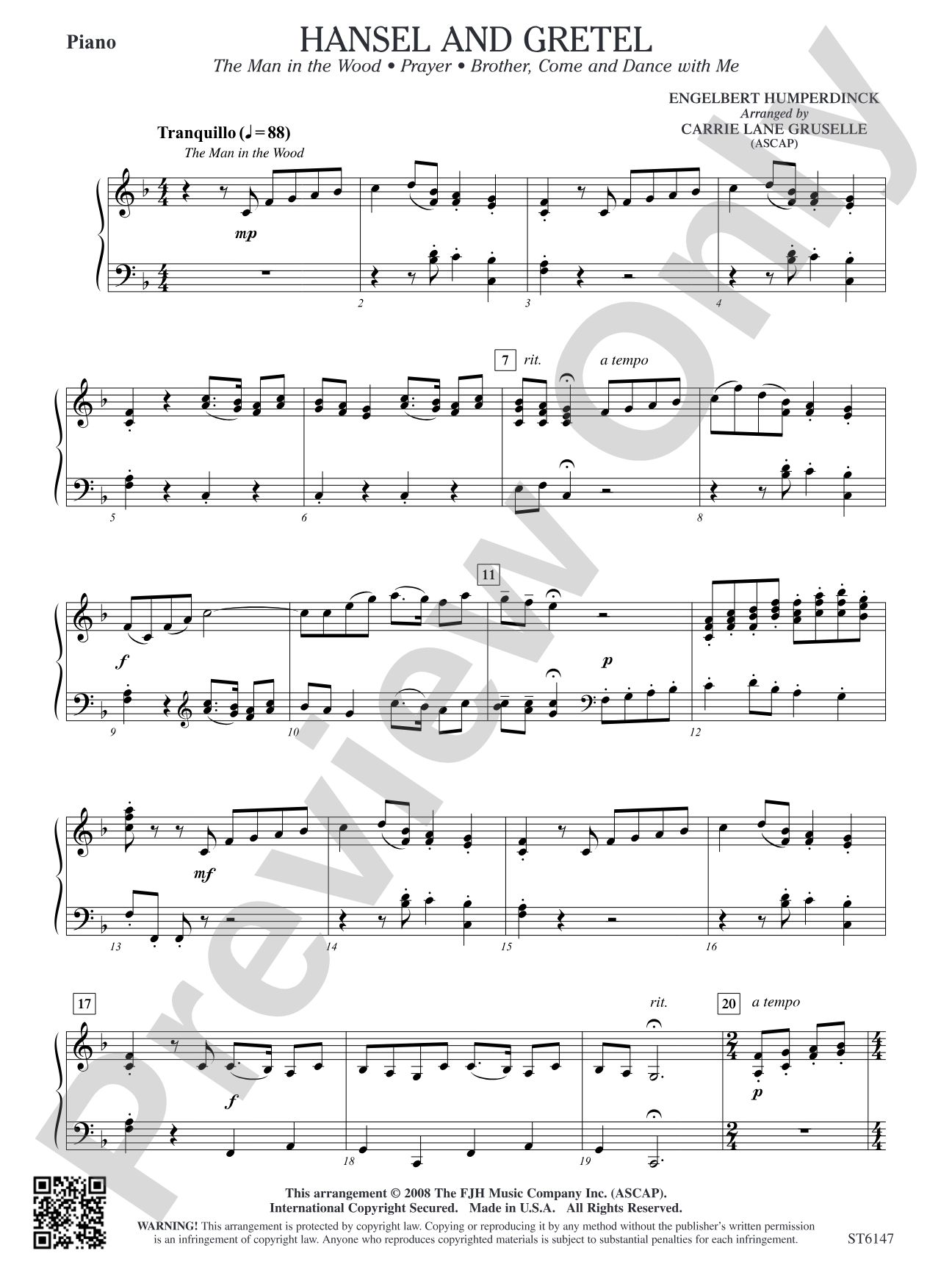
Hansel and Gretel: Piano

By Engelbert Humperdinck / arr. Carrie Lane Gruselle

Grade: 3

Item: 98-PC-DST6147_K

Digital Download
$7.00
Description
Experience the magic of Humperdinck's famous opera based on the fairy-tale story of two lost children, a witch, and a gingerbread house. This arrangement includes three famous melodies: The Man in the Wood, Prayer, and Brother, Come and Dance with Me. Each section is separated by a short pause, so directors can be selective if there is not enough time to perform all three melodies. An absolute gem that has endless educational and musical possibilities!

Hansel and Gretel: Piano isn't in MakeMusic Cloud just yet...but it could be. Let us know you'd like to see it, and you'll help shape what comes next. In the meantime, start a free trial and dive into thousands of interactive titles your students can play along with today.

Sample Audio
0:00
0:00
Sample Video
Additional Details
Series: FJH String Orchestra
Publisher: The FJH Music Company, Inc.
SKU: 98-PC-DST6147_K

More about this title

About the Composer: Engelbert Humperdinck

Engelbert Humperdinck (1854-1921) was a German composer who achieved lasting fame through his operatic masterworks, particularly Hansel and Gretel. His gift lay in crafting memorable melodies and orchestrations that brought fairy-tale narratives to vivid life, earning him recognition across Europe and beyond.

Hansel and Gretel remains one of the most frequently performed operas worldwide, beloved for its accessibility, warmth, and musical sophistication. Humperdinck's ability to weave folk-like themes with orchestral richness makes his work enduringly valuable in music education contexts.

Why we love this

This arrangement captures three of the opera's most singable, recognizable melodies in a format that lets you choose how much time to spend on the work. The separations between sections give you real flexibility for concert planning, and the Grade 3 level means your students can access genuine operatic music without oversimplification.

What to expect

Storybook charm meets genuine orchestral craft. These melodies carry the comfort of a fairy tale while the string writing invites players into a richer musical language than they may have encountered before. There's a warmth and directness that engages both performers and audiences.

Who it's for

String orchestra directors who want to introduce students to operatic repertoire at an accessible level. This works especially well for ensembles in Grades 4-6 that are ready for music with real narrative and emotional character but don't yet tackle more complex arrangements.

How to get the most out of it

  • Balance the lyrical quality of each melody by drawing out the string tone; these themes deserve warmth and connection, not rushing through the phrases.
  • Work the transitions between melodies deliberately. Since sections are separated by pauses, use that space to reset articulation and dynamics so each theme feels fresh.
  • Highlight any internal solos (particularly in Prayer if your arrangement includes them) so they sing above the accompaniment texture.
  • Experiment with light vibrato from your upper strings during the more sustained passages to add maturity and depth to the familiar tunes.

How to use it

This arrangement serves beautifully as a standalone family concert piece or as part of a thematic program exploring storytelling in music. You might also pair it with other Grade 3 works to build a concert that showcases your ensemble's growing musicianship, or use individual melodies as a teaching tool for style and phrasing.

Skills your students will build

  • Sustaining long melodic lines with consistent tone and intonation
  • Balancing accompaniment against soloists
  • Executing clean section transitions
  • Interpreting baroque and romantic operatic style on string instruments
  • Managing dynamic contrast across different phrases and themes

You May Also Like