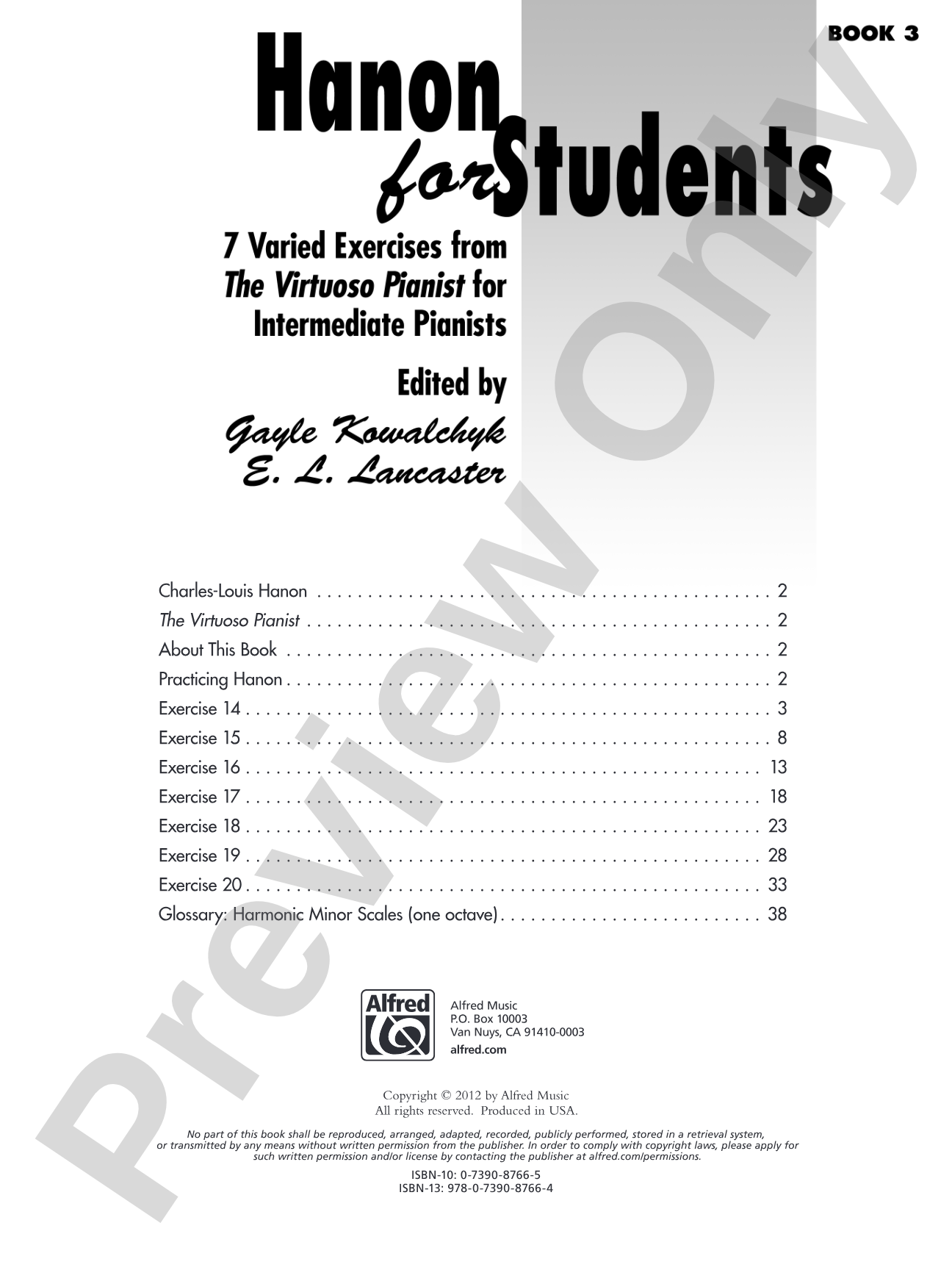
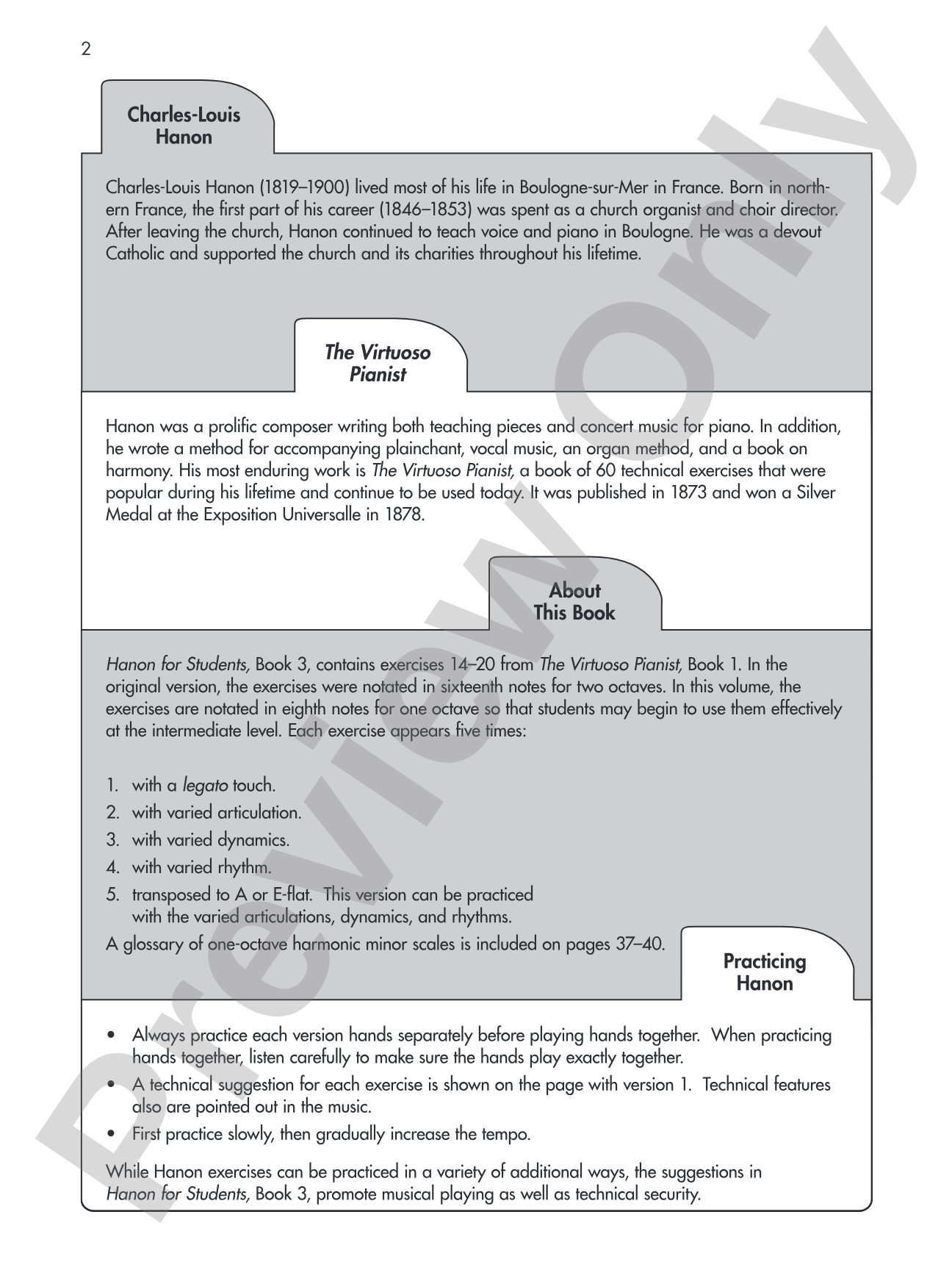
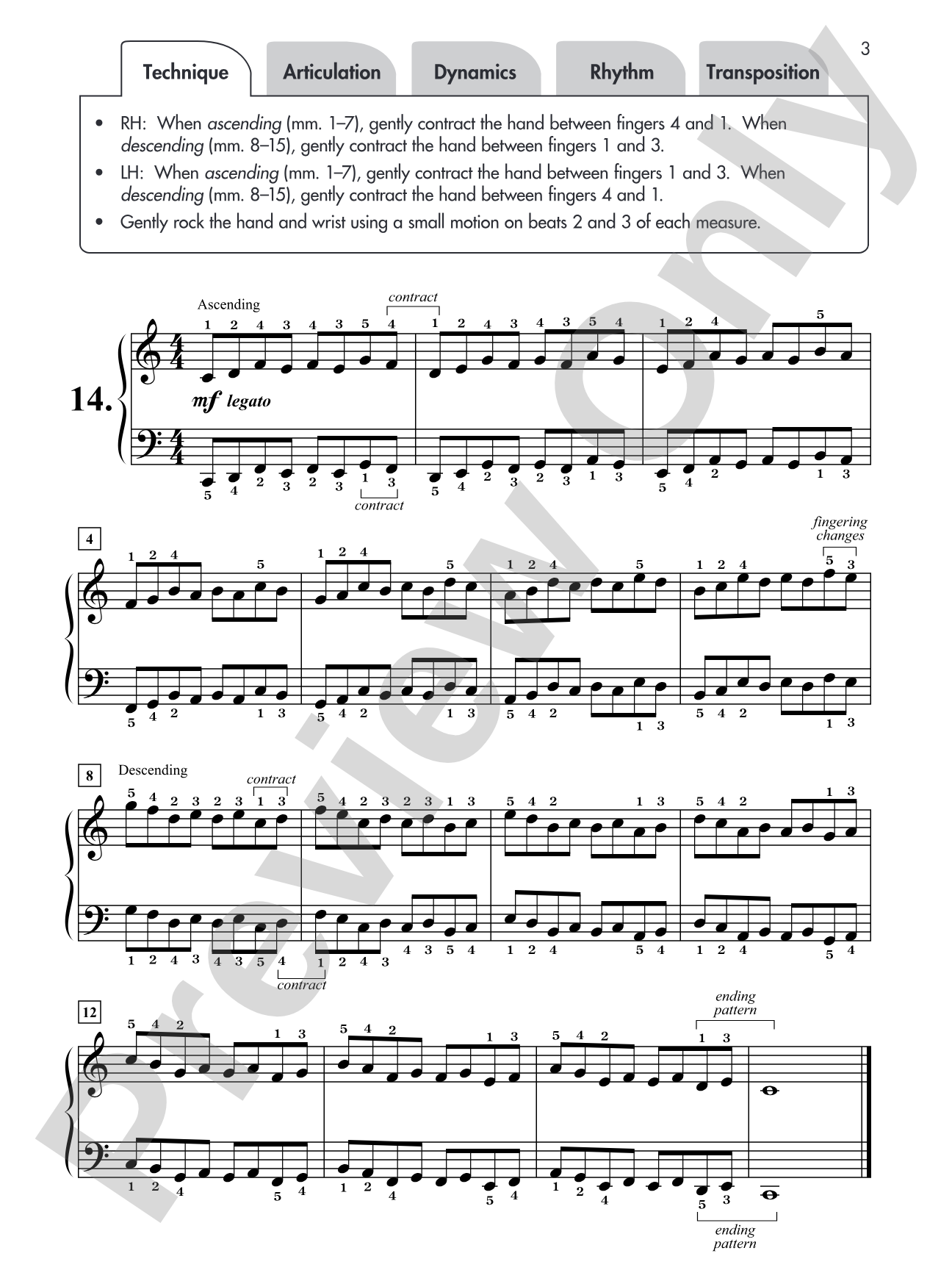
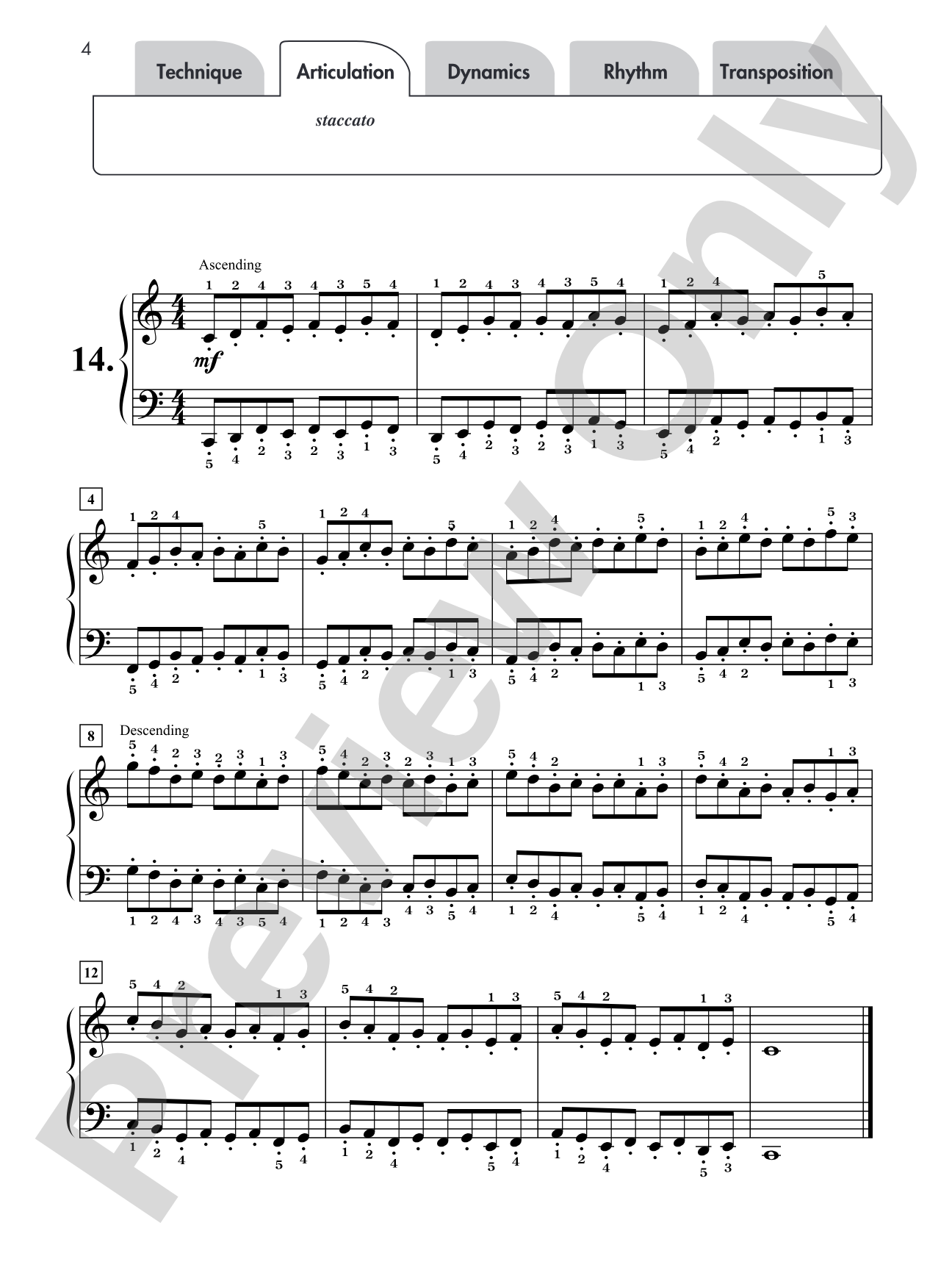
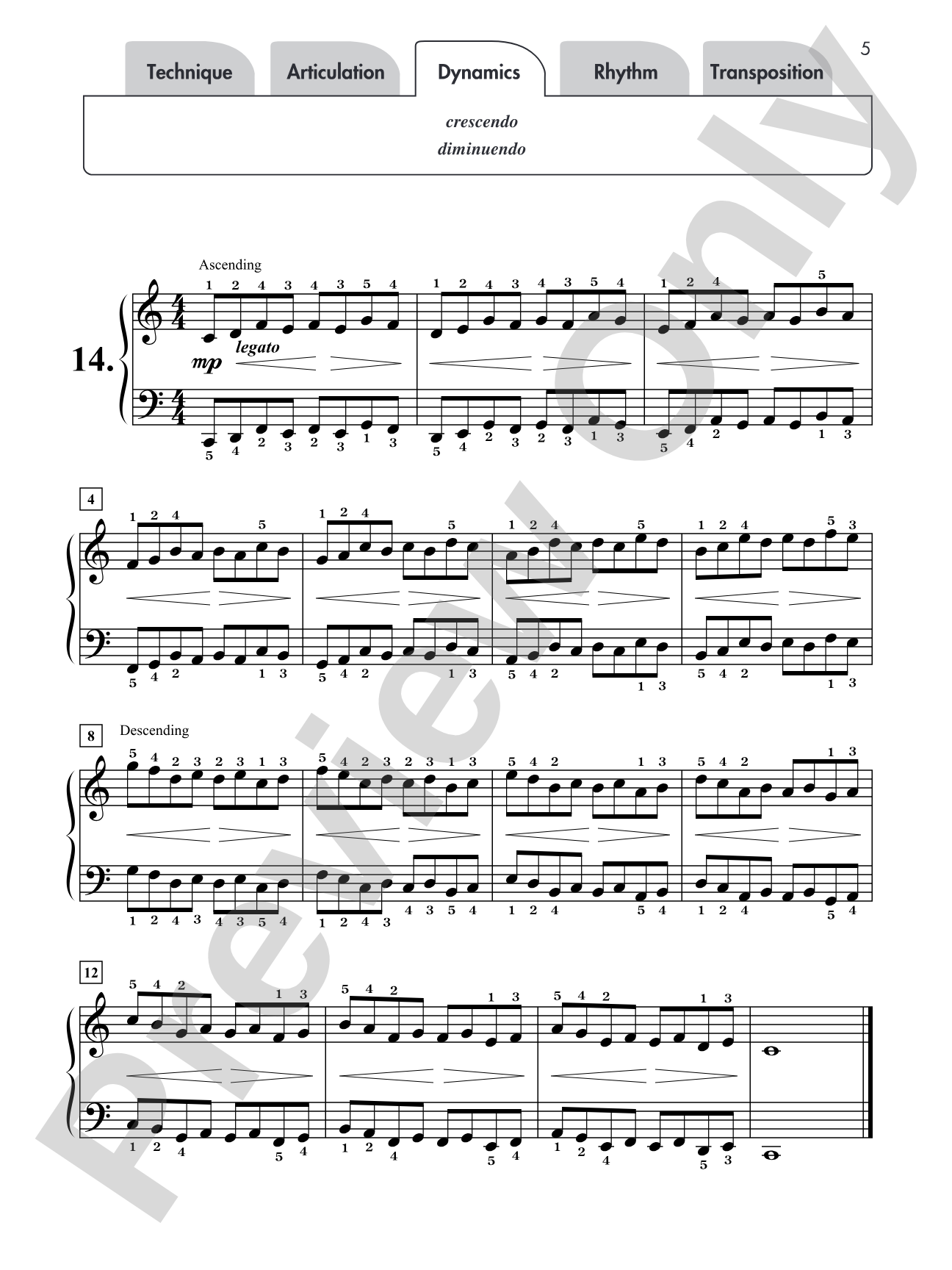
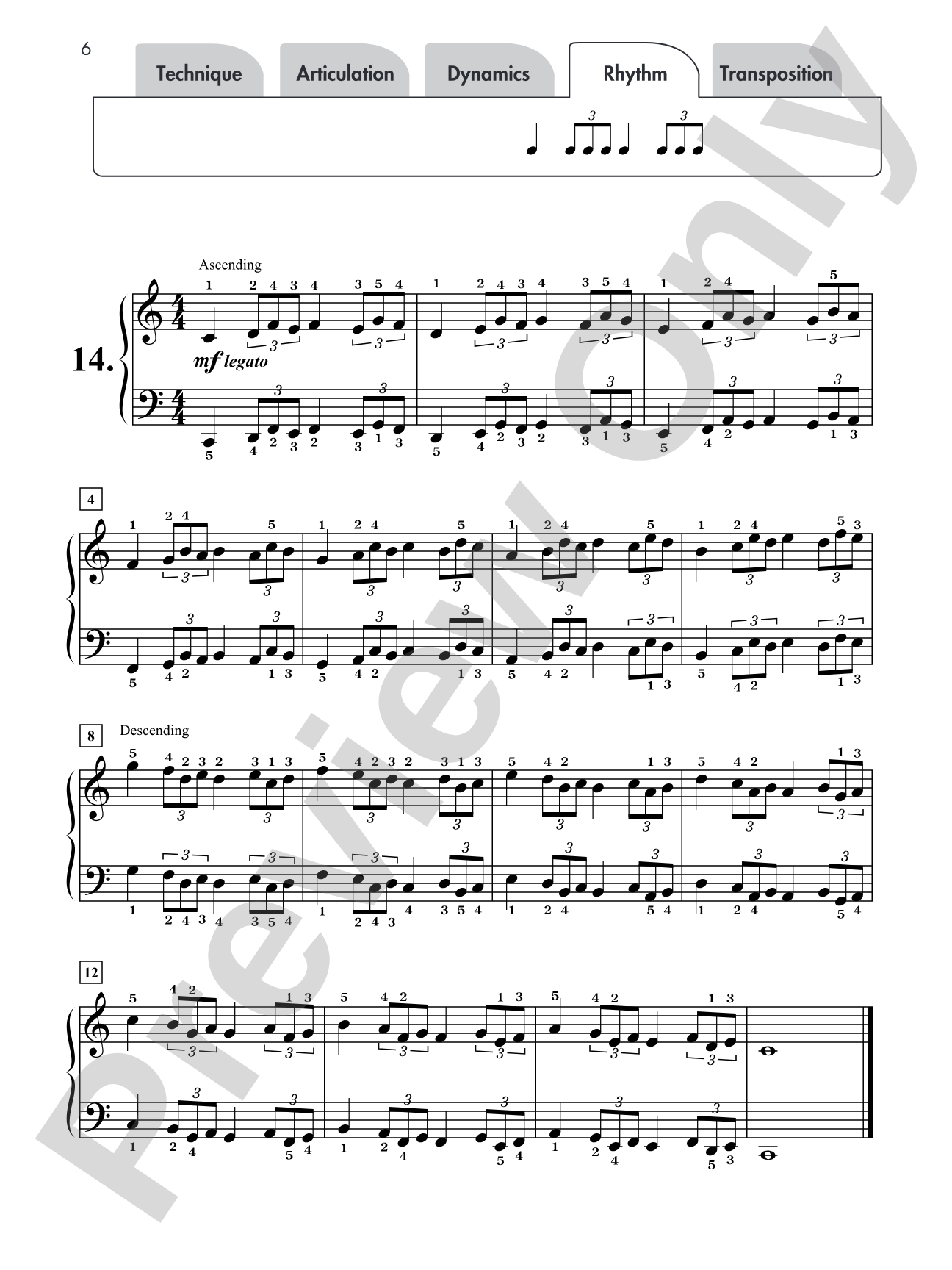
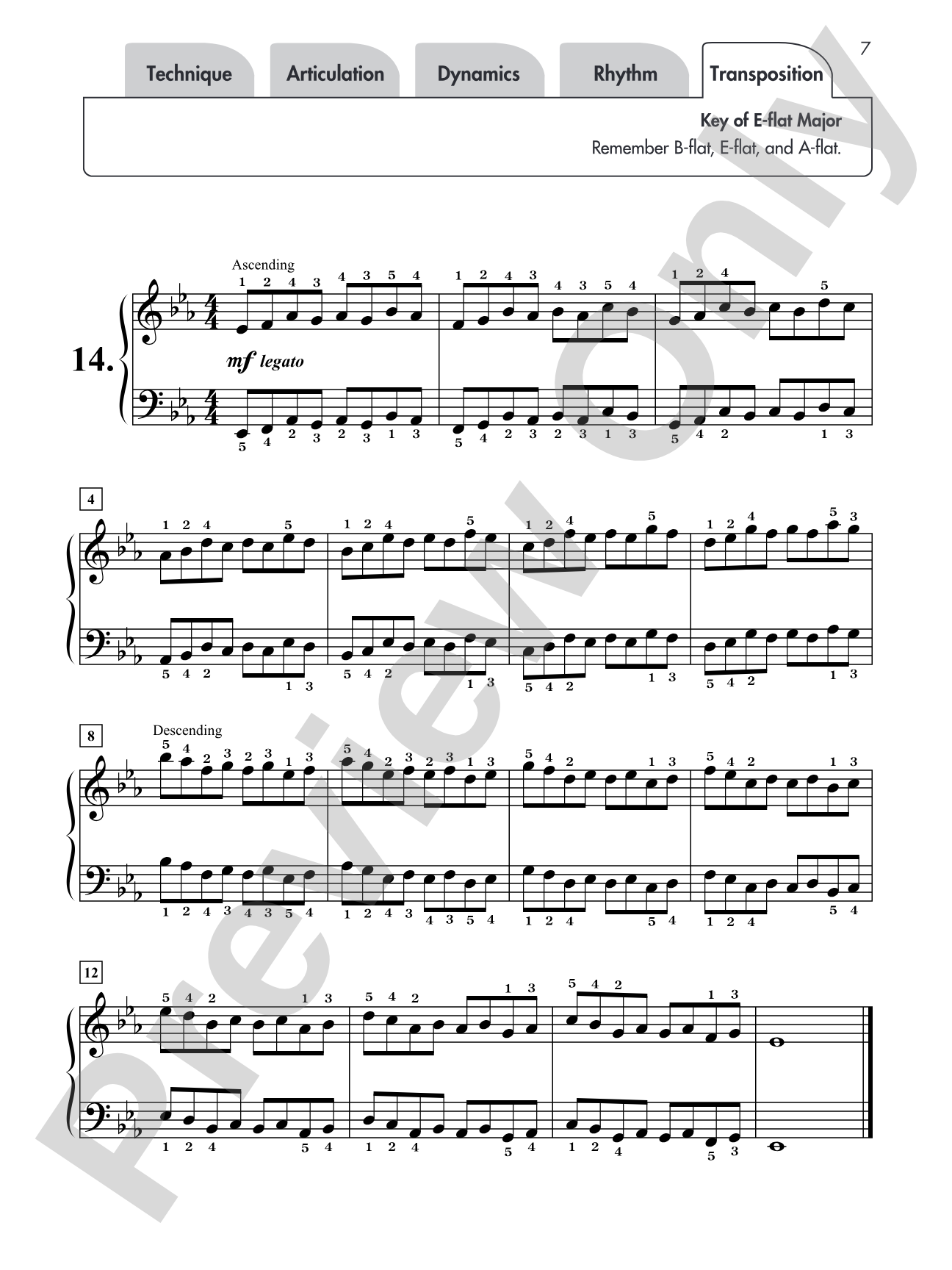
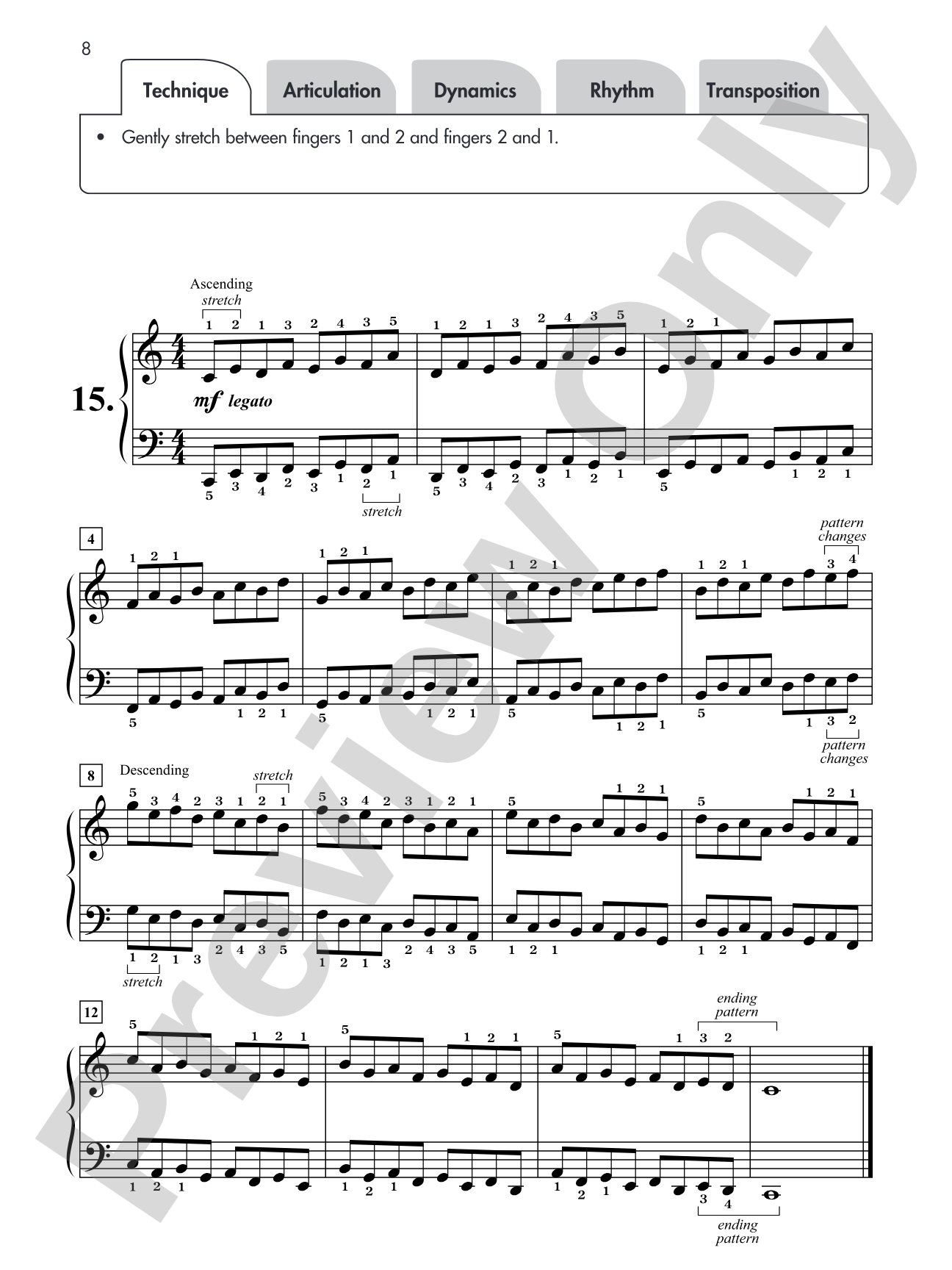
Hanon for Students, Book 3, contains exercises 14--20 from The Virtuoso Pianist, Book 1. The exercises are notated in eighth notes for one octave so that students may begin to use them effectively at the intermediate level. Each exercise appears five times to be played with a legato touch, varied articulation, varied dynamics, varied rhythm, and transposed to E-flat or A.
"This new series differs from others in that it encourages thoughtful and musical practicing." -Yiyi Ku, MusicTeachersHelper.com
Discover MakeMusic Cloud: thousands of interactive titles your students can play along with today.
Carl Czerny's The Virtuoso Pianist stands as one of the most systematic and enduring collections of technical studies ever written for piano. First published in the 19th century, these exercises distill core pianistic challenges into progressively refined patterns, making them invaluable for building independence, evenness, and control across the keyboard.
This edition reimagines Czerny's work for contemporary students by extracting seven exercises from Book 1 and presenting them in a format designed for active, thoughtful engagement rather than mechanical repetition. The five variations of each exercise (legato, articulated, dynamic, rhythmic, and transposed versions) transform what could feel like rote drilling into intentional musical practice.
Why we love this
The genius here is structural: instead of asking students to mechanically repeat an exercise until their fingers tire, each variation reframes the same technical content in a new light, keeping the mind engaged and making the work feel purposeful. Intermediate pianists often coast through technique books without really listening to what they're playing; this design forces musicality into every repetition.
What to expect
Clean, efficient, and surprisingly musical for a technique book. Each exercise feels like a small puzzle that reveals something new about finger independence and hand position with every variation. The work builds momentum without exhaustion.
Who it's for
Intermediate pianists ready to move beyond single-repetition technique work and capable of following multi-layered instructions within a single exercise. Teachers seeking a more musical alternative to traditional Hanon presentations will find this especially useful for students who need structure but rebel against mindless drilling.
How to get the most out of it
Treat the legato version as your baseline for tone quality, then measure every other articulation against it to ensure clarity doesn't collapse into scratchiness.
When transposing to E-flat or A, don't sight-read through; map out the new key signature and fingering patterns first so you're solidifying transposition as a skill, not just moving your hands.
Use the dynamic variations to explore your instrument's palette at different volume levels, paying attention to how tone color shifts as you crescendo and diminuendo.
Approach the rhythmic variations slowly at first, letting each new pattern settle before bringing tempo back up; rushing these undermines their purpose as coordination builders.
How to use it
Assign one exercise per week during lessons, completing all five variations across several practice days rather than in one session. This approach fits naturally into a year-long curriculum where technique, repertoire, and musicianship develop in parallel. These studies pair well with intermediate sonatinas or early romantic pieces, grounding the technical vocabulary students hear and play in their primary repertoire.
Skills your students will build
Finger independence and even articulation across fast scalar passages
Transposition in multiple keys (E-flat and A) within a fixed technical pattern
Dynamic control and tonal shaping across a single technical figure
Legato touch combined with clarity in staccato and accent markings
Rhythmic flexibility and subdivision independence through altered rhythmic patterns
Consistent hand position and wrist alignment during extended passages
You May Also Like
Scan to Complete Your Purchase
Use your phone's camera to scan the code below
You'll log in on your phone and the order will be added to your account