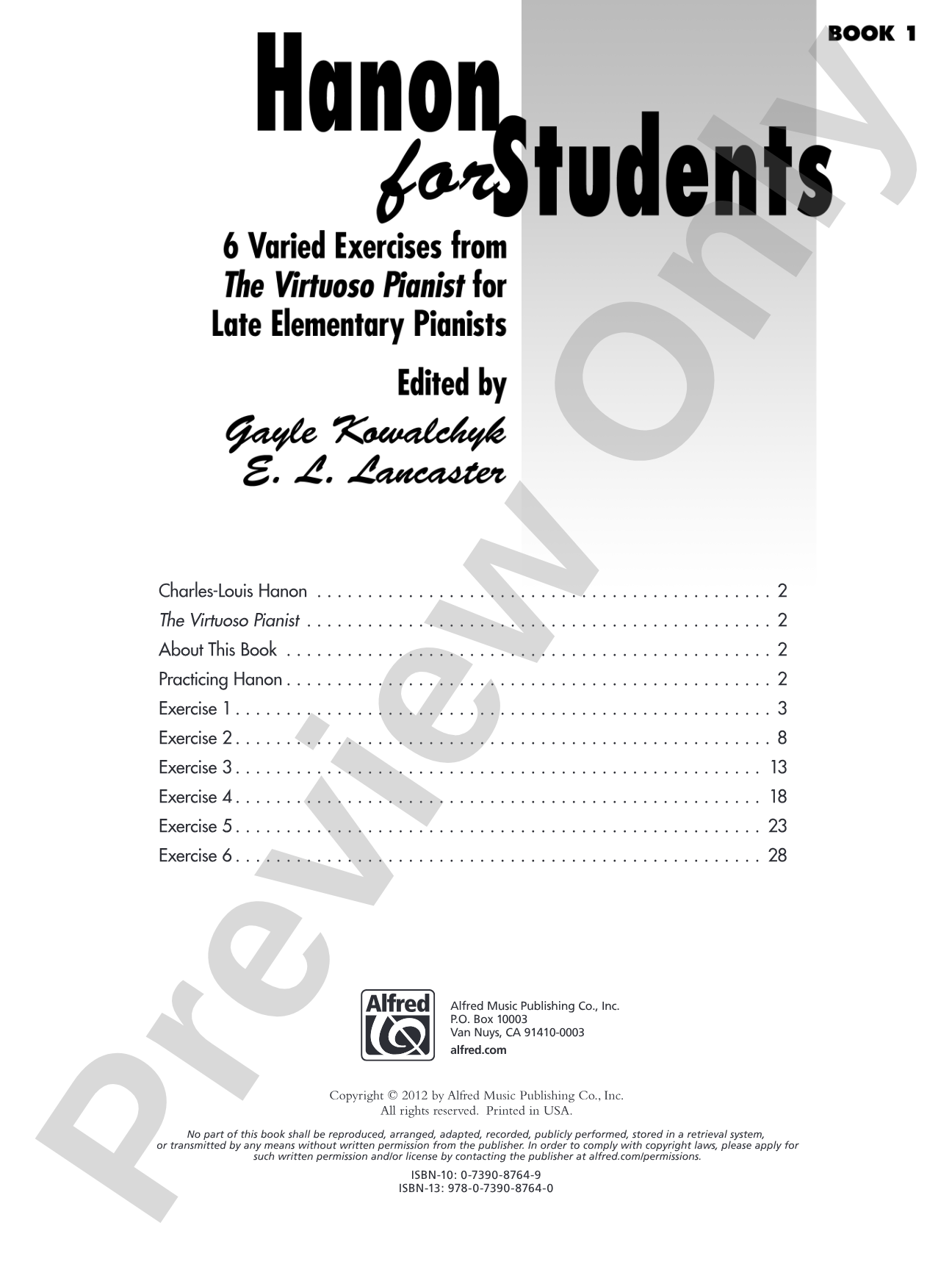
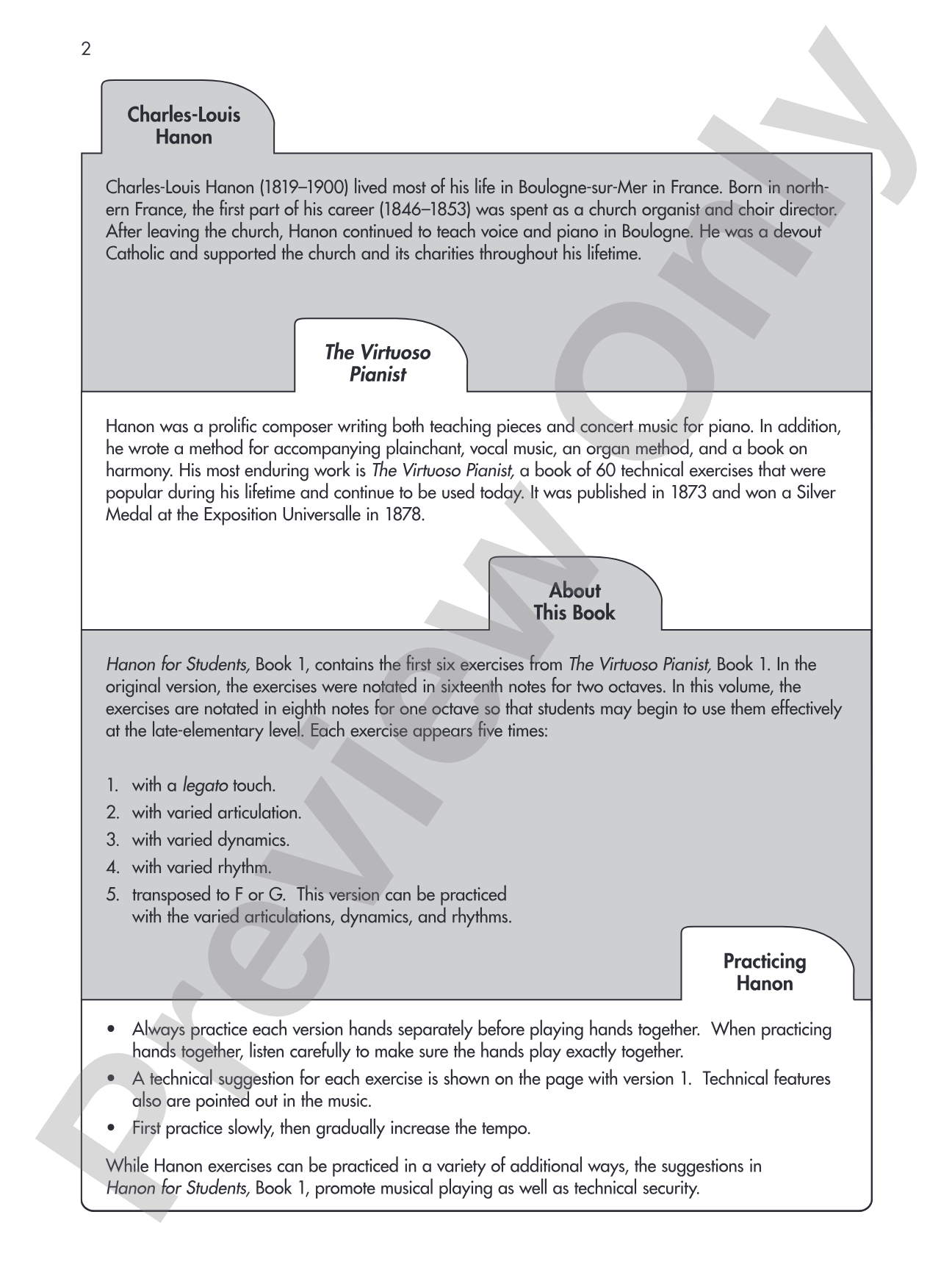
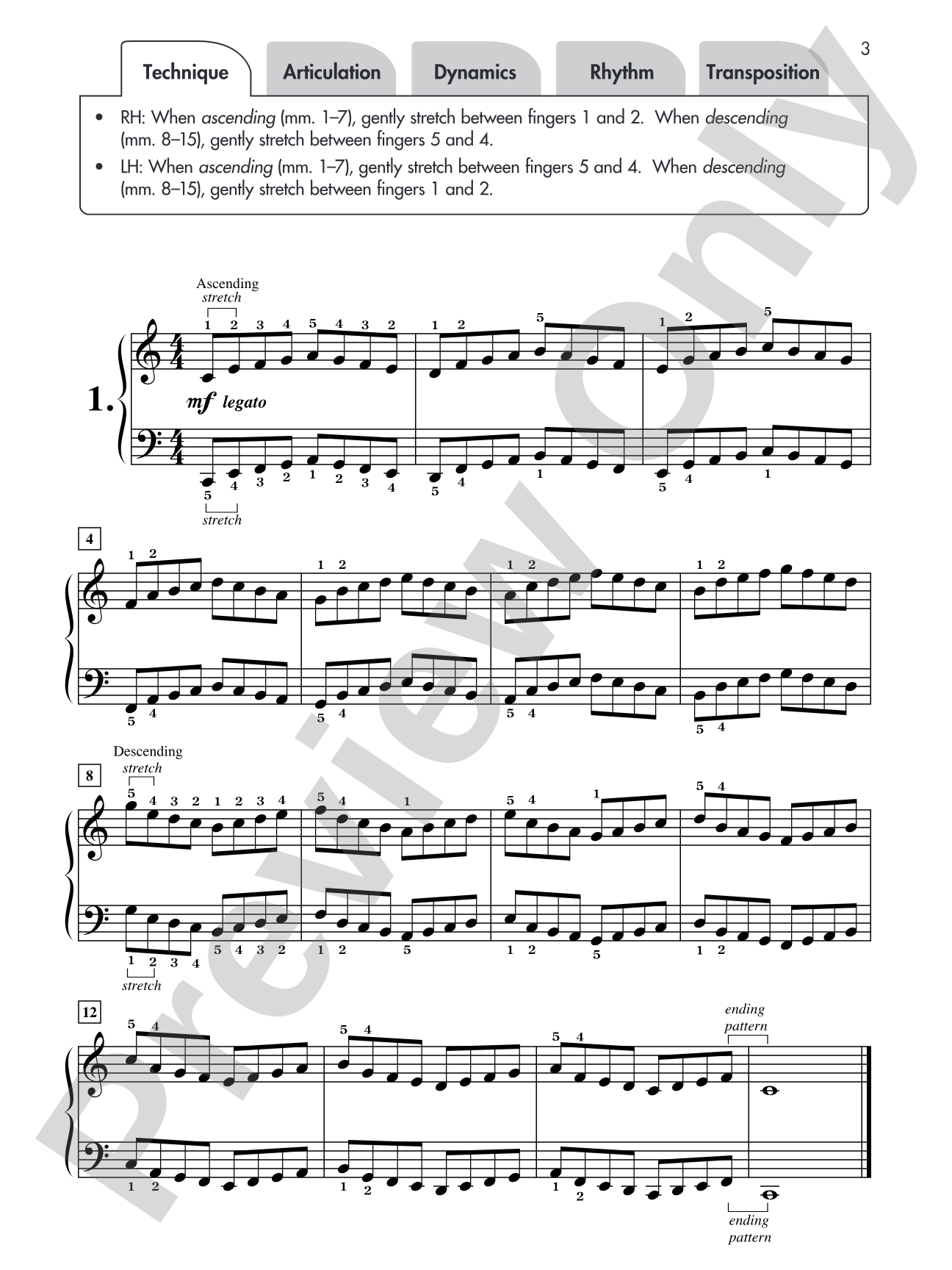
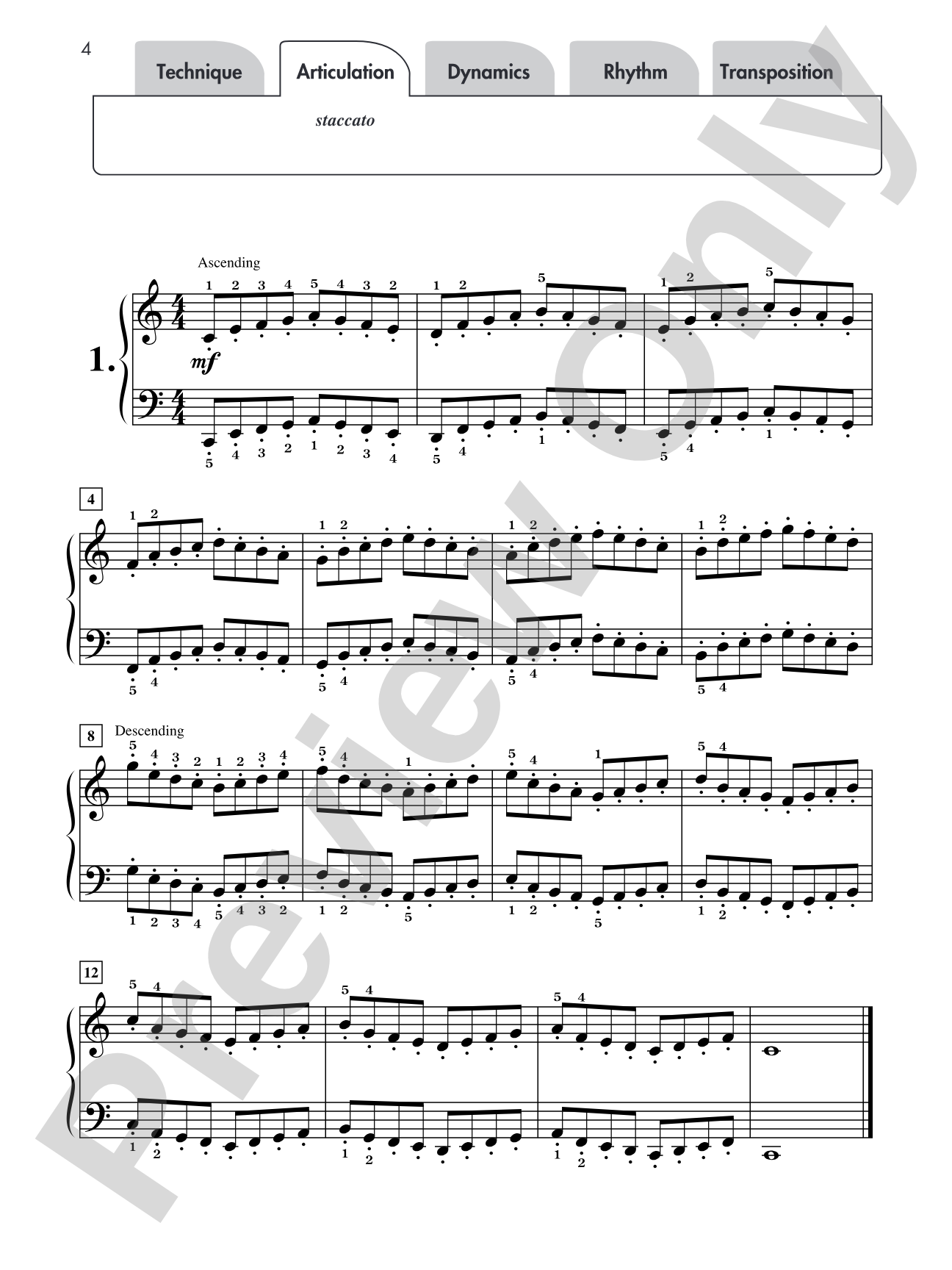
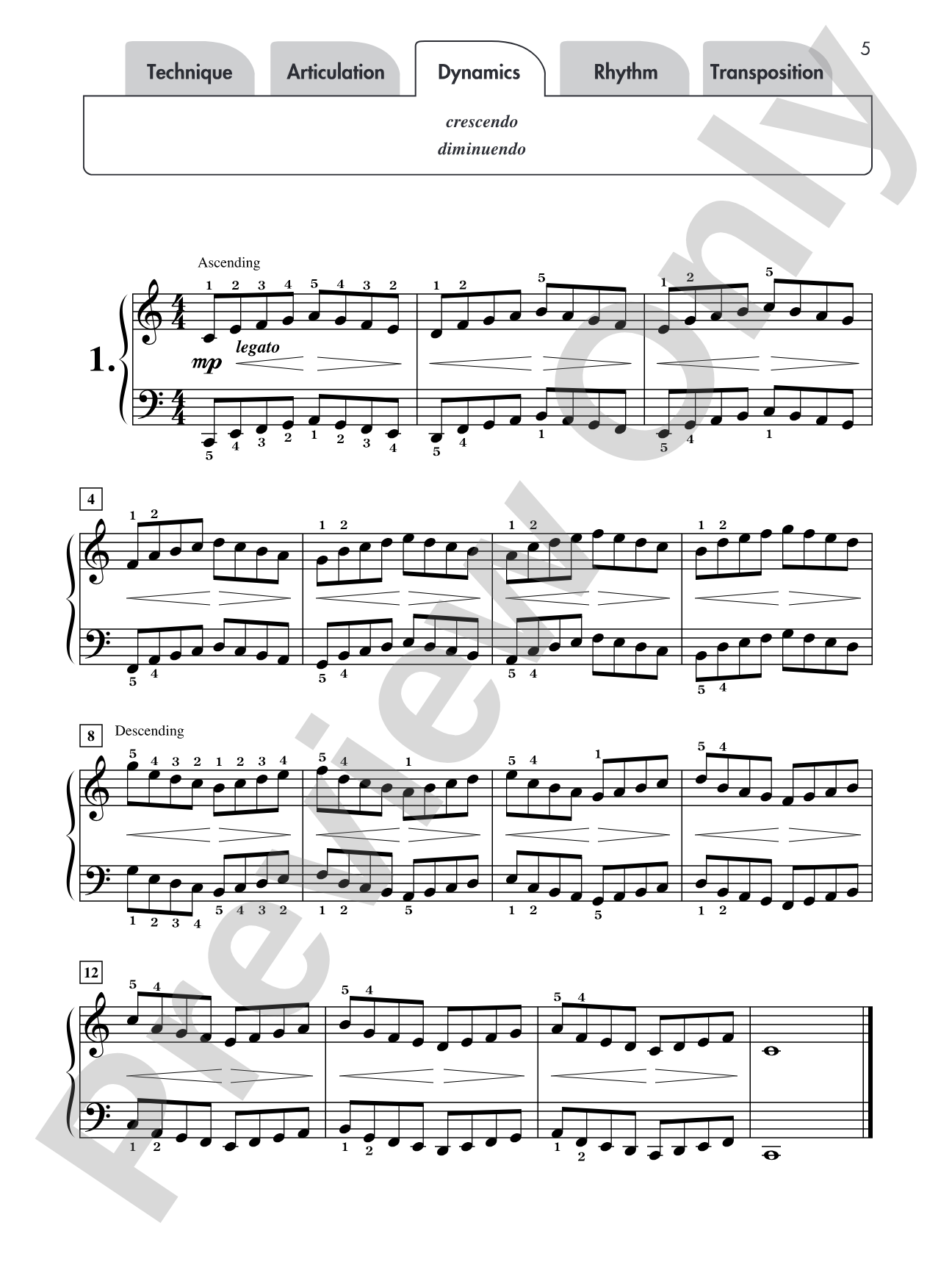
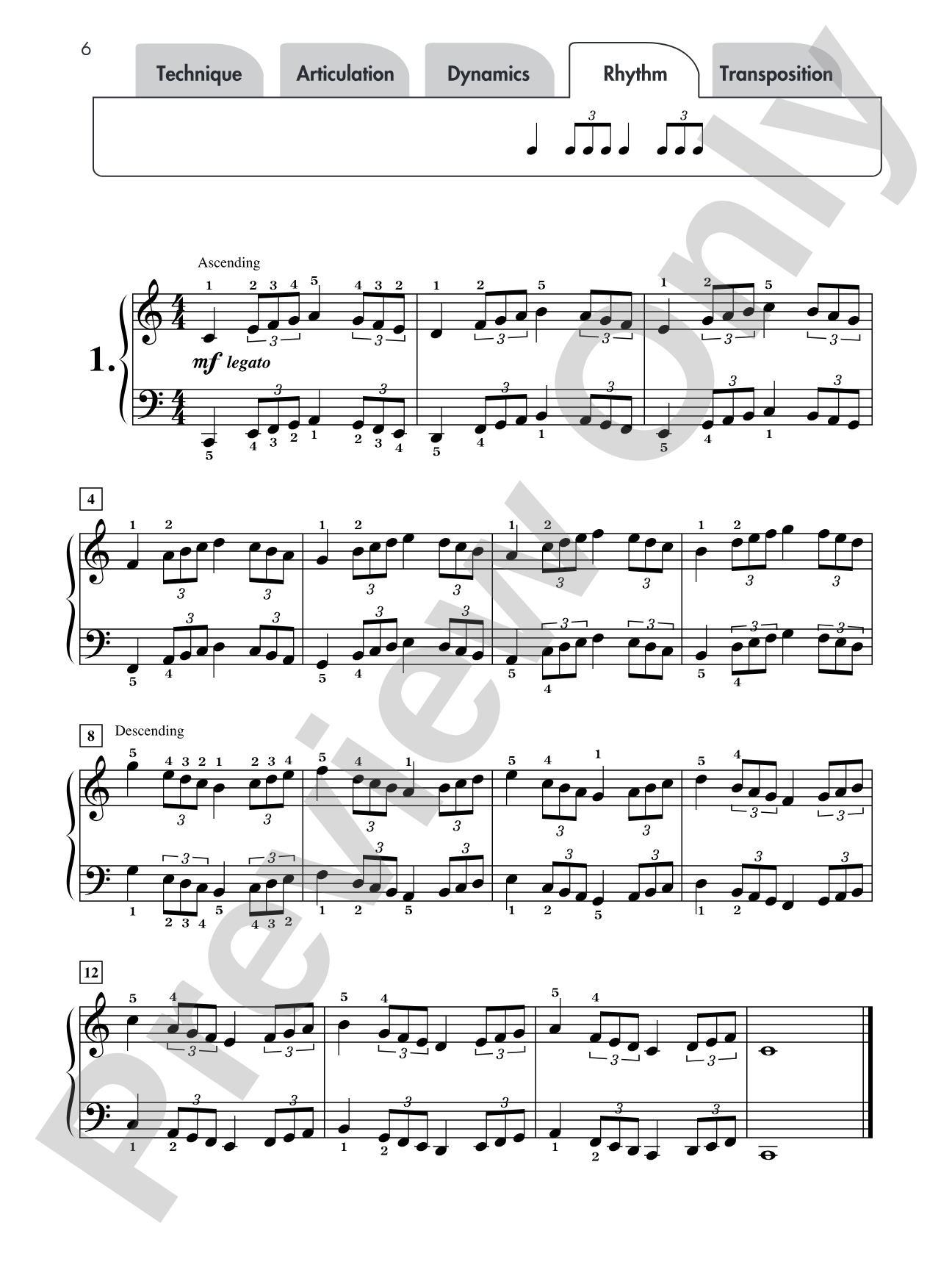
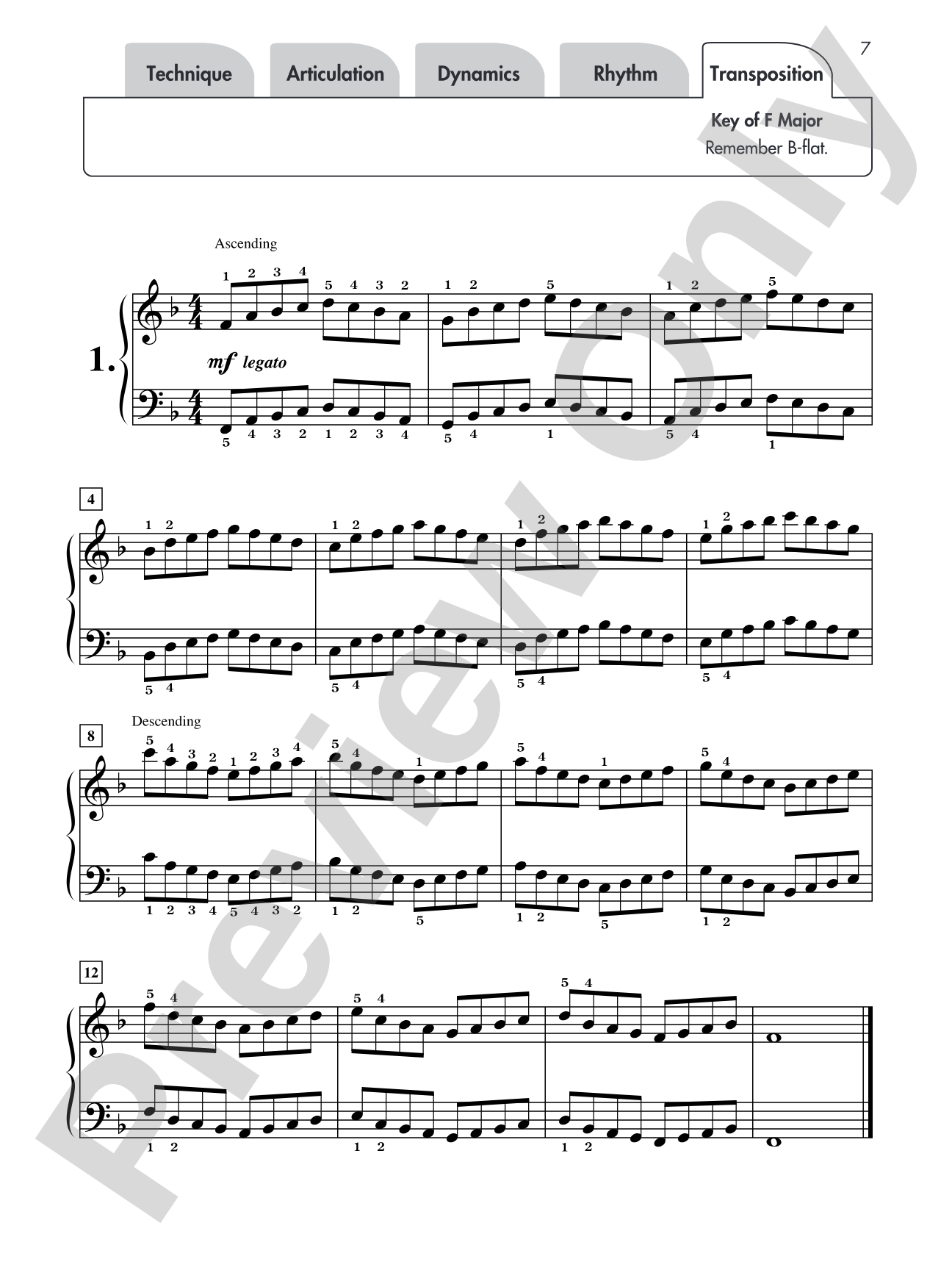
Hanon for Students, Book 1, contains the first six exercises from The Virtuoso Pianist, Book 1. The exercises are notated in eighth notes for one octave so that students may begin to use them effectively at the late-elementary level. Each exercise appears five times to be played with a legato touch, varied articulation, varied dynamics, varied rhythm, and transposed to F or G.
"This new series differs from others in that it encourages thoughtful and musical practicing." -Yiyi Ku, MusicTeachersHelper.com
Discover MakeMusic Cloud: thousands of interactive titles your students can play along with today.
Charles-Louis Hanon (1819-1900) was a French pianist and pedagogue whose exercise collection, The Virtuoso Pianist, became one of the most widely used technique books in piano education. First published in the 1860s, Hanon's systematic approach to building finger independence, evenness, and dexterity shaped generations of pianists. His exercises remain foundational because they isolate fundamental technical challenges without demanding advanced musical interpretation, allowing students to focus entirely on the physical and mental discipline required for clean, controlled playing.
Hanon's legacy rests on his understanding that technique and musicality need not be separate pursuits. Rather than treating finger exercises as mechanical drills, he designed them to develop the motor control necessary for expressive playing. This philosophy continues to inform piano pedagogy worldwide, and contemporary arrangements like this one honor Hanon's original insight while adapting his work to match the capacities and musical sensibilities of modern young learners.
Why we love this
This book strips away the intimidation factor that makes students avoid traditional Hanon. By presenting just the first six exercises in accessible late-elementary range and eighth-note notation, it lets young pianists build genuine finger strength and independence without feeling overwhelmed. The built-in repetition structure (legato, articulated, dynamic variation, rhythmic variation, and transposition) transforms what could feel like mindless drilling into thoughtful musical work that actually engages the student's ear and imagination.
What to expect
Focused and purposeful. These exercises feel straightforward at first, then increasingly rewarding as the student discovers how each articulation, dynamic shift, and transposition reveals something new about finger control and coordination. There is a quiet confidence in the simplicity; nothing distracts from the work itself.
Who it's for
Late-elementary pianists ready to work on finger independence and evenness but who need a scaled-down entry point to Hanon's legendary technique building. Teachers who want their students to experience real technical progress through systematic, thoughtful repetition without overwhelming them with dense fingerwork or advanced hand positions.
How to get the most out of it
Begin each new articulation or dynamic variation with a clear mental image of the desired sound before playing; avoid simply repeating the exercise mechanically.
When transposing to F or G, think through the fingering pattern in advance rather than trying to adjust on the fly, which builds the pattern recognition that transfers to sight-reading.
Use the legato version as your baseline; approach each subsequent version as a new challenge rather than a repeat, and listen for consistency of tone across all finger pairs.
Count aloud during rhythmic variations to lock in the pattern, especially when moving between even eighths and other rhythmic groupings.
How to use it
Assign a single exercise as a weekly technical focus over the course of several lessons, working through all five variations before moving to the next one. This creates a spiral curriculum where the same musical gesture deepens over time, and the student builds ownership of the material rather than rushing through disconnected exercises.
Skills your students will build
Finger independence across all five digits
Legato and staccato articulation control
Playing with consistent evenness and tempo stability
Dynamic control in isolated finger movements
Transposition across multiple keys
Rhythmic flexibility and counting precision
You May Also Like
Scan to Complete Your Purchase
Use your phone's camera to scan the code below
You'll log in on your phone and the order will be added to your account