
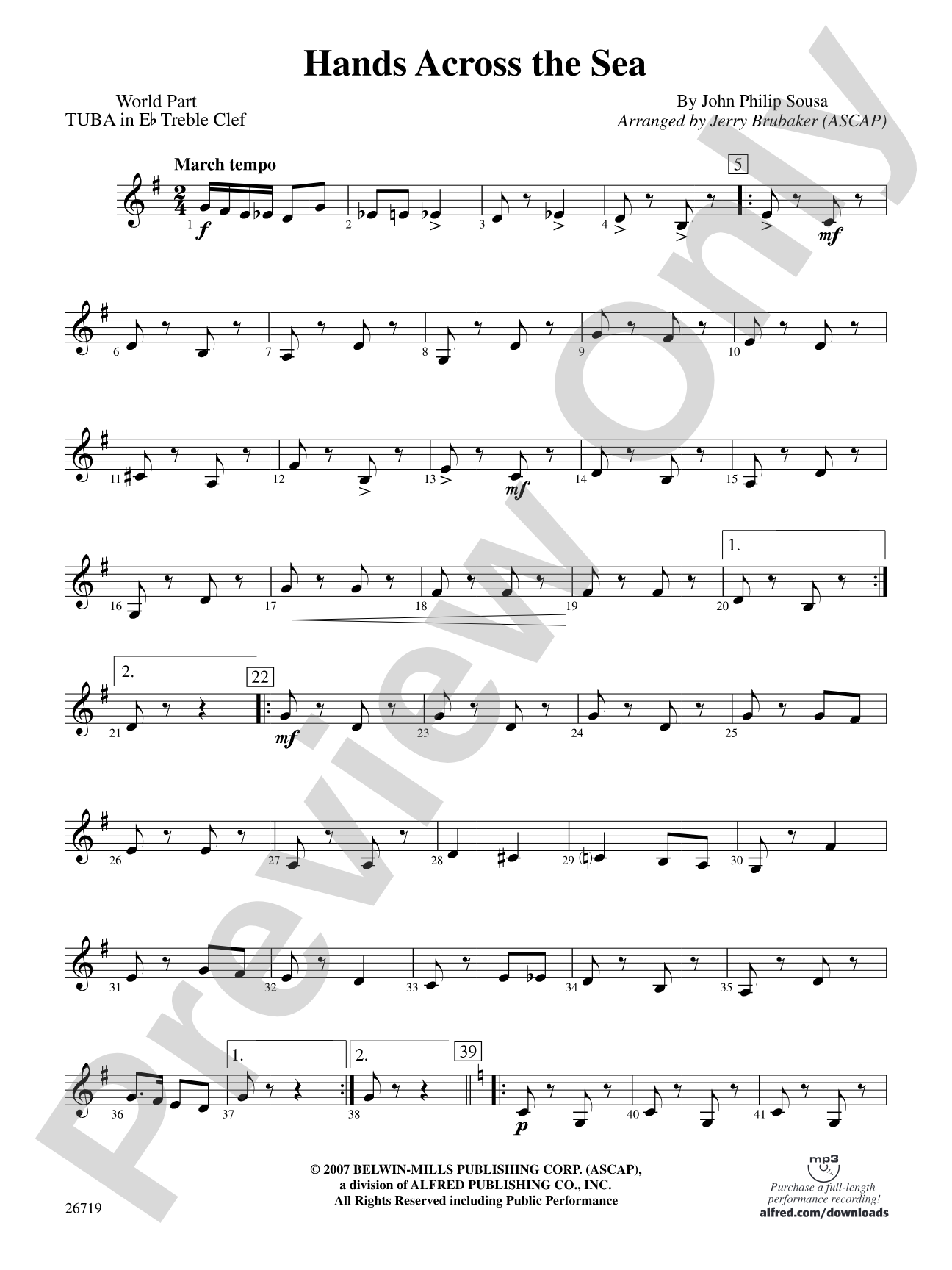
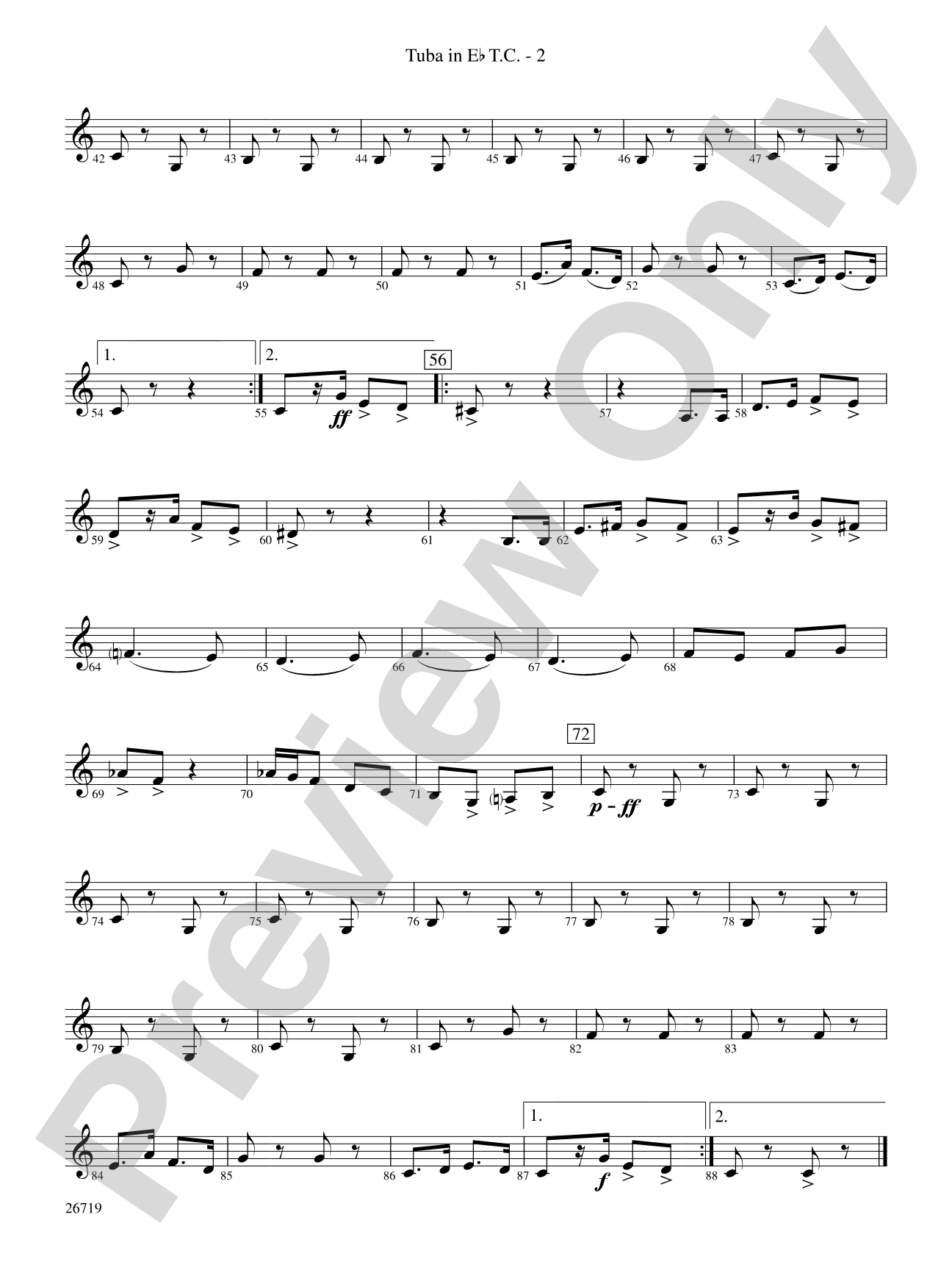

Hands Across the Sea: (wp) E-flat Tuba T.C.
By John Philip Sousa / arr. Jerry Brubaker
Grade: 2 (Easy)
Item: 00-PC-0001192_wpTBETC
$3.00
Pickup currently not available
Description
Jerry Brubaker has prepared this dynamic Sousa march for developing bands. The energy is retained while the rhythms, notes and articulations have been simplified for young players. As the title implies, Hands Across the Sea was originally composed to express eternal friendship through music to our allies abroad. (3:00) This title is available in MakeMusic Cloud.


Don't just read it, hear it, play along with it, and watch your students grow with it. In MakeMusic Cloud, Hands Across the Sea: (wp) E-flat Tuba T.C. comes alive with professional accompaniment, adjustable tempo, and built-in practice tools that turn solo practice into real progress.
Open in the Player
Jump straight in and assign it today.
Start Your Free Trial
Open this title and explore the full library in minutes.
Sample Audio
1
Audio File
--:--
0:00
0:00
Sample Video
Additional Details
Series:
Belwin Young Band
Publisher:
Alfred Music
Page Count:
117
SKU:
00-PC-0001192_wpTBETC
More about this title
About the Composer: John Philip Sousa
John Philip Sousa (1854-1932) stands as America's most celebrated band composer and conductor. His marches defined the genre and remain central to band repertoire worldwide, performed by ensembles from elementary schools to professional military bands. Sousa's gift was writing music that energized audiences while remaining accessible to developing musicians, a balance that has kept his works vital across generations.
Beyond composition, Sousa championed American band music as an art form worthy of concert halls. His prolific output includes over 140 marches, operettas, and concert works. His influence on band education is immeasurable; his marches teach musicianship, precision, and joy in ensemble playing.
Why we love this
Sousa marches carry an infectious spirit that Grade 2 players rarely encounter in other repertoire at their level, and Brubaker's arrangement preserves the infectious energy while making the part writing genuinely playable for developing ensembles. The rhythmic clarity and straightforward harmonic structure let young musicians focus on stylistic execution, articulation, and sectional balance instead of fighting complex technical demands. Programming an authentic march teaches concert deportment and audience connection in ways that many modern Grade 2 pieces cannot match.
What to expect
Hands Across the Sea radiates patriotic warmth and ceremonial grandeur without bombast. The march unfolds with clarity and purpose, inviting players to feel part of a larger musical tradition while the straightforward part writing allows young musicians to contribute meaningfully to ensemble sound. The trio offers a moment of lyrical relief before the return of the march, creating the satisfying architecture young players need to understand musical form.
Who it's for
Grade 2 concert bands seeking authentic march repertoire that does not demand advanced technical facility. Directors working with developing ensembles benefit from Brubaker's careful simplification, which removes obstacles without diminishing Sousa's compositional intent. This arrangement also serves community and non-selective bands where musical growth and confidence matter more than technical complexity.
How to get the most out of it
- Conduct with a clear, buoyant beat that lets the ensemble feel the march's natural momentum. Avoid over-articulating the downbeat; instead, bring energy to the forward motion between beats.
- Balance the instrumentation so that melodic lines sing over foundational harmonic voices. In Sousa marches, the melody should always be heard, which requires intentional section-to-section adjustment.
- Mark articulations consistently across sections during early rehearsals. Young players often interpret legato and staccato differently; unifying these markings strengthens ensemble sound.
- Work the trio section separately to establish its character as a contrast to the march proper. Many young bands rush the trio; a clear, singing approach differentiates it musically.
How to use it
Feature this march as a standalone concert opener or closer to establish a strong, confident ensemble identity. It pairs well with a contrasting work in a concert program, particularly a ballad or folk-based arrangement that gives the program tonal variety. Consider programming it for festival or concert competitions where authentic American repertoire and ensemble musicianship receive recognition.
Skills your students will build
- Sousa march idiom and style conventions (articulation, phrasing, tempo flexibility)
- Ensemble balance and blend in four-part harmonic writing
- Reading and executing consistent articulations across a full concert band score
- Sectional independence while maintaining vertical alignment
- Understanding formal structure (march, trio, march return)