
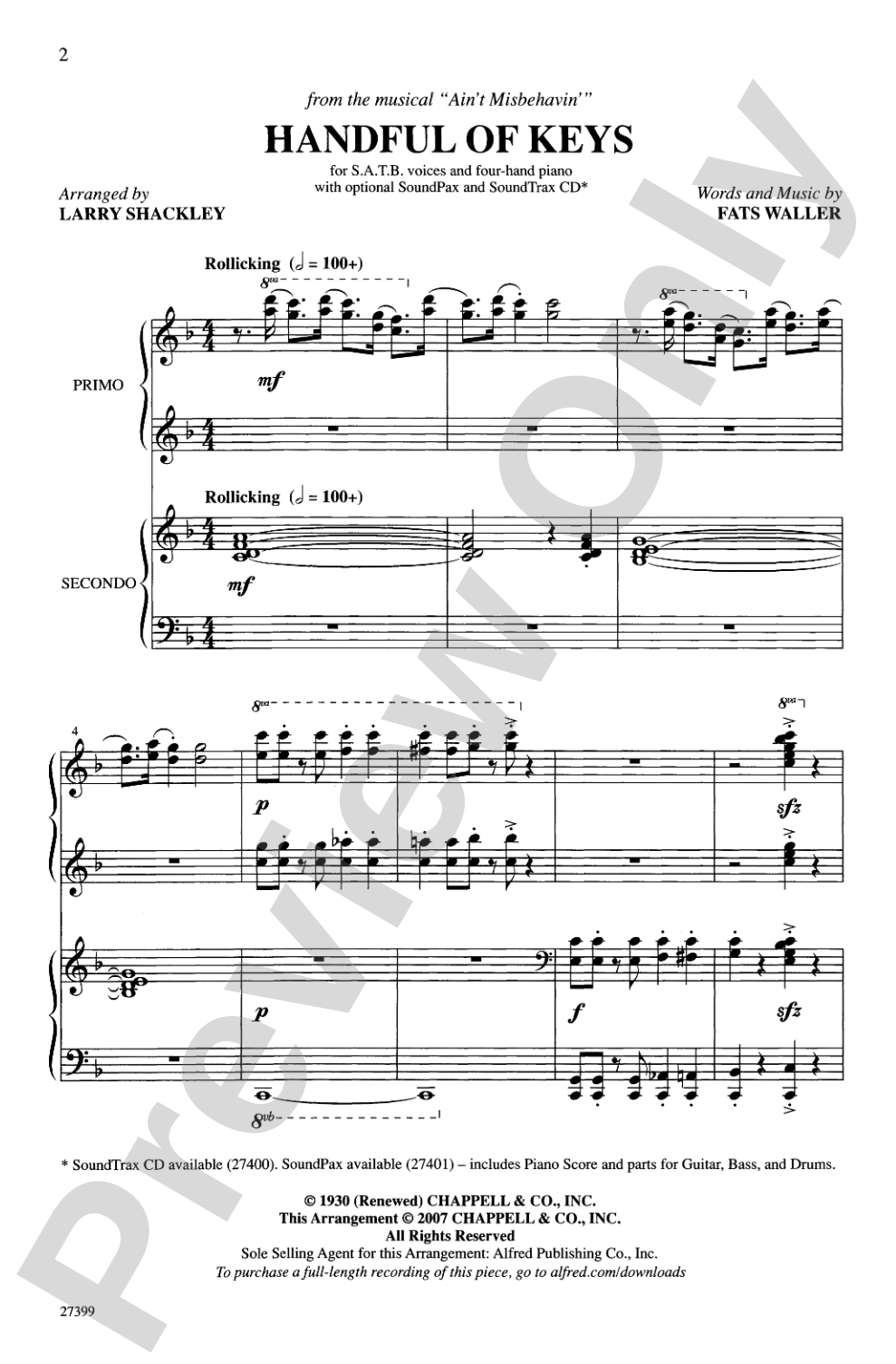
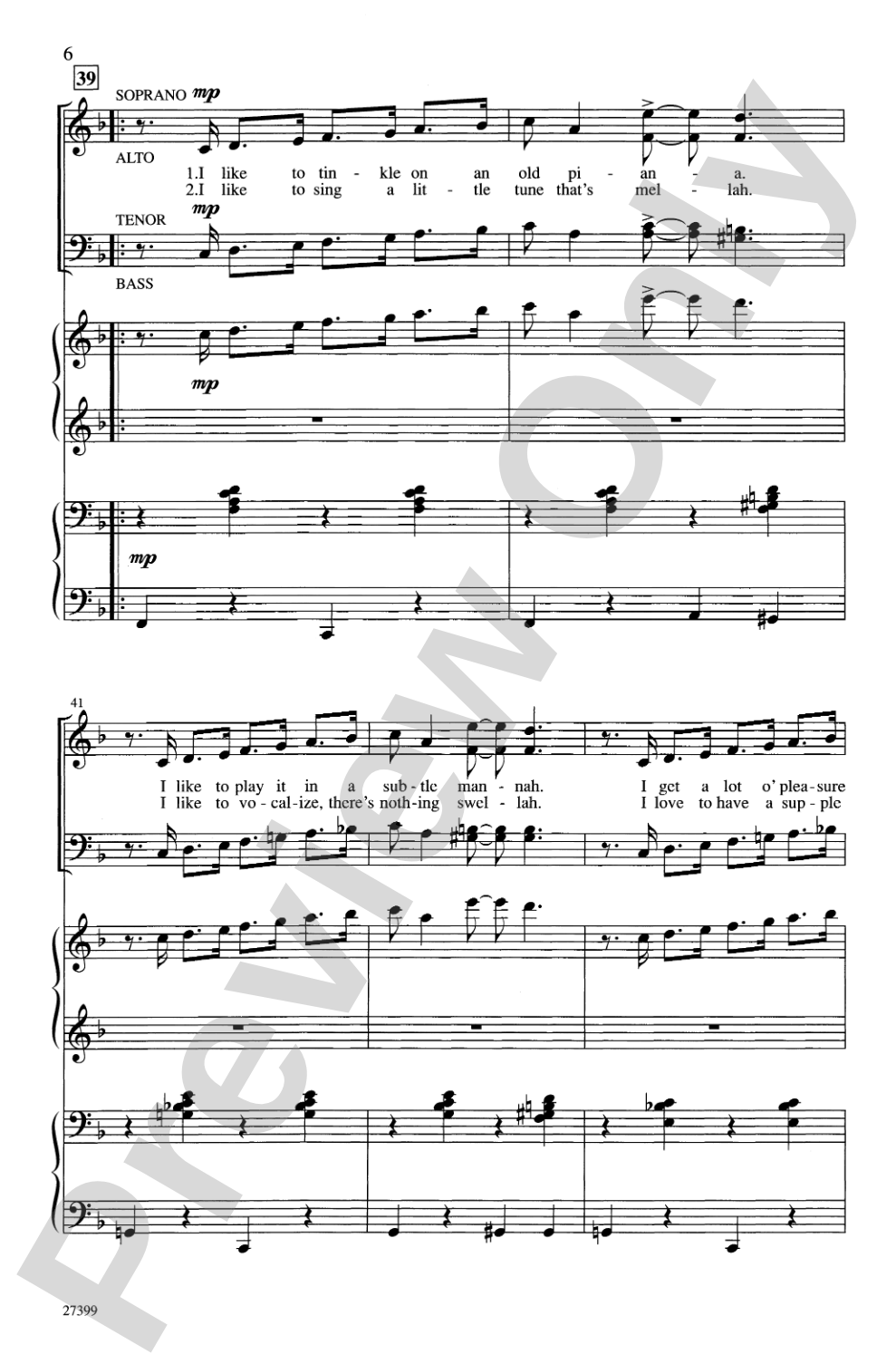
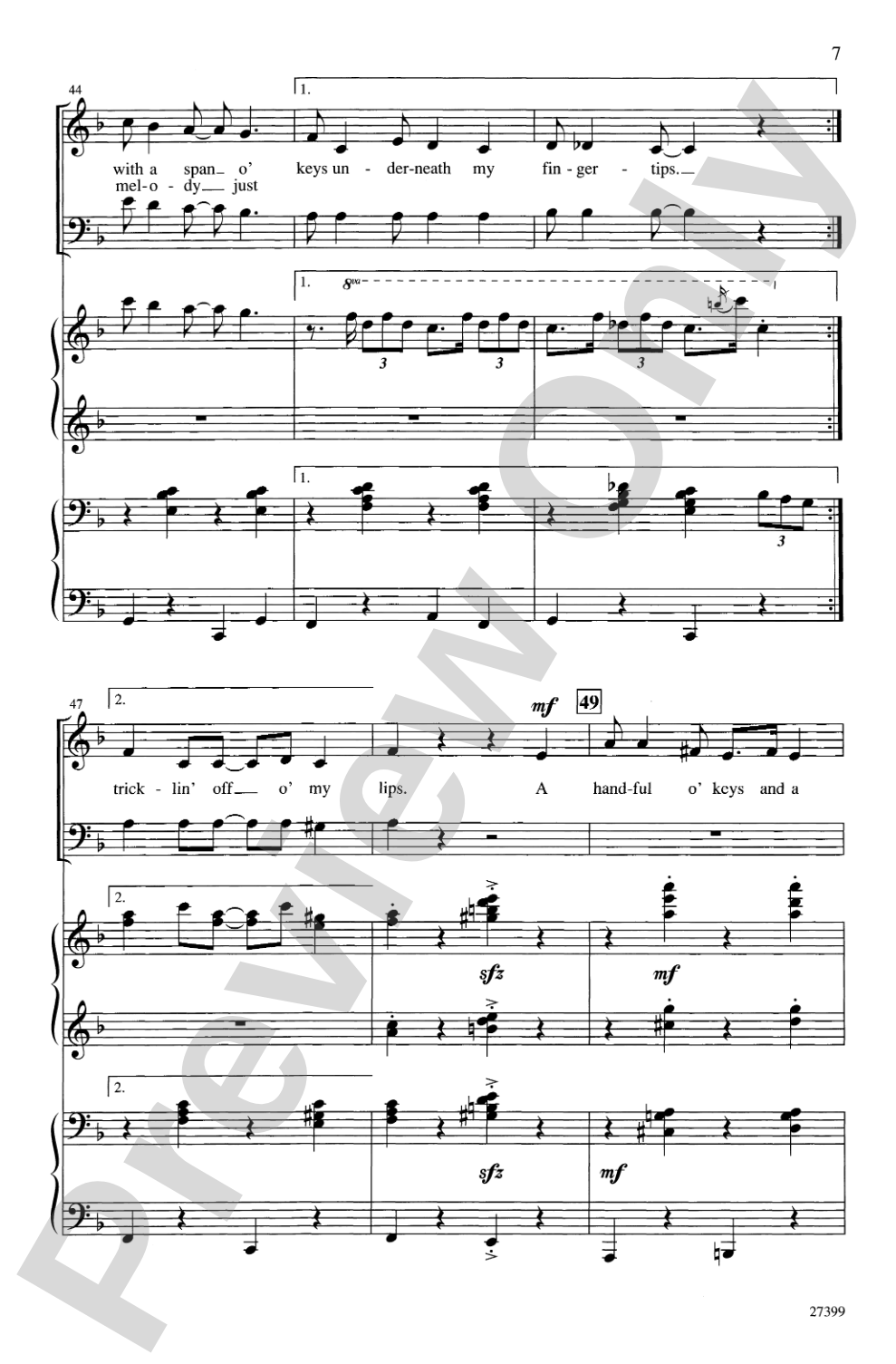

Handful of Keys (from Ain't Misbehavin'): SATB Choral Octavo
From the Musical Ain't Misbehavin'
Words and music by Thomas "Fats" Waller / arr. Larry Shackley
Item: 00-PO-0004368
$3.99
Minimum order quantity: 20 copies
One moment…
Description
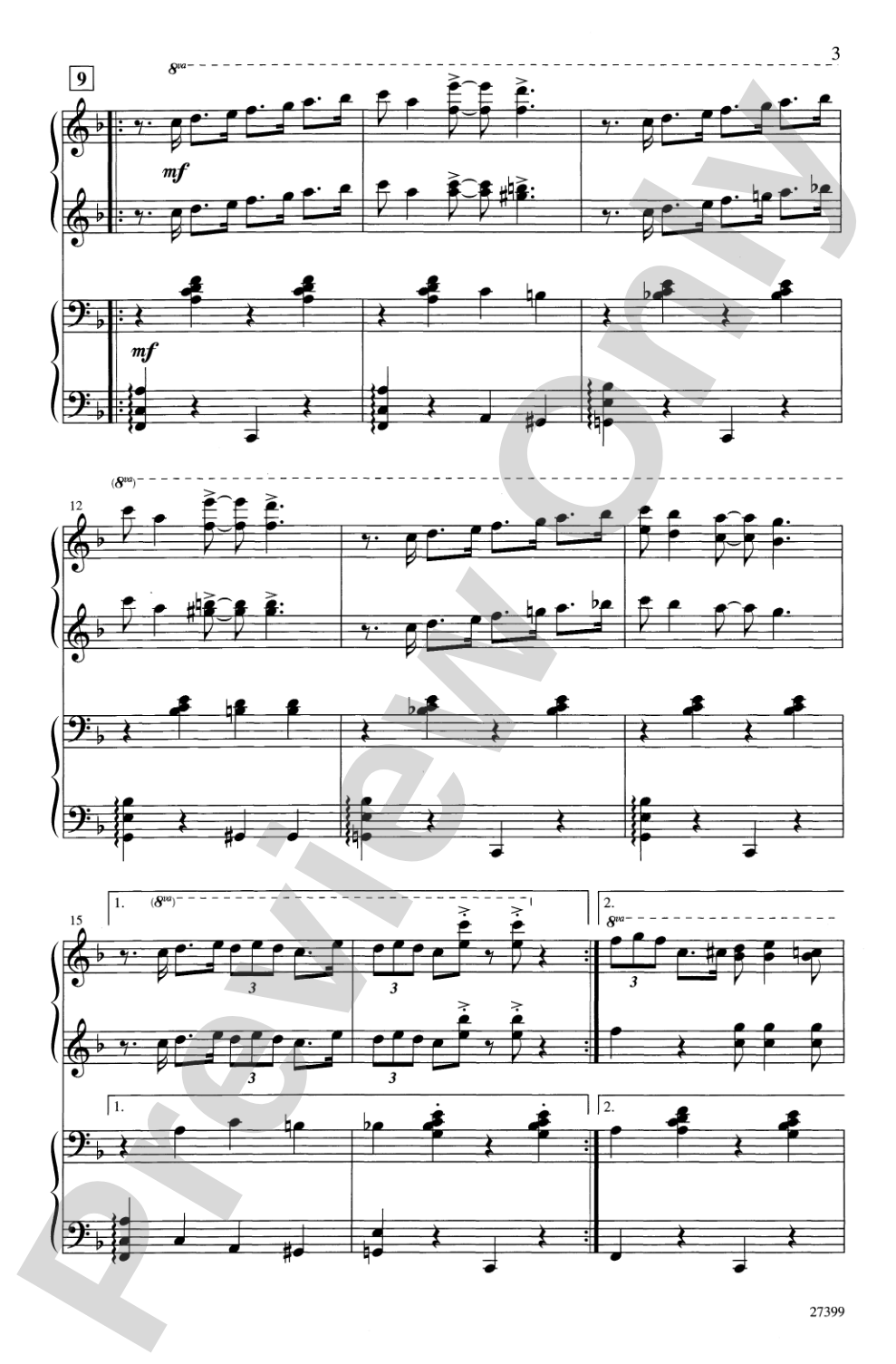
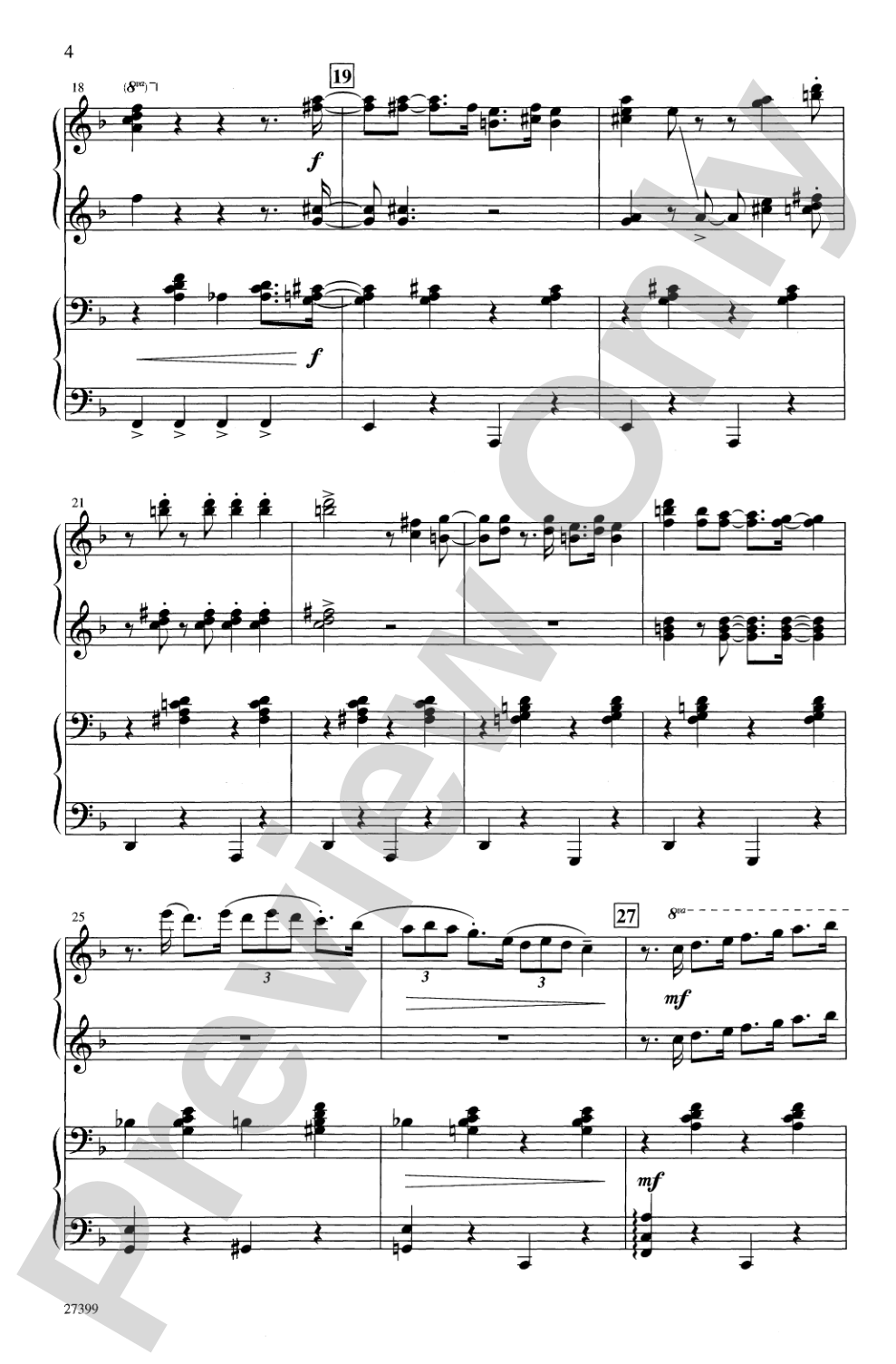
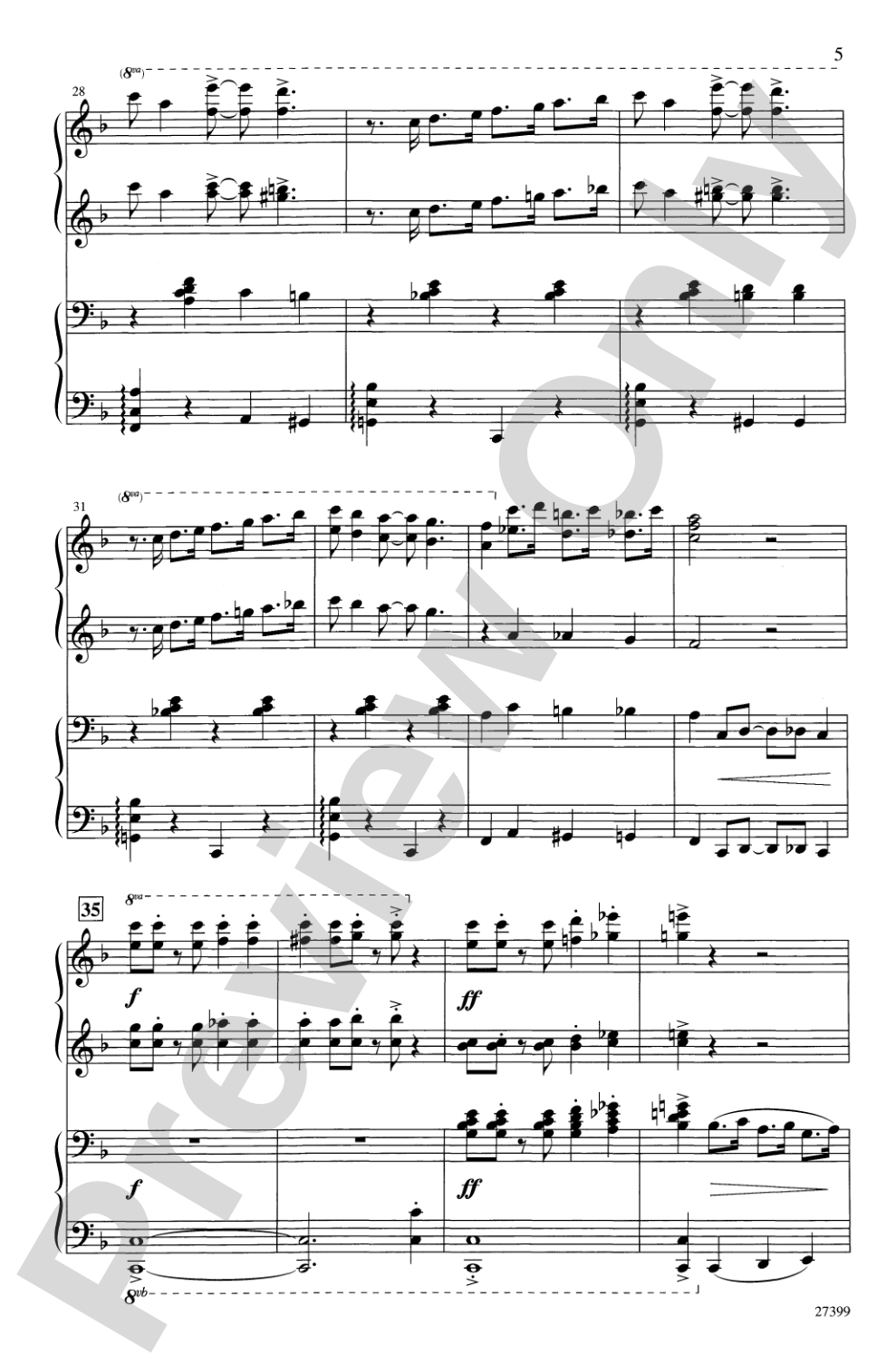
A terrific four-hand piano version of this showstopper from the musical Ain't Misbehavin'. The lyrics alone are spectacular. And with the great choral writing and piano accompaniment, well, it's a knockout! Showcase your accompanists on this one, or use the SoundTrax CD. Bring the spirit of the legendary Fats Waller to your next concert with this outstanding choral arrangement.


Handful of Keys (from Ain't Misbehavin'): SATB Choral Octavo isn't in MakeMusic Cloud just yet...but it could be. Let us know you'd like to see it, and you'll help shape what comes next. In the meantime, start a free trial and dive into thousands of interactive titles your students can play along with today.
Request This Title
Tell us you want it.
Start Your Free Trial
Explore everything that's ready to play right now.
Sample Audio
1
Audio File
--:--
0:00
0:00
Sample Video
No sample videos found.
Additional Details
Series:
Alfred Archive Edition: Alfred Pop Choral Series
Publisher:
Alfred Music
Page Count:
28
SKU:
00-PO-0004368
Instrumentation:
4-Hand Piano
More about this title
About the Composer: Thomas "Fats" Waller
Thomas "Fats" Waller (1904-1943) was a pianist, organist, composer, and entertainer who fundamentally shaped American jazz and stride piano. His prolific output spanned jazz standards, Broadway scores, and novelty songs, all delivered with infectious humor and technical brilliance. Waller's ability to blend sophisticated harmonic language with accessible melody and wit made him one of the most influential and beloved figures in early jazz history.
Waller's work on the 1929 musical Ain't Misbehavin' remains a cornerstone of the American musical theater canon. His compositions for the show showcase his gift for writing memorable hooks wrapped in swinging rhythms, making his material enduringly popular for choral and instrumental arrangements.
Why we love this
Larry Shackley's arrangement captures the swagger and joy of Waller's original while giving your choir immediate access to authentic jazz harmony and swing. The four-hand piano accompaniment is playable by competent accompanists but detailed enough to feel genuinely musical, and having the option of a recorded accompaniment means you can program this even if your keyboard resources are stretched thin.
What to expect
Urbane, witty, and bursting with personality. The melody bounces with infectious optimism while the harmony keeps things sophisticated. There's genuine joy in singing this; it rewards both technical precision and theatrical confidence.
Who it's for
Choirs with solid SATB balance and the ability to navigate jazz harmony and swing rhythms. This works equally well for concert choirs, show choirs, and university groups seeking authentic Broadway repertoire that swings.
How to get the most out of it
- Treat the swing feel as nonnegotiable from the first rehearsal. Have your piano accompanist anchor the groove with a relaxed, listening quality rather than mechanical precision.
- Let the lyrics drive your phrasing. Waller wrote these words to land with personality and attitude, so avoid singing through the text without characterization.
- Balance ensemble cohesion with individual voice confidence. SATB four-part writing at this level should feel secure, not thin or apologetic.
- If using recorded accompaniment, rehearse with it early and often so your singers lock into the groove rather than fighting against it.
How to use it
This is a natural centerpiece for a jazz or standards-themed concert, a perfect contrast to more classical repertoire on a mixed program, or an excellent closer when you want the audience leaving with a smile. Its theatrical flair makes it ideal for pops concerts or springtime showcases.
Skills your students will build
- Singing swing feel and jazz phrasing with rhythmic accuracy
- Interpreting and executing jazz harmony (seventh chords, chromatic voice leading)
- Maintaining ensemble blend while singing with character and personality
- Following and responding to accompaniment in styles outside classical tradition