Handel: Twelve Easy Pieces (Ed. Hans von Bülow) Sheet Music Preview

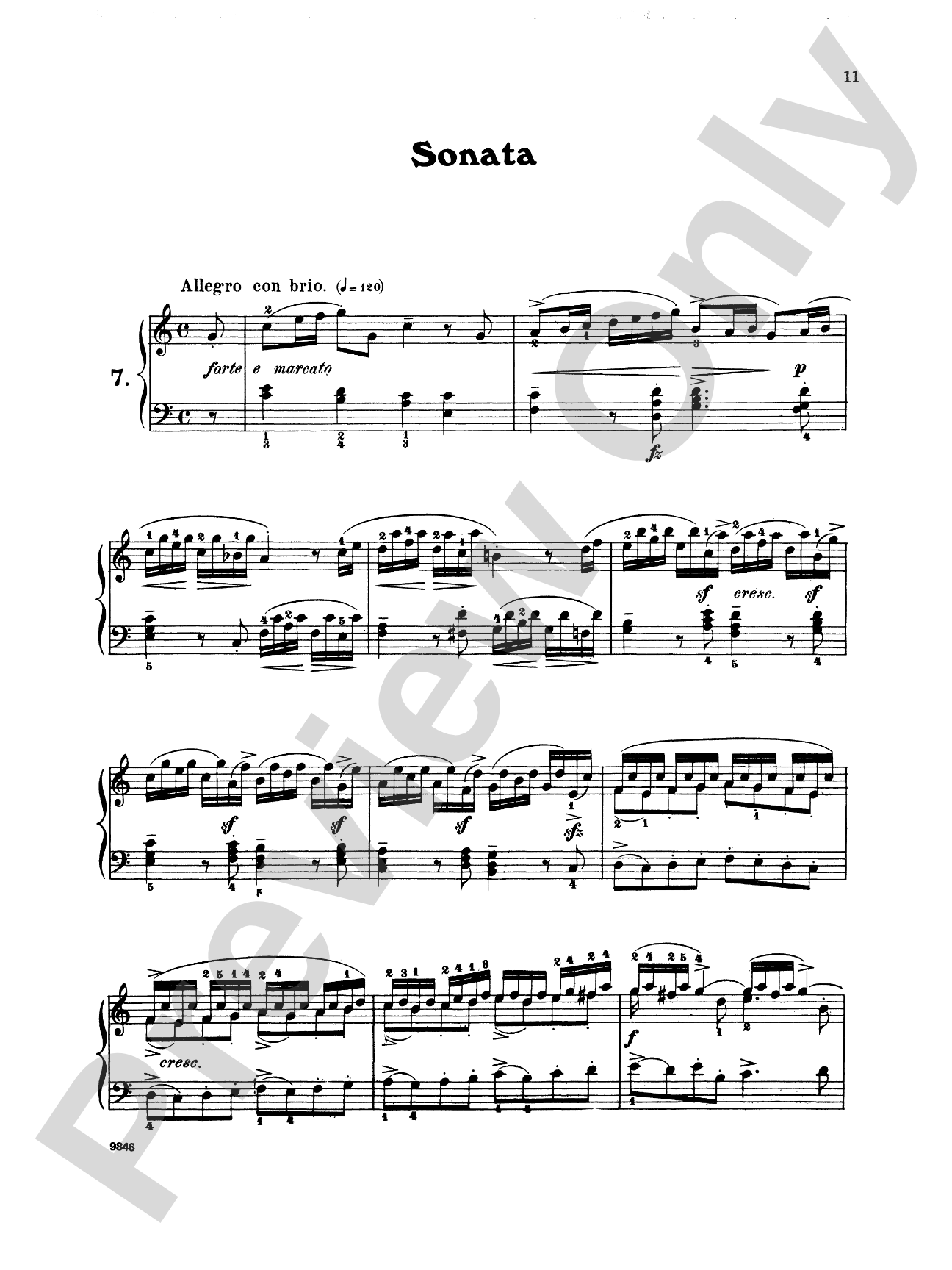
Handel: Twelve Easy Pieces (Ed. Hans von Bülow)

By George Frideric Handel / ed. Hans von Bülow

Item: 00-PC-0013380

Digital Download
$0.99
Description
The pieces in the series presented in this volume, are selected from the second and third parts of Handel's colected pianoforte-works, published for the German handel Society by Breitkopf and Härtel, of Leipzig, in 1859.

Don't just read it, hear it, play along with it, and watch your students grow with it. In MakeMusic Cloud, Handel: Twelve Easy Pieces (Ed. Hans von Bülow) comes alive with professional accompaniment, adjustable tempo, and built-in practice tools that turn solo practice into real progress.

Sample Audio
No sample audio found.
Sample Video
Additional Details
Series: Kalmus Edition
Publisher: Alfred Music
Page Count: 28
SKU: 00-PC-0013380

More about this title

About the Composer: George Frideric Handel

George Frideric Handel (1685–1759) dominated the musical landscape of 18th-century London, establishing himself as a master of opera, oratorio, and instrumental music. His prolific output across multiple genres demonstrated compositional sophistication and an instinctive understanding of what moved listeners, from grand ceremonial works to intimate keyboard pieces.

Handel's keyboard works reveal a composer equally comfortable at the harpsichord or piano as he was conducting orchestras. These pieces distill the melodic invention and harmonic clarity that made him one of the Baroque era's most performed composers. For students and teachers, his keyboard writing offers direct access to essential Baroque compositional principles without requiring the virtuosity demanded by more demanding works.

Why we love this

This collection presents Handel's keyboard music in a manageable, beautifully curated selection that sits at the intersection of historical authenticity and pedagogical practicality. The Hans von Bülow edition respects the source material while offering editorial clarity that helps pianists understand Handel's compositional voice on their own terms. At 28 pages, the set provides enough variety to sustain a student's engagement across multiple practice sessions without overwhelming.

What to expect

These pieces carry the courtly grace and measured intelligence of the Baroque without requiring virtuosic fireworks. Handel's melodic generosity comes through clearly; his lines sing naturally on the keyboard, and his harmonic progressions feel inevitable rather than fussy. There is warmth and immediate accessibility here, paired with genuine compositional substance.

Who it's for

Intermediate pianists who are ready to engage seriously with Baroque compositional practices and want to move beyond simplified keyboard arrangements. Students preparing for repertoire exams, recitals, or auditions benefit from Handel's direct, elegant writing style. Teachers seeking reliable Handel keyboard literature for lesson material or performance reference will find this edition dependable.

How to get the most out of it

  • Shape phrases with the clarity Baroque composers expected; these pieces reward clean articulation and controlled dynamic contrasts rather than the sustained pedaling common to later Romantic keyboard writing.
  • Listen for the dance rhythms embedded in many pieces. Handel's keyboard works often echo the minuets, sarabandes, and gigues of the suite tradition; bringing out these underlying patterns gives the music its proper character.
  • Treat ornaments as structural, not decorative. Apply them with precision and let them breathe; they anchor melodic ideas and deserve space within the phrase.

How to use it

Program individual pieces from this collection in student recitals to demonstrate Baroque keyboard style alongside modern or Romantic repertoire; the contrast clarifies each era's aesthetic. Use selections as teaching repertoire to introduce harmonic function, phrase architecture, and the relationship between dance forms and formal design. The collection works particularly well as a bridge repertoire for students transitioning from beginner method books into standard classical repertoire.

Skills your students will build

  • Reading Baroque notation and interpreting articulation, ornamentation, and phrasing conventions
  • Understanding harmonic function through clear, well-proportioned chord progressions
  • Recognizing and executing dance forms (minuet, sarabande, gigue, courante) at the keyboard
  • Developing evenness and clarity in rapid scalar passages and hand independence
  • Building musical independence through Handel's two-and-three-part writing

You May Also Like