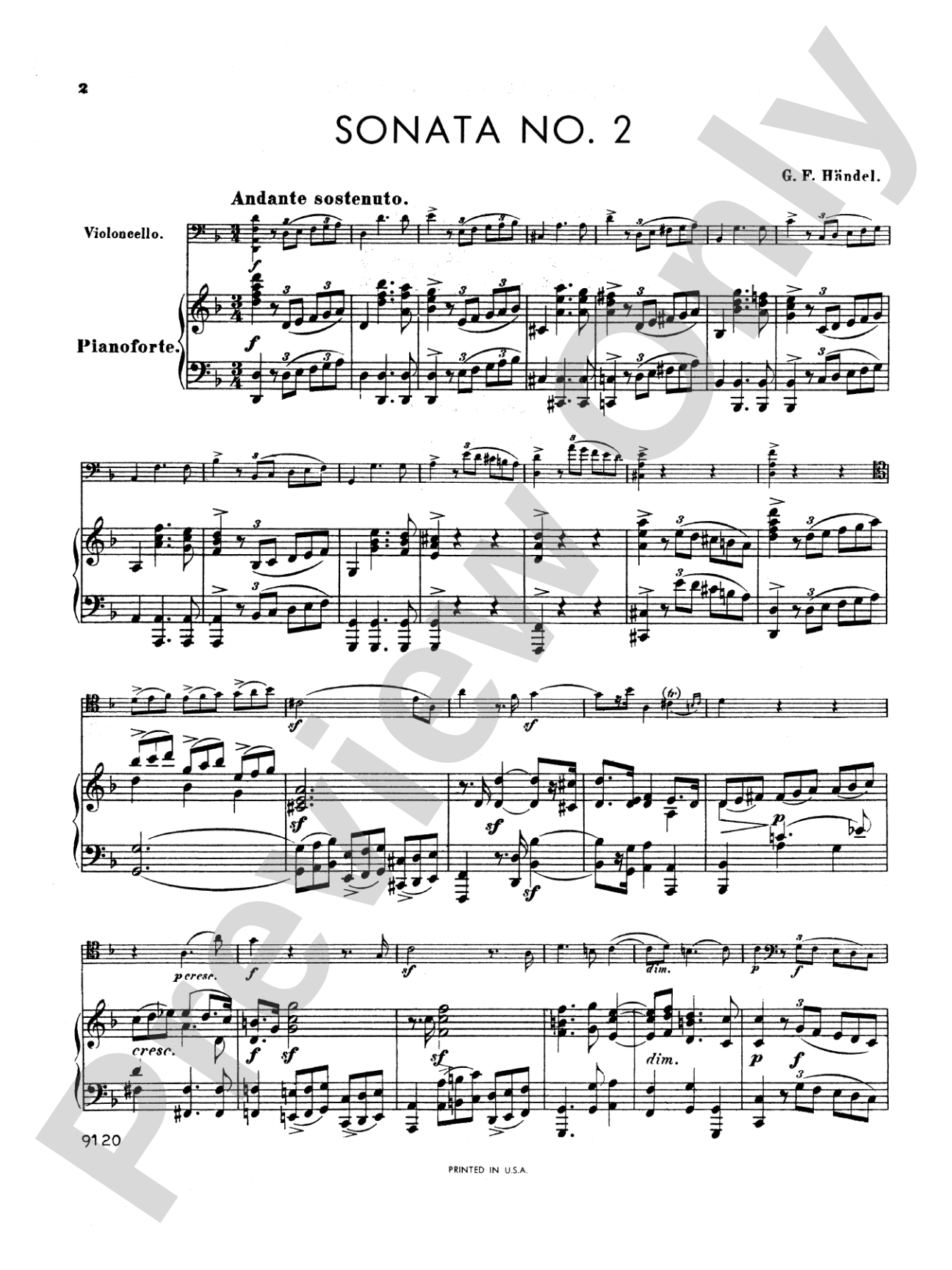
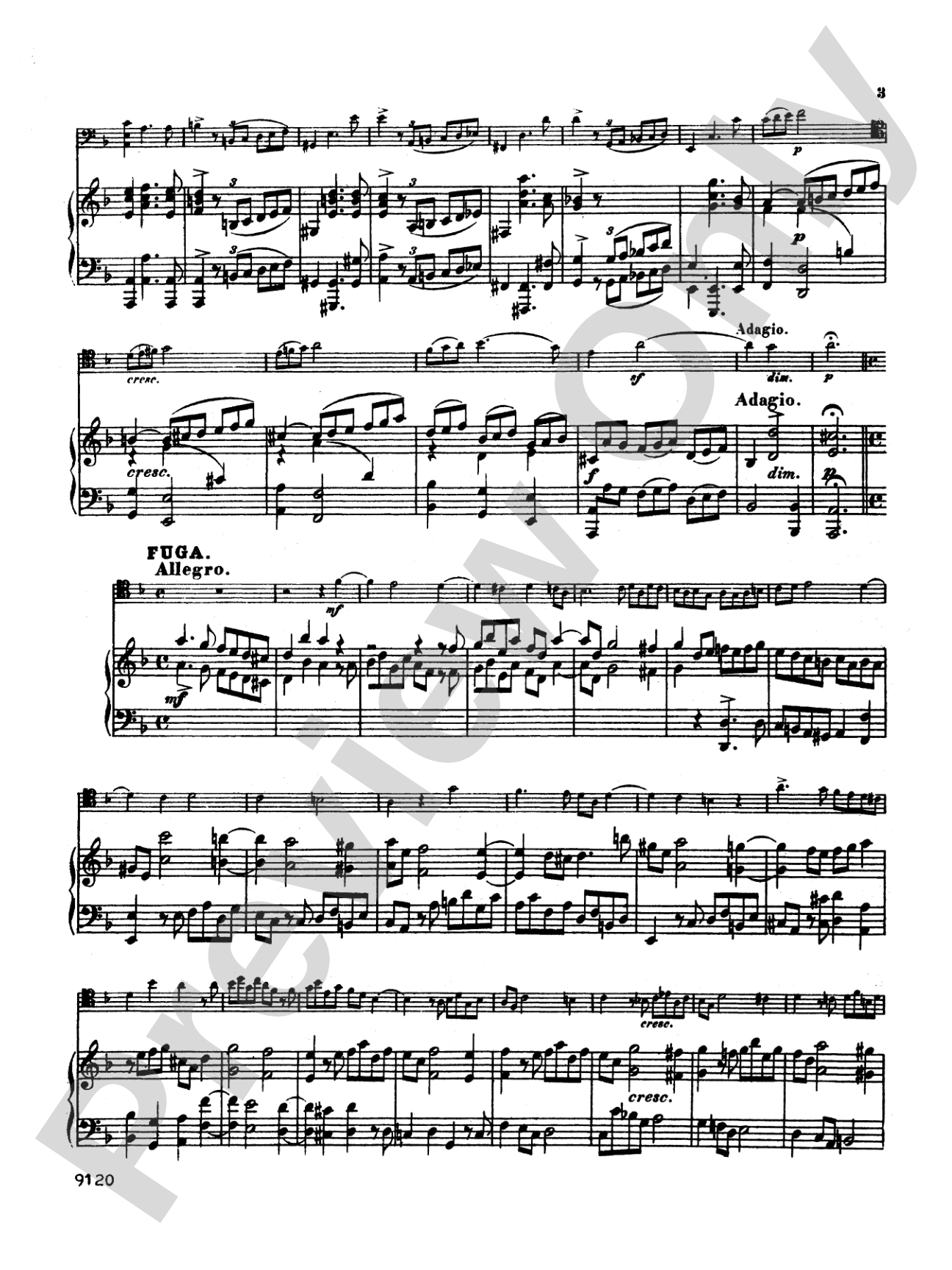
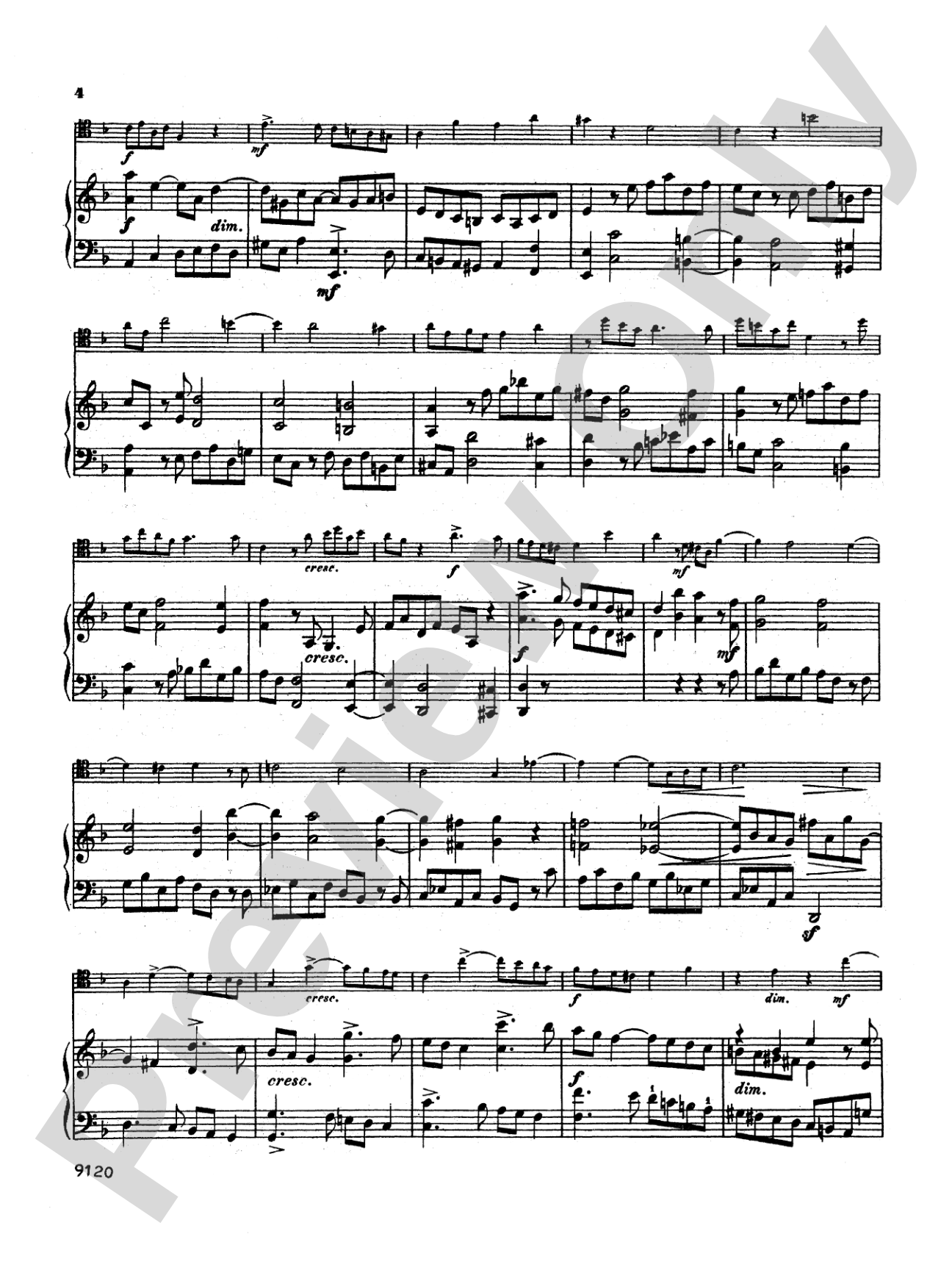
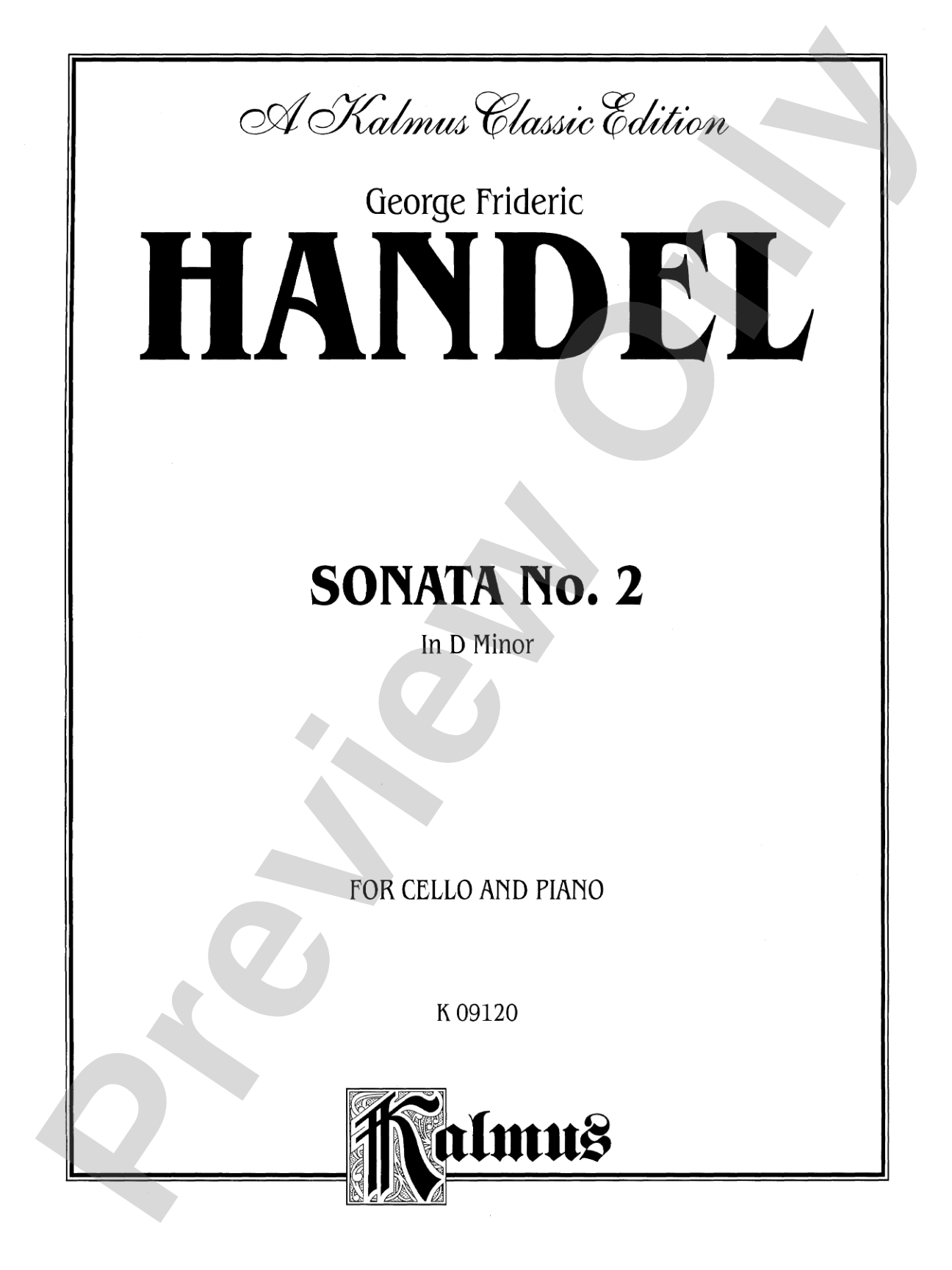
Handel: Sonata No. 2 in D Minor Sheet Music Preview

Handel: Sonata No. 2 in D Minor

By George Frideric Handel

Item: 00-PC-0011763

Digital Download
$3.99
Description
A Cello solo with Piano Accompaniment composed by George Frideric Handel.

Don't just read it, hear it, play along with it, and watch your students grow with it. In MakeMusic Cloud, Handel: Sonata No. 2 in D Minor comes alive with professional accompaniment, adjustable tempo, and built-in practice tools that turn solo practice into real progress.

Sample Audio
No sample audio found.
Sample Video
Additional Details
Series: Kalmus Edition
Publisher: Alfred Music
Page Count: 24
SKU: 00-PC-0011763

More about this title

About the Composer: George Frideric Handel

George Frideric Handel (1685-1759) shaped the musical landscape of early 18th-century Europe through his mastery of both instrumental and vocal forms. Born in Halle, Germany, he spent much of his career in England, where he became the preeminent composer of opera and oratorio, establishing himself as a commanding figure in Baroque music.

Handel's instrumental works, including his sonatas for cello, showcase the same structural clarity and harmonic sophistication that define his dramatic works. His cello sonatas blend Italian influence with German counterpoint, creating pieces that remain central to the string repertoire and essential study for cellists navigating the Baroque style.

Why we love this

Handel's cello sonatas occupy a unique space in contest and festival programming: they demand serious technical command while remaining deeply musical rather than showy. This D minor sonata in particular offers cellists the chance to demonstrate Baroque phrasing, ornamentation, and the ability to shape longer lines without modern vibrato crutches, making it an excellent choice for adjudicated events where musicianship counts as much as facility.

What to expect

D minor gives this sonata an introspective, sometimes urgent character that unfolds across multiple movements with the architectural confidence of Baroque form. The writing alternates between lyrical passages that require sensitive phrasing and more driven sections that test both technical precision and rhythmic clarity.

Who it's for

Advanced cellists preparing for competitions, festivals, and formal recitals who are ready to engage with Baroque style and its technical and interpretive demands. This sonata works equally well for cellists exploring the classical chamber repertoire and those building a diverse performance portfolio.

How to get the most out of it

  • Shape the longer melodic lines by thinking in terms of harmonic arrival rather than phrase length; let the underlying chords guide your arc and breathing.
  • Approach ornaments with period sensitivity: trills and mordents should emerge from the melodic gesture, not interrupt it.
  • Balance projection with restraint in the upper register; these lines sing without requiring aggressive bow pressure or excessive vibrato.
  • Collaborate with your pianist on the continuo figures; the keyboard part supports harmonic structure, so clarity between the two voices strengthens both.

How to use it

Feature this as a standalone recital item for an intermediate or advanced solo cello program, or pair it with another Baroque work to anchor a themed concert around period style. Its 24-page length makes it substantial enough to demonstrate serious repertoire while remaining manageable within a varied program.

Skills your students will build

  • Baroque ornamentation and period-appropriate articulation
  • Sustained melodic shaping over longer phrases
  • Harmonic awareness and structural listening
  • Balance and blend with piano accompaniment
  • Control of vibrato and tone color in the upper register
  • Reading and interpreting Baroque figured bass conventions

You May Also Like