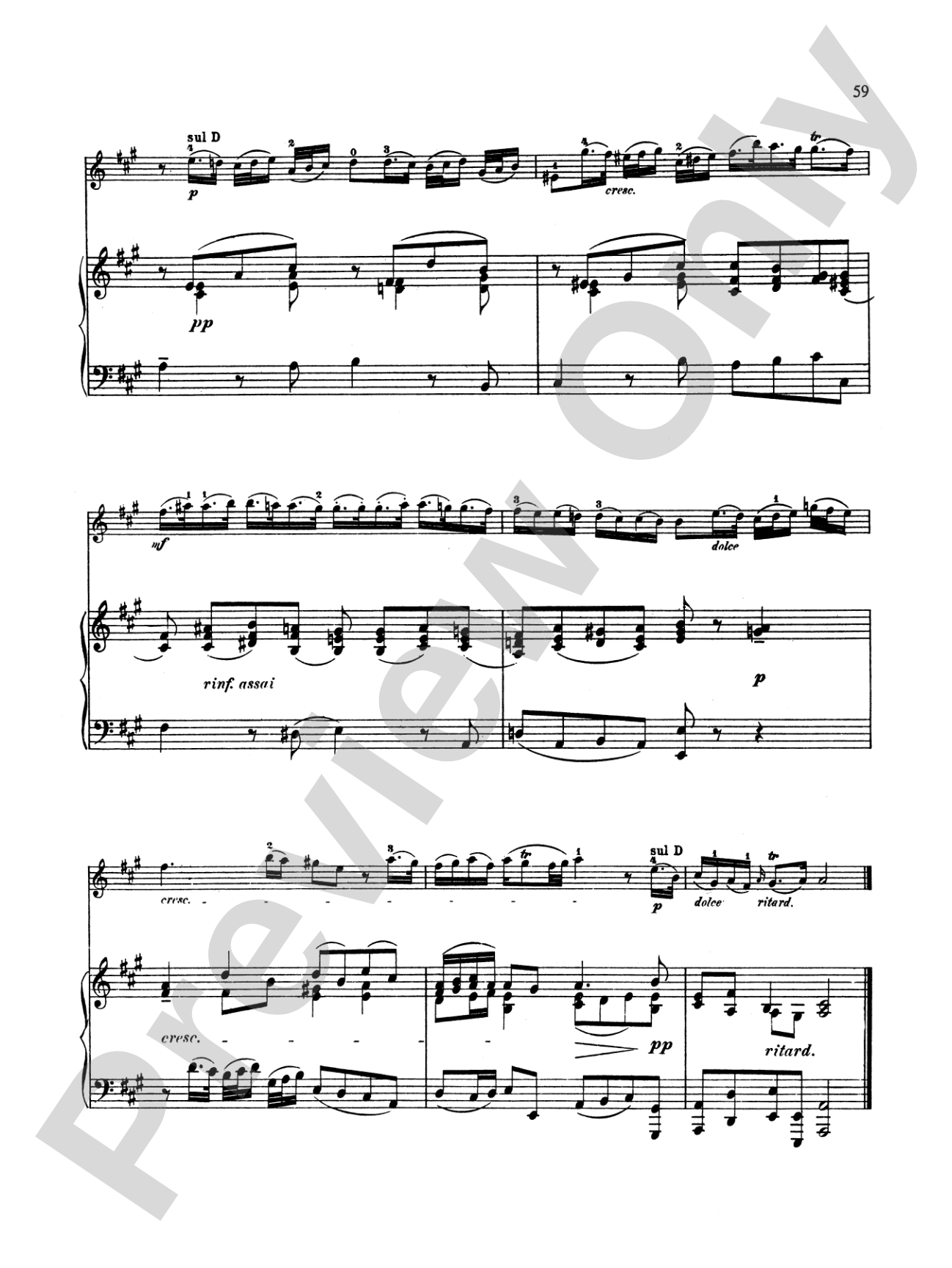
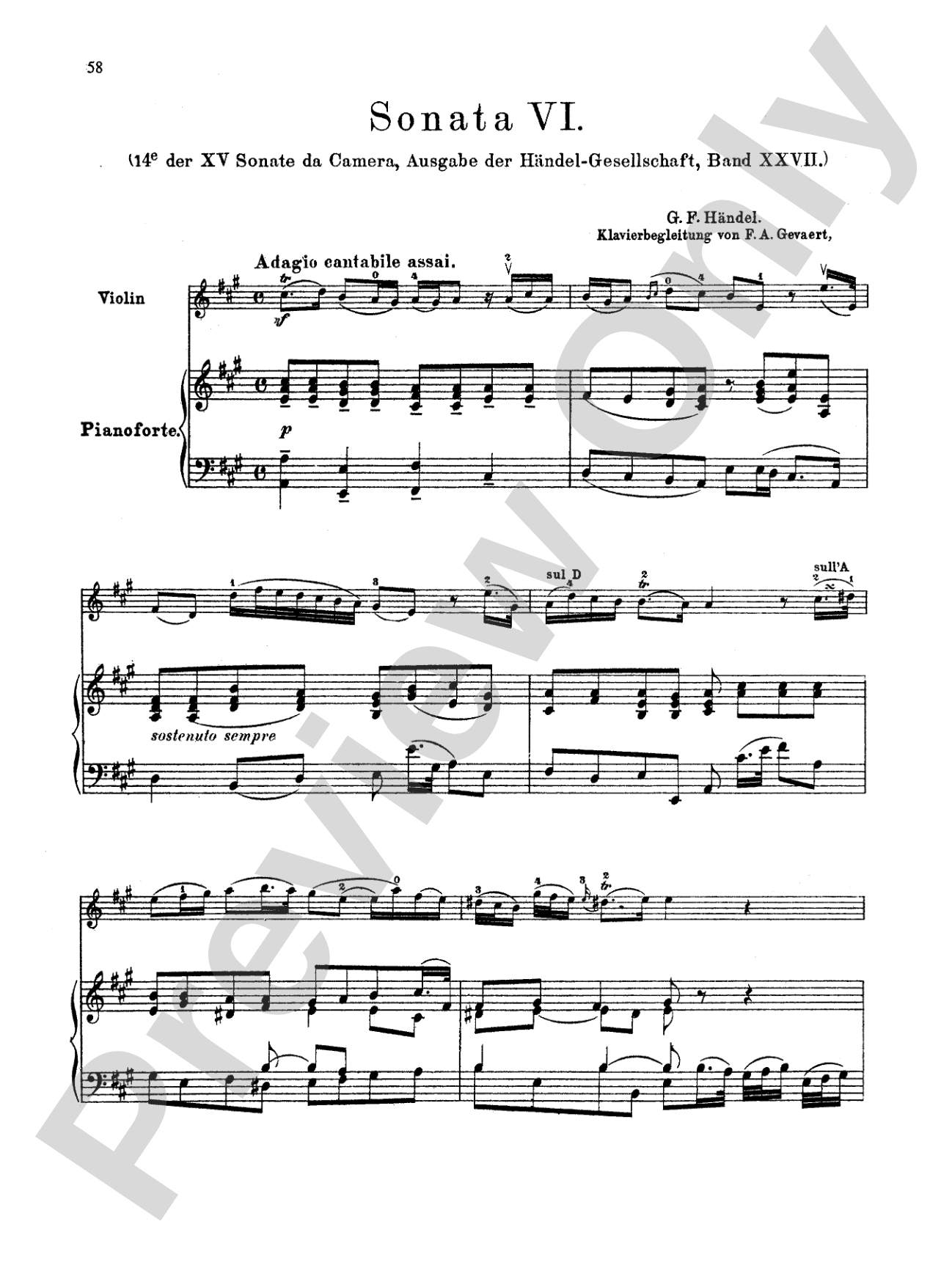
Handel: Six Sonatas Sheet Music Preview

Handel: Six Sonatas

By George Frideric Handel

Item: 00-PC-0002868

Digital Download
$0.99
Description
Now in one volume: A major, E major, G minor, D major, F major, A major.

Don't just read it, hear it, play along with it, and watch your students grow with it. In MakeMusic Cloud, Handel: Six Sonatas comes alive with professional accompaniment, adjustable tempo, and built-in practice tools that turn solo practice into real progress.

Sample Audio
No sample audio found.
Sample Video
Additional Details
Series: Kalmus Edition
Publisher: Alfred Music
Page Count: 100
SKU: 00-PC-0002868

More about this title

About the Composer: George Frideric Handel

George Frideric Handel (1685-1759) shaped the Baroque era through his command of melody, harmonic architecture, and orchestral color. Born in Halle, Germany, he established himself across Europe before settling in London, where he became a defining figure in English musical life. His instrumental works—concertos, sonatas, and chamber music—reveal the same dramatic instinct and formal sophistication that made his operas revolutionary.

Why we love this

These sonatas sit perfectly at the threshold between study and performance. Violinists encounter genuine Baroque voice-leading, scalar figuration, and the rhythmic language of the era without the extreme technical demands that can derail progress. The six sonatas offer enough variety in key and character to sustain a contest or recital program, and they're substantial enough to teach phrasing and style without overstaying their welcome.

What to expect

These sonatas inhabit a world of elegant dialogue between violin and keyboard. The writing is vocally driven, shaped by the contours of speech and song, yet orchestrated with Handel's gift for harmonic color and structural clarity. You'll find moments of lyrical warmth alongside passages of rhythmic vitality and intellectual counterpoint.

Who it's for

Violinists at the advanced intermediate to early advanced level who are ready to explore Baroque style and expand their recital repertoire. These sonatas work equally well for students preparing for competitions or examinations and for those seeking substantial concert material.

How to get the most out of it

  • Approach the Baroque phrasing as speech rather than song; let the natural shape of the melodic line determine your breath and bow changes rather than symmetrical four-bar phrases.
  • Balance the violin line against the keyboard accompaniment by thinking of the piano part as harmonic support, not competition. Keep your tone focused and direct rather than trying to dominate.
  • Observe the key signatures and accidentals with care; Baroque ornamentation and figured bass harmony often contain chromatic movement that shapes the harmonic color.
  • Use separate bow strokes to articulate the rhythmic drive of the basso continuo; let the accompaniment's pulse guide your forward motion.

How to use it

Program one or two of these sonatas as a contrasting block alongside Romantic or contemporary works to create historical depth and stylistic range in a recital. All six can form their own concert program if grouped by key or character; alternating major and minor sonatas creates natural pacing and emotional variety.

Skills your students will build

  • Reading and performing Baroque style conventions (articulation, phrasing, and ornamentation)
  • Voice-leading awareness through figured bass accompaniment
  • Scalar and arpeggio figuration in multiple keys
  • Balancing a solo melodic line with keyboard accompaniment
  • Sustaining longer formal structures across multiple movements

You May Also Like