
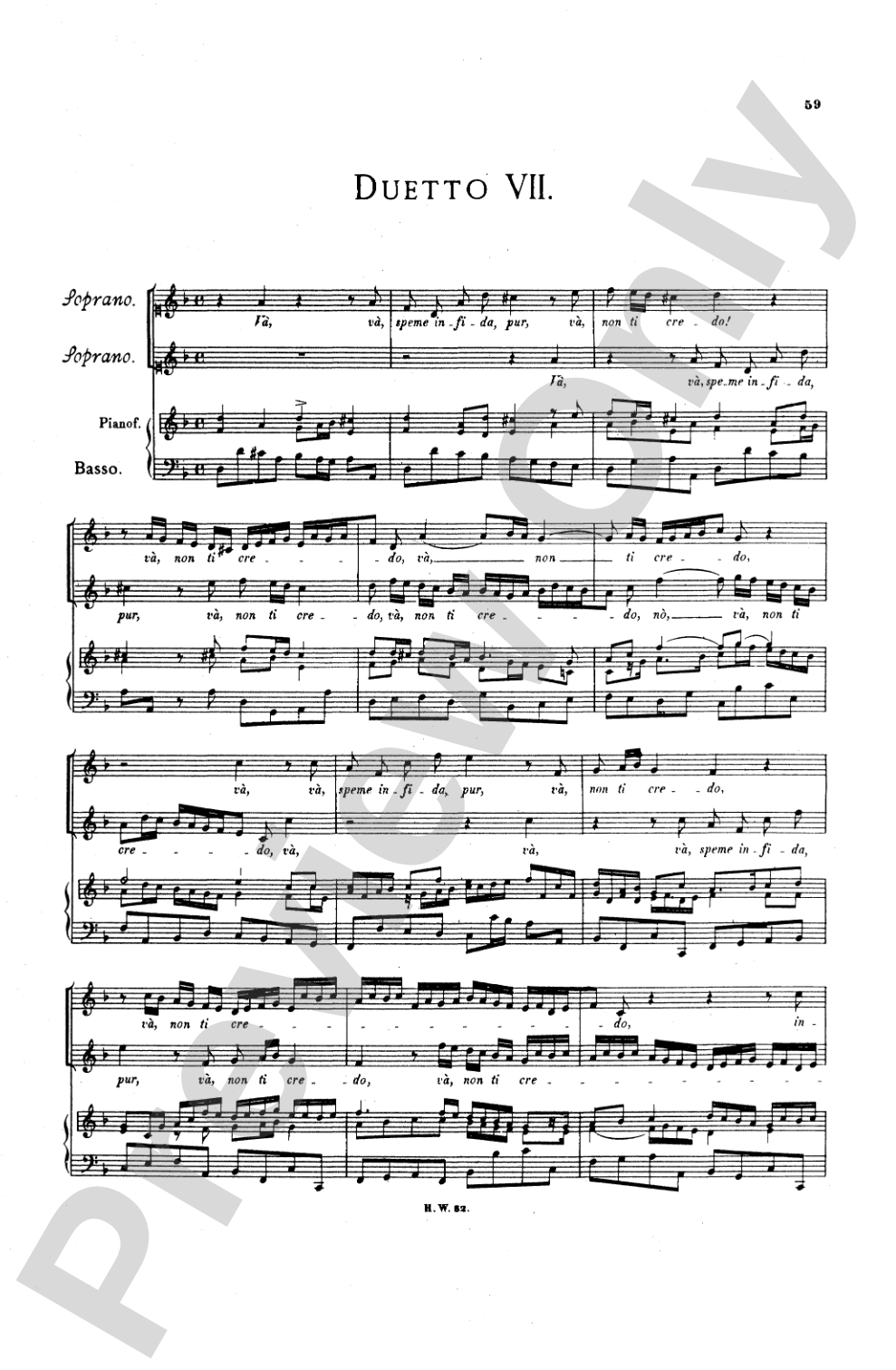
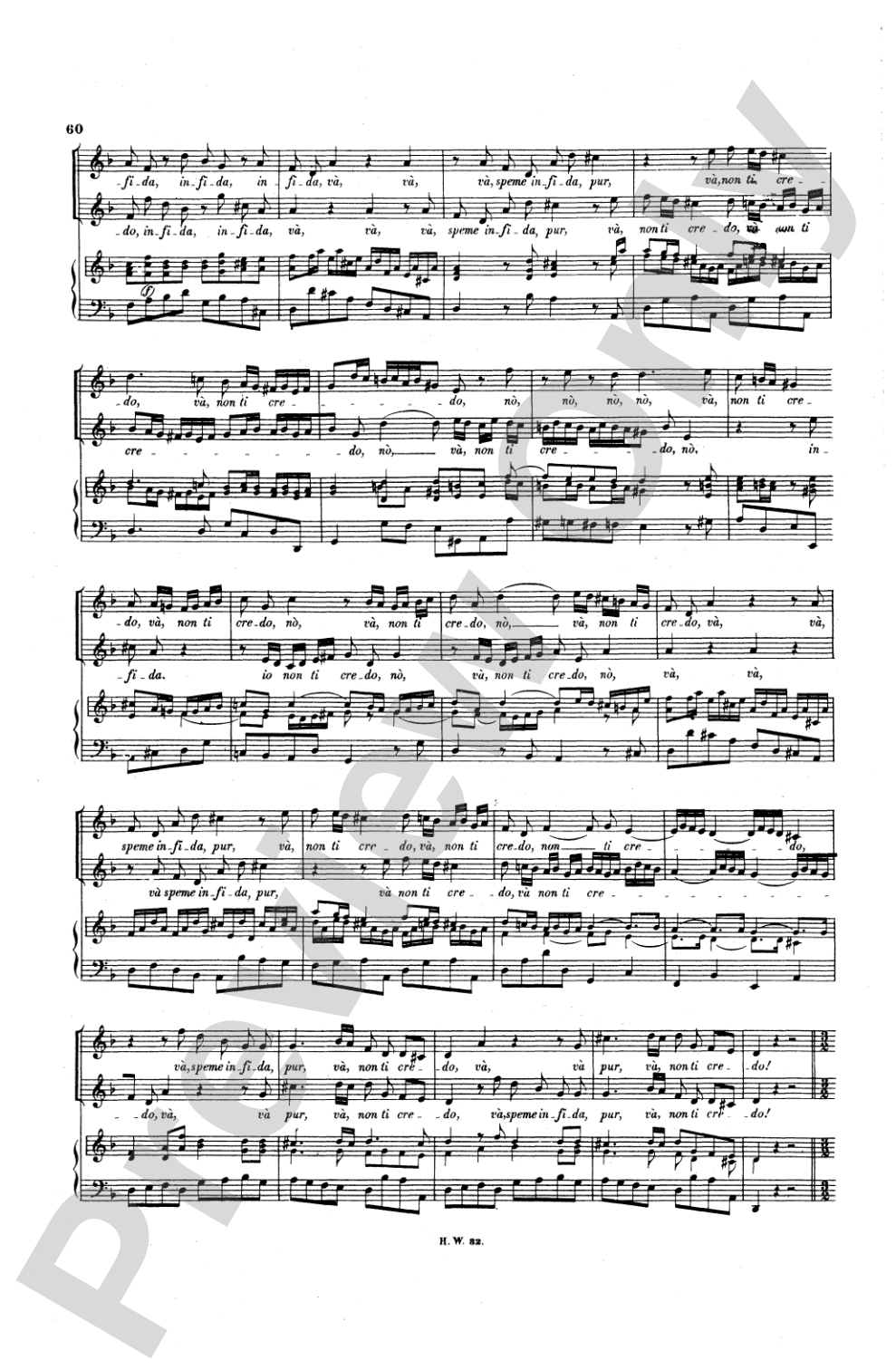

Handel: Italian Duets and Trios, Volume II (Italian)
By George Frideric Handel
Item: 00-PC-0002763
$0.99
Pickup currently not available
Description
A collection of duets and trios for Voice, composed by George Frideric Handel.


Don't just read it, hear it, play along with it, and watch your students grow with it. In MakeMusic Cloud, Handel: Italian Duets and Trios, Volume II (Italian) comes alive with professional accompaniment, adjustable tempo, and built-in practice tools that turn solo practice into real progress.
Open in the Player
Jump straight in and assign it today.
Start Your Free Trial
Open this title and explore the full library in minutes.
Sample Audio
No sample audio found.
Sample Video
No sample videos found.
Additional Details
Series:
Kalmus Edition
Publisher:
Alfred Music
Page Count:
184
SKU:
00-PC-0002763
More about this title
About the Composer: George Frideric Handel
George Frideric Handel (1685-1759) was a German-born composer who spent much of his career in London, where he became one of the most celebrated musicians of the Baroque era. His output was vast and versatile: operas, oratorios, instrumental concertos, and vocal chamber music all flowed from his pen with seemingly inexhaustible invention. Handel's Italian duets and trios represent a distinct corner of his legacy, works composed when he was deeply immersed in Italian musical culture and the aesthetic of intimate vocal writing.
These chamber vocal works showcase the melodic gift and harmonic sophistication that made Handel a master of his time. They demand nothing of grandeur or spectacle, instead revealing the composer's ability to craft elegant, singable lines that sit comfortably in the voice while maintaining structural integrity and emotional depth. For singers and conductors, these pieces offer direct access to Baroque vocal writing at its most refined.
Why we love this
This collection opens a door to Baroque vocal chamber music that rarely appears on recital programs, giving singers and ensembles genuine repertoire alternatives to the expected canon. The writing is idiomatic and grateful for the voice; Handel understood vocal technique and wrote accordingly, making these pieces accessible without sacrificing sophistication. Programming duets and trios from this volume signals serious engagement with the Baroque vocal literature beyond oratorio and opera.
What to expect
These duets and trios breathe with the grace and refinement of the Italian Baroque; they are conversational without being trivial, intimate without being precious. The writing favors long, singing lines and moments of surprising harmonic color, creating miniature worlds of genuine emotional and musical content. Listen and you hear a master composer turning his full attention to the particular joys of writing for paired and tripled voices.
Who it's for
This volume serves advanced singers and chamber ensembles ready to explore the Baroque vocal repertoire beyond the standard repertory. Voice teachers preparing students for recitals, art song literature study, or audition programs will find substantial material here. Academic programs and professional singers seeking to expand their Baroque vocal catalog will benefit from Handel's elegant craftsmanship and genuine musical substance.
How to get the most out of it
- Approach the Italian text with attention to natural speech rhythms; Handel's melodic lines follow the contours of the language, and authentic pronunciation shapes the musical phrasing.
- Balance vocal parts by ear rather than by dynamic markings alone. In duets, one voice often carries the primary line while the other provides harmonic support; adjust blend accordingly rather than singing with equal weight throughout.
- Use the miniature score format to study the harmonic and structural architecture. Understanding Handel's voice leading and the function of each part deepens interpretation and helps singers find their place within the texture.
- Seek period-appropriate accompaniment when possible. Baroque continuo practice (harpsichord, cello, or lute) transforms these works; if modern piano is necessary, consider arrangements that reflect the harmonic language rather than thickened Romantic textures.
How to use it
Feature a duet or trio from this collection on a vocal recital to anchor a Baroque group, or pair selections with other chamber vocal works for a focused concert segment on Italian vocal writing. These pieces also work well in academic settings as study scores for voice students exploring historical style and vocal technique. Consider programming one or more as concert openers or encore material, where their brevity and charm provide natural structural punctuation.
Skills your students will build
- Singing Italian text with historically informed pronunciation and textual clarity
- Reading and performing in ensemble within complex Baroque voice leading
- Interpreting dynamic and expressive nuance from a miniature score
- Understanding continuo-based harmonic language and voice function in Baroque vocal texture
- Balancing independence and blend in small vocal ensembles