
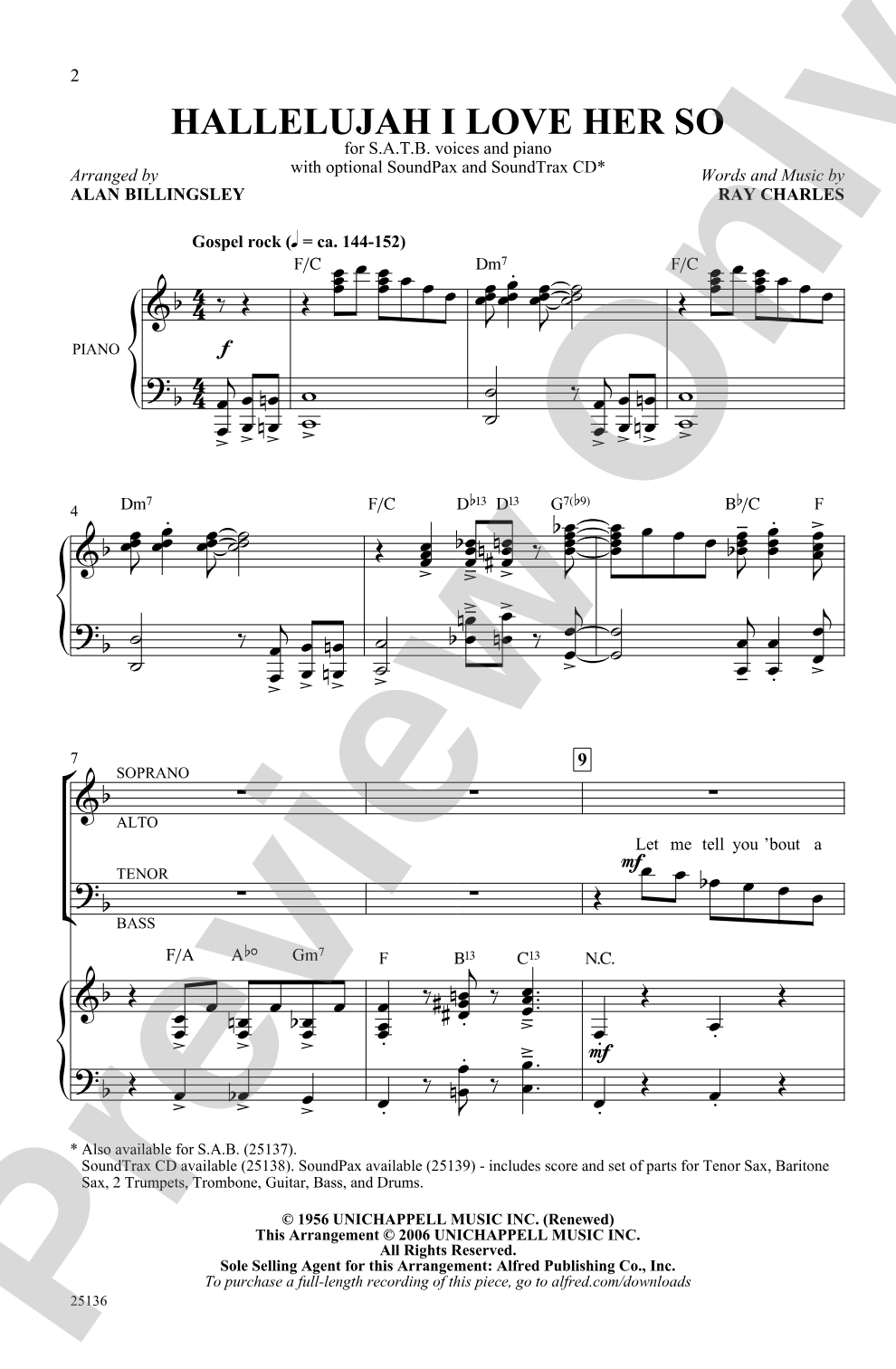
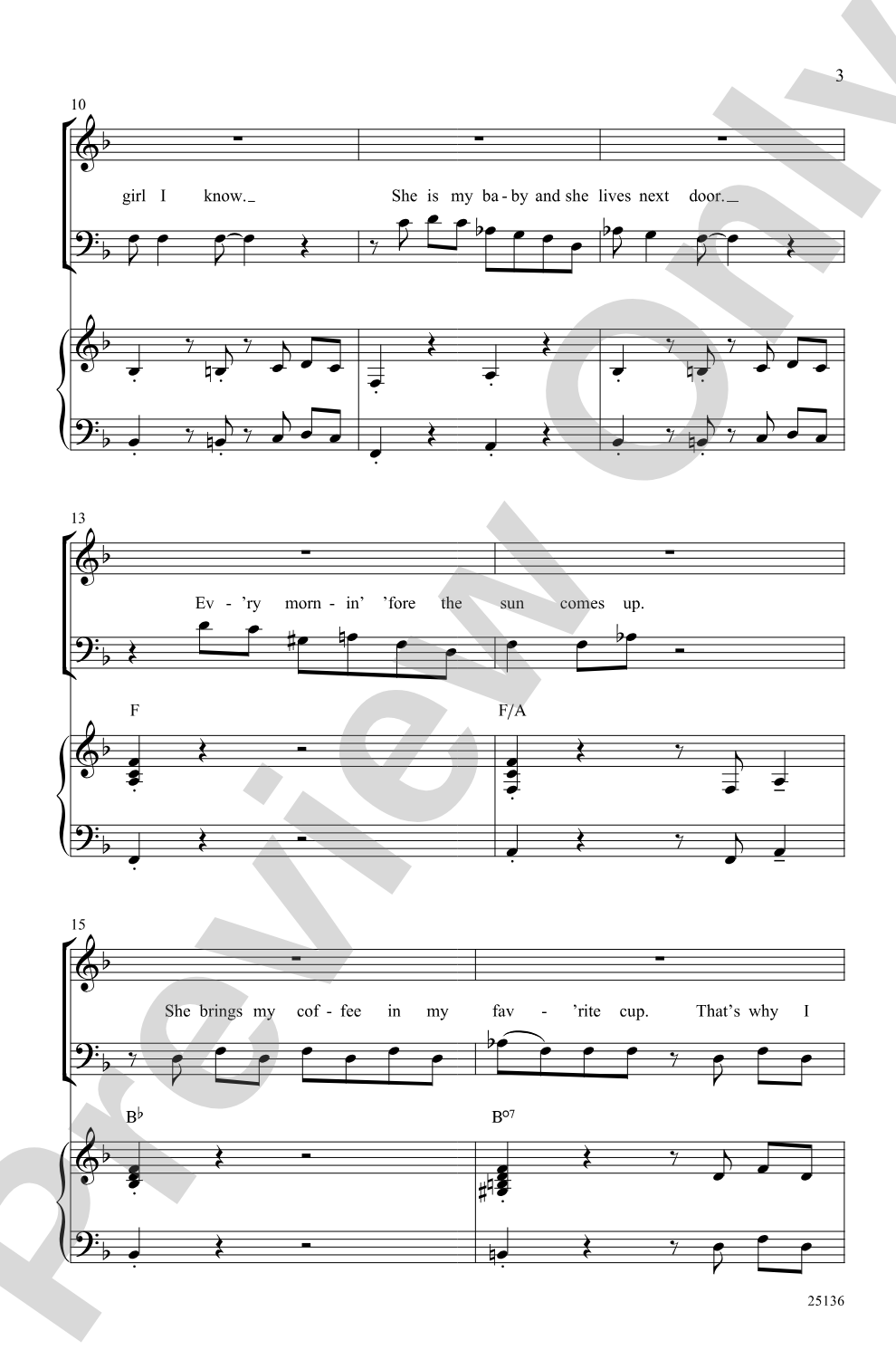
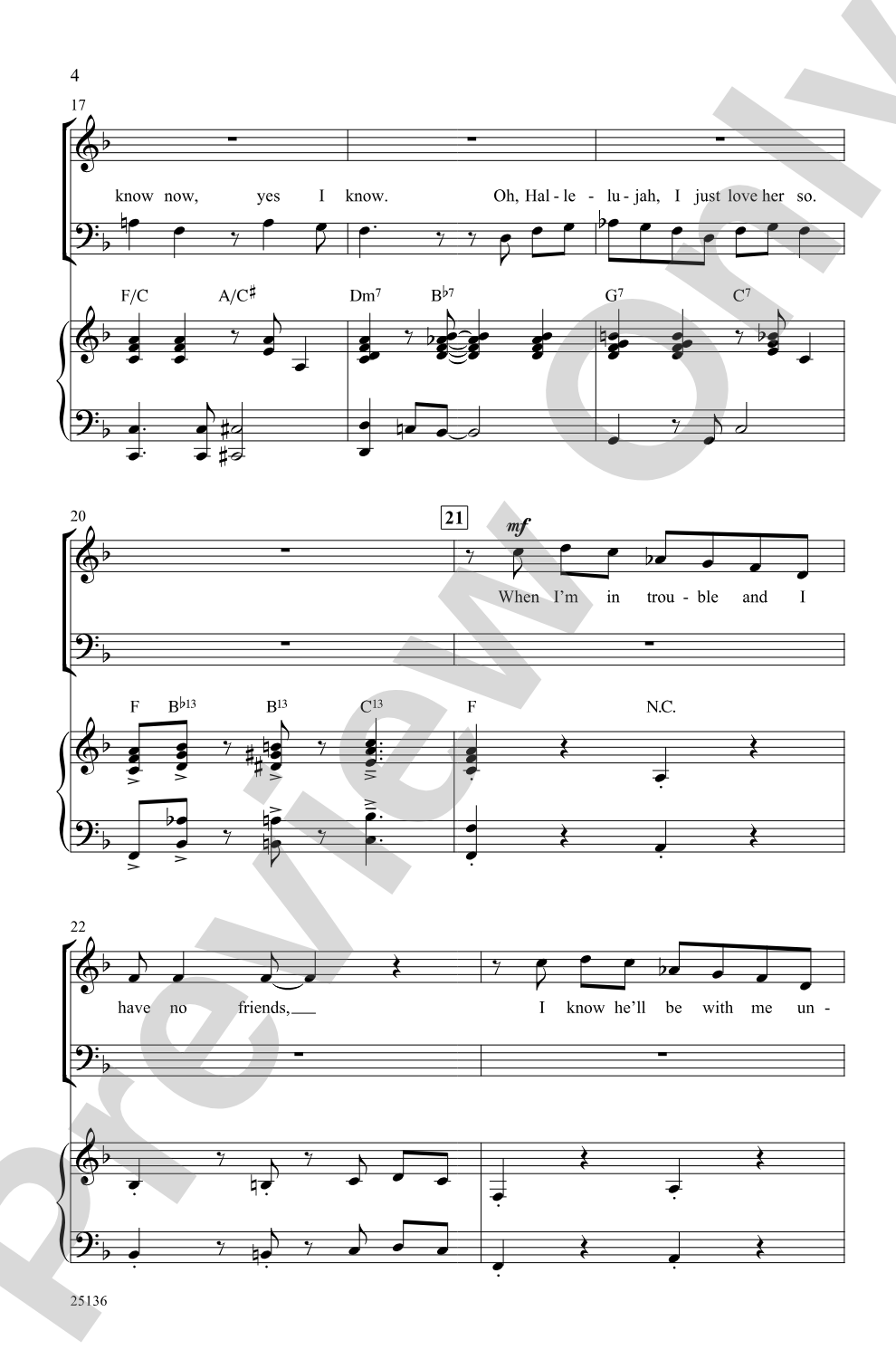

Hallelujah I Love Her So: SATB Choral Octavo
By Ray Charles / arr. Alan Billingsley
Item: 00-PO-0007699
$1.75
Minimum order quantity: 20 copies
Pickup currently not available
Related Items
Hallelujah I Love Her So: SoundTrax Digital Audio Download |
$22.95
|
View | |
Hallelujah I Love Her So: Choral SoundPax |
$30.00
|
View | |
Hallelujah I Love Her So: SATB Choral Octavo |
$1.75
|
View | |
Hallelujah I Love Her So: SAB Choral Octavo |
$1.75
|
View | |
Hallelujah I Love Her So: Choral Octavo SoundTrax CD |
$22.95
|
View | |
Hallelujah I Love Her So: Choral SoundPax |
$30.00
|
View |
Description
The late, great Ray Charles showcased other songwriters throughout his long career. But Ray wrote this one himself, and introduced it in 1956 on one of his legendary rhythm-and-blues recordings for Atlantic Records. Introduce the genius of Ray Charles to your singers with this fresh, new, rocking version.


Hallelujah I Love Her So: SATB Choral Octavo isn't in MakeMusic Cloud just yet...but it could be. Let us know you'd like to see it, and you'll help shape what comes next. In the meantime, start a free trial and dive into thousands of interactive titles your students can play along with today.
Request This Title
Tell us you want it.
Start Your Free Trial
Explore everything that's ready to play right now.
Sample Audio
1
Audio File
--:--
0:00
0:00
Sample Video
No sample videos found.
Additional Details
Series:
Alfred Pop Choral Series
Publisher:
Alfred Music
Page Count:
12
SKU:
00-PO-0007699
More about this title
About the Composer: Ray Charles
Ray Charles (1930-2004) was a pianist, singer, and composer who fundamentally changed American music by fusing blues, gospel, country, and jazz into a sound entirely his own. Born in Albany, Georgia, and blind from childhood, Charles became one of the most influential musicians of the twentieth century, earning the title "The Genius" for his fearless innovation and emotional depth across every genre he touched.
Charles wrote "Hallelujah I Love Her So" in 1956 as a declaration of joy and devotion, introducing it on a rhythm-and-blues recording for Atlantic Records. The song became a standard, recorded by countless artists, but Charles's original version remains the definitive statement: a masterclass in vocal charisma, rhythmic drive, and the art of making a simple love song feel like pure celebration.
Why we love this
Alan Billingsley's arrangement captures the infectious energy and swagger of Charles's original without overshadowing the vocal lines. The rocking groove sits comfortably in a modern choral context, making it an ideal piece for directors seeking to program music that feels contemporary, singable, and genuinely fun for their ensemble.
What to expect
Exuberant and unapologetic. The song radiates the warmth and confidence of someone who has found love and wants the whole world to know it. Singers will feel the rhythmic lift and forward motion throughout, and the text's straightforward joy makes emotional connection immediate and genuine.
Who it's for
Choirs of intermediate to advancing ability who want to introduce their singers to authentic R&B and pop songwriting while keeping the energy high and the fun factor front and center. This works equally well for concert choirs looking to expand their repertoire beyond classical standards and for pop choral ensembles seeking material with real historical weight.
How to get the most out of it
- Anchor the rhythmic feel with a steady pulse in the rhythm section or recorded accompaniment; this song lives in its groove, and any hesitation will flatten the energy.
- Shape the melody with the swagger and pride Charles brought to his original recording; singers should feel the confidence in their vocal delivery, not just hit the notes.
- Layer the parts carefully so that the solo or featured voice can cut through with clarity while the supporting voices lock in underneath.
- Bring out any call-and-response moments or rhythmic interjections in the arrangement; they're what give the piece its conversational, celebratory character.
How to use it
Program this as an opener or closer on a concert where you want to establish a lighter tone and draw the audience in quickly. It pairs well alongside other classic pop or R&B standards, and it's especially effective when you're programming a tribute concert or a set celebrating American songwriting across genres.
Skills your students will build
- Rhythmic precision in a groove-based musical setting
- Stylistic singing with appropriate inflection and attitude for R&B and pop idioms
- Balancing solo and ensemble voices within a four-part texture
- Maintaining a steady sense of swing and forward motion in the pulse