
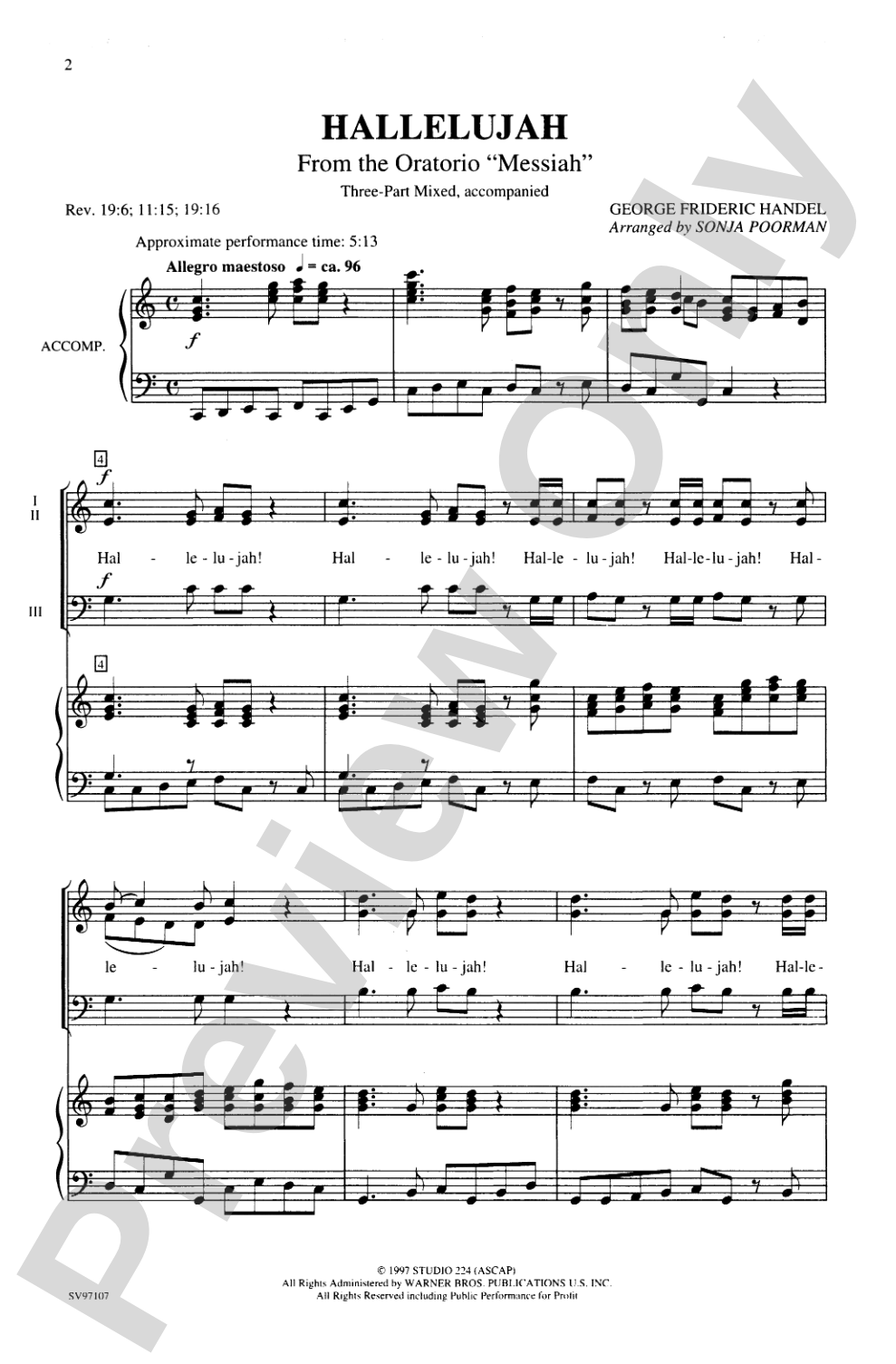
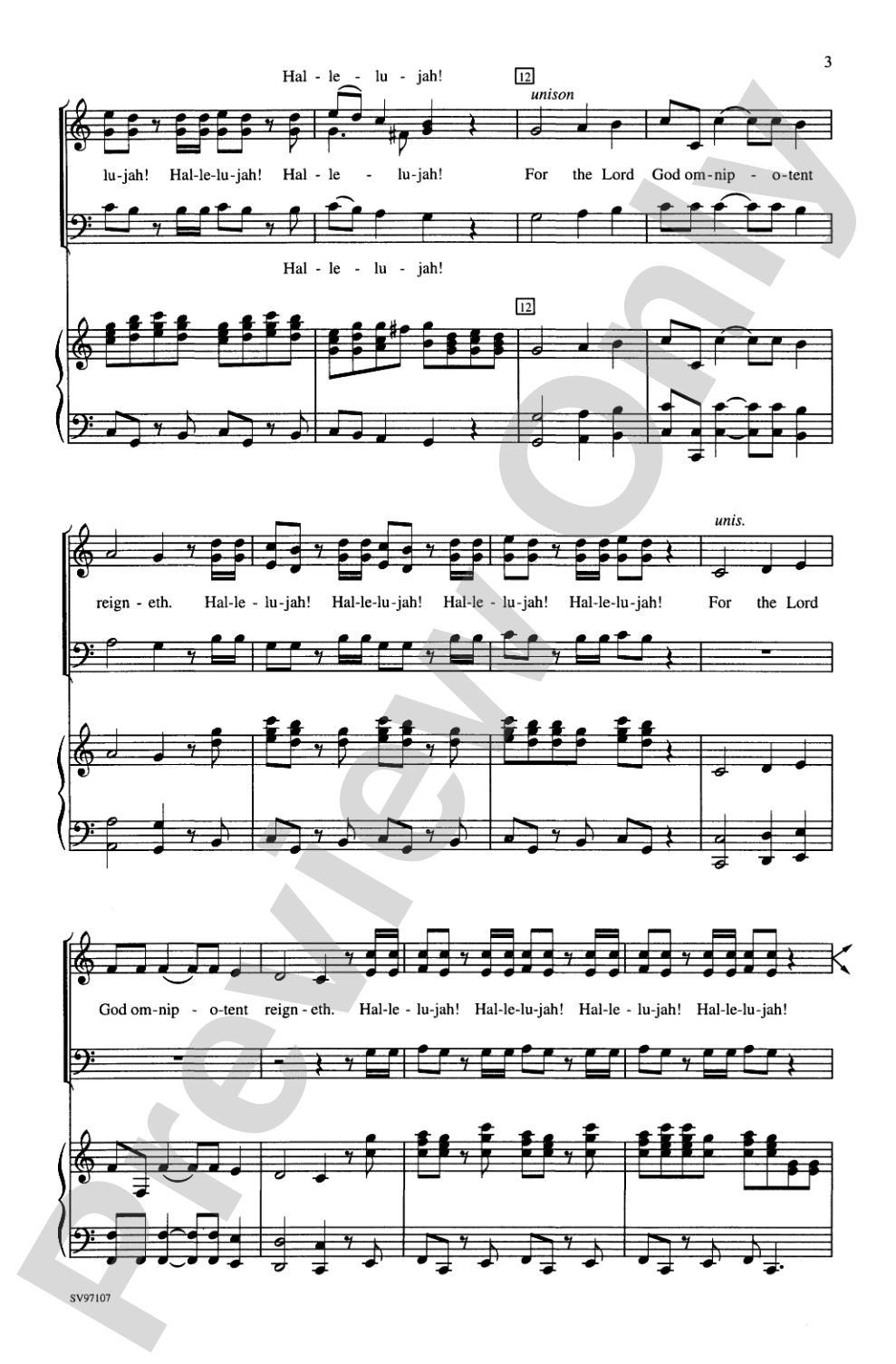
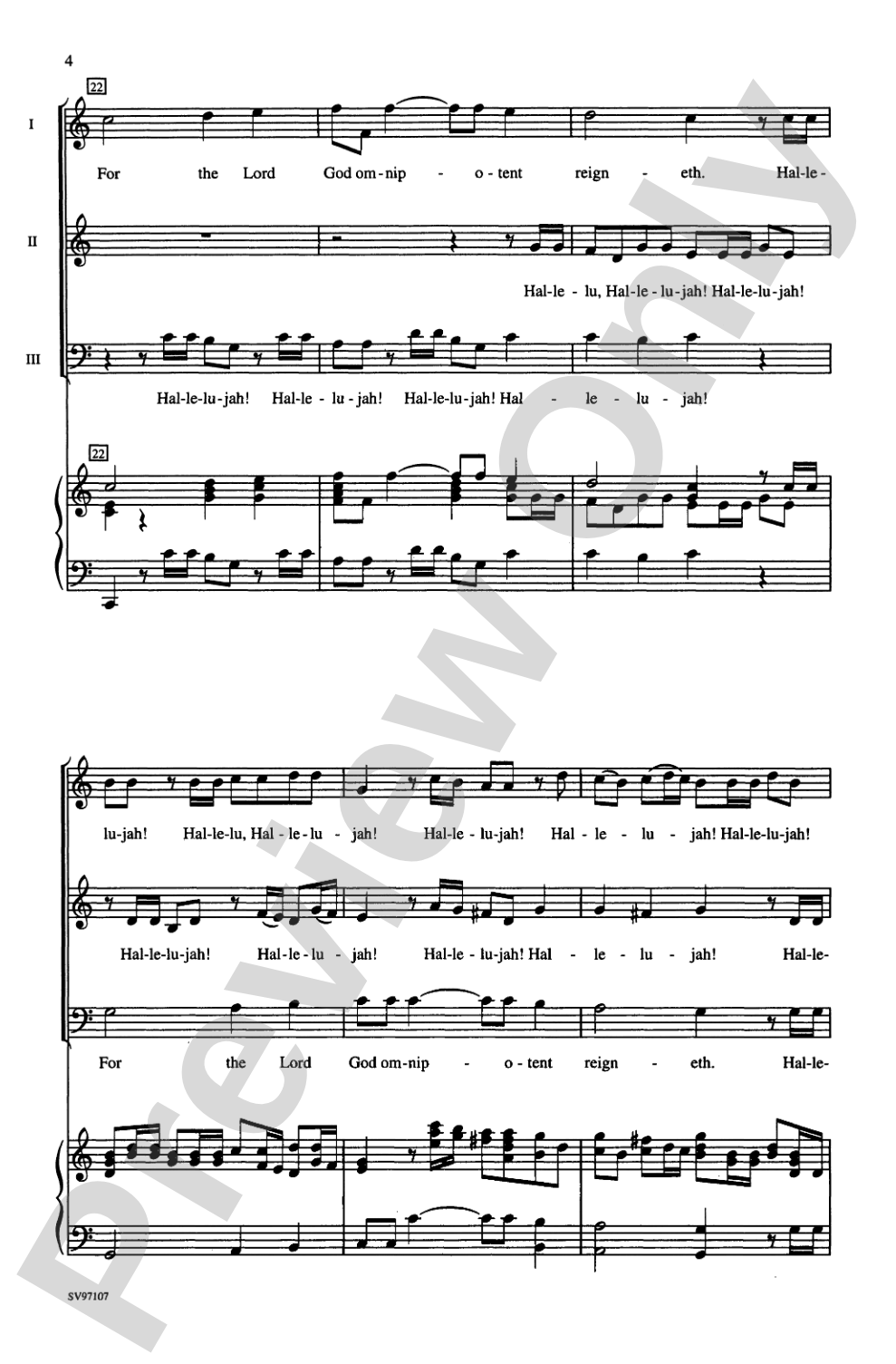

Hallelujah (from the oratorio Messiah): 3-Part Mixed Choral Octavo
From the Oratorio Messiah
By George Frideric Handel / arr. Sonja Poorman
Item: 00-PO-0002758
$2.95
Minimum order quantity: 20 copies
Pickup currently not available
Description
The Handel classic sung every year by millions of singers of all ages is now recreated in a very performable edition for younger and developing choirs. Sonja has carefully crafted the arrangement to capture the original integrity while making it eminently singable. This arrangement is destined to become a standard.


Hallelujah (from the oratorio Messiah): 3-Part Mixed Choral Octavo isn't in MakeMusic Cloud just yet...but it could be. Let us know you'd like to see it, and you'll help shape what comes next. In the meantime, start a free trial and dive into thousands of interactive titles your students can play along with today.
Request This Title
Tell us you want it.
Start Your Free Trial
Explore everything that's ready to play right now.
Sample Audio
No sample audio found.
Sample Video
No sample videos found.
Additional Details
Series:
Alfred Archive Edition: Studio PR Catalog
Publisher:
Alfred Music
Page Count:
16
SKU:
00-PO-0002758
More about this title
About the Composer: George Frideric Handel
George Frideric Handel (1685-1759) spent much of his career in England, where he became the dominant figure in English musical life during the eighteenth century. His output spanned operas, instrumental works, and sacred music, but it is the oratorio that secured his legacy in music education. Messiah stands apart as perhaps the most widely performed choral work in the Western repertoire, beloved across centuries for its grandeur, accessibility, and spiritual power.
Handel's genius lay in writing for real singers and real ensembles. His melodies soar without becoming unsingable; his harmonies move with clarity and purpose. For music educators, his work demonstrates that popularity and artistic integrity are not mutually exclusive. A piece need not be obscure to be worth teaching, and a masterwork need not be simplified to be shared with developing musicians.
Why we love this
Sonja Poorman's arrangement honors the monumental original while speaking directly to the voices and sight-reading abilities of younger choirs. Rather than dilute the piece into something unrecognizable, she has made thoughtful choices about voicing and range that allow singers to experience authentic Baroque writing without the frustration of impossible tessitura. This is how you build a generation of musicians who can walk into a concert hall and recognize Messiah as their own.
What to expect
Radiant and exultant. The piece opens with measured dignity, then builds into the overwhelming affirmation that gives Messiah its name. Even in this adapted form, singing "Hallelujah" creates a palpable lift in the room; the repeated text and rising melodic lines generate genuine joy rather than forced celebration.
Who it's for
This octavo suits middle and high school choirs, developing community choirs, and singers aged 12 and up who are ready for a substantial four-part work presented in a more manageable three-part format. It is equally at home in a progressive church program or a secular concert setting where younger singers need access to canonical literature.
How to get the most out of it
- Study the recorded accompaniment before rehearsal to establish the harmonic foundation; singers will lock onto the alto and soprano lines more securely when they know where the bass progression sits.
- Shape phrases around the text rather than resting at barlines; this Baroque masterpiece breathes in thought units, not measures.
- Balance the three parts carefully during the famous "Hallelujah" section; the sopranos should not overshadow the supporting lines, as the strength comes from unified texture.
How to use it
This works brilliantly as a holiday finale, whether performed alongside other Messiah excerpts or as a standalone beacon in a mixed concert. It also makes an excellent spring or end-of-year celebration piece, marking an ensemble's growth in musical maturity. Directors often find it reaches beyond their usual audience because millions of concertgoers already carry this melody in their hearts.
Skills your students will build
- Baroque phrasing and text-driven articulation
- Managing divided three-part voicing with independence
- Sustaining full-voice singing without loss of intonation in longer phrases
- Building ensemble blend across SAB ranges