
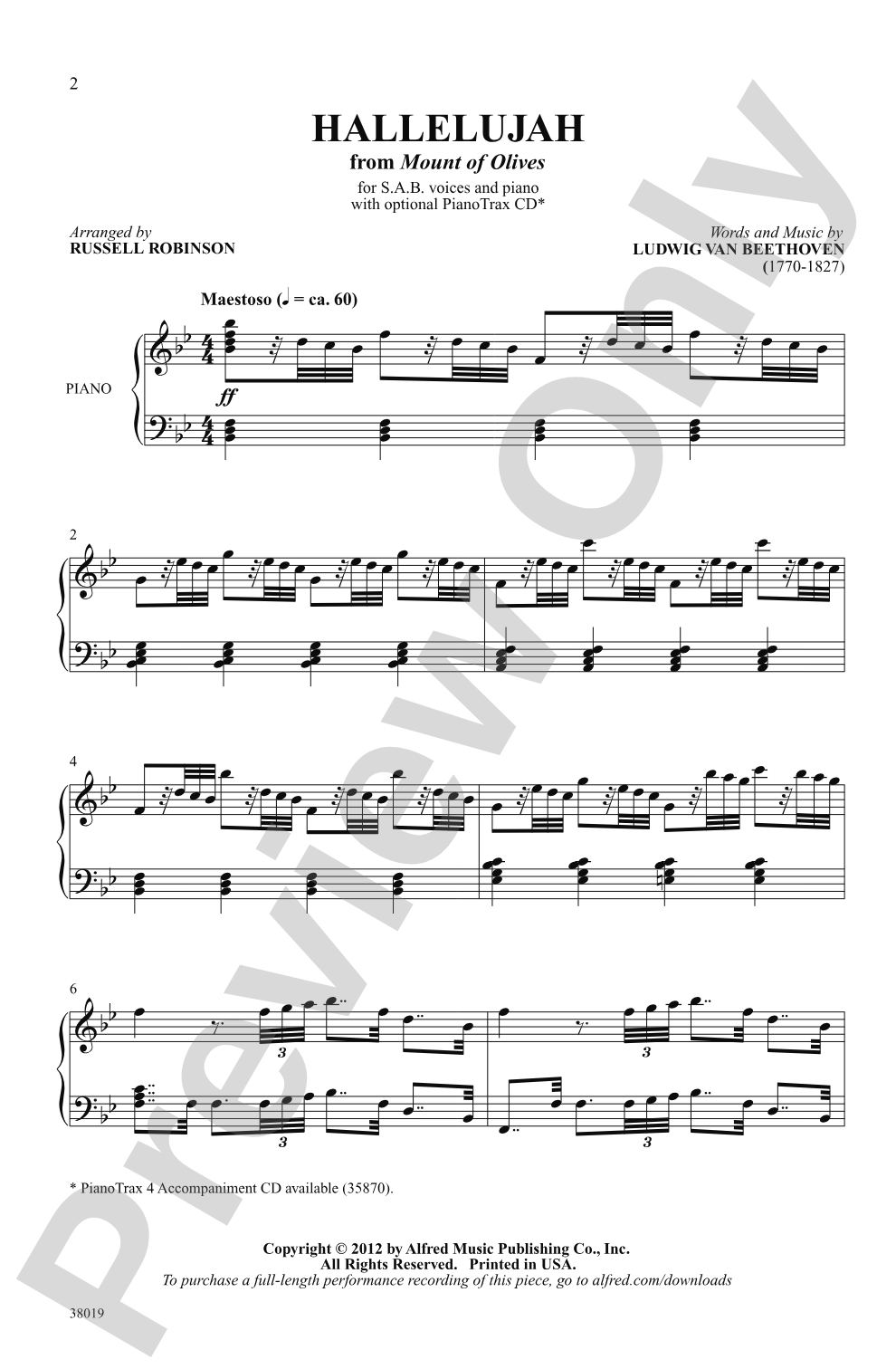
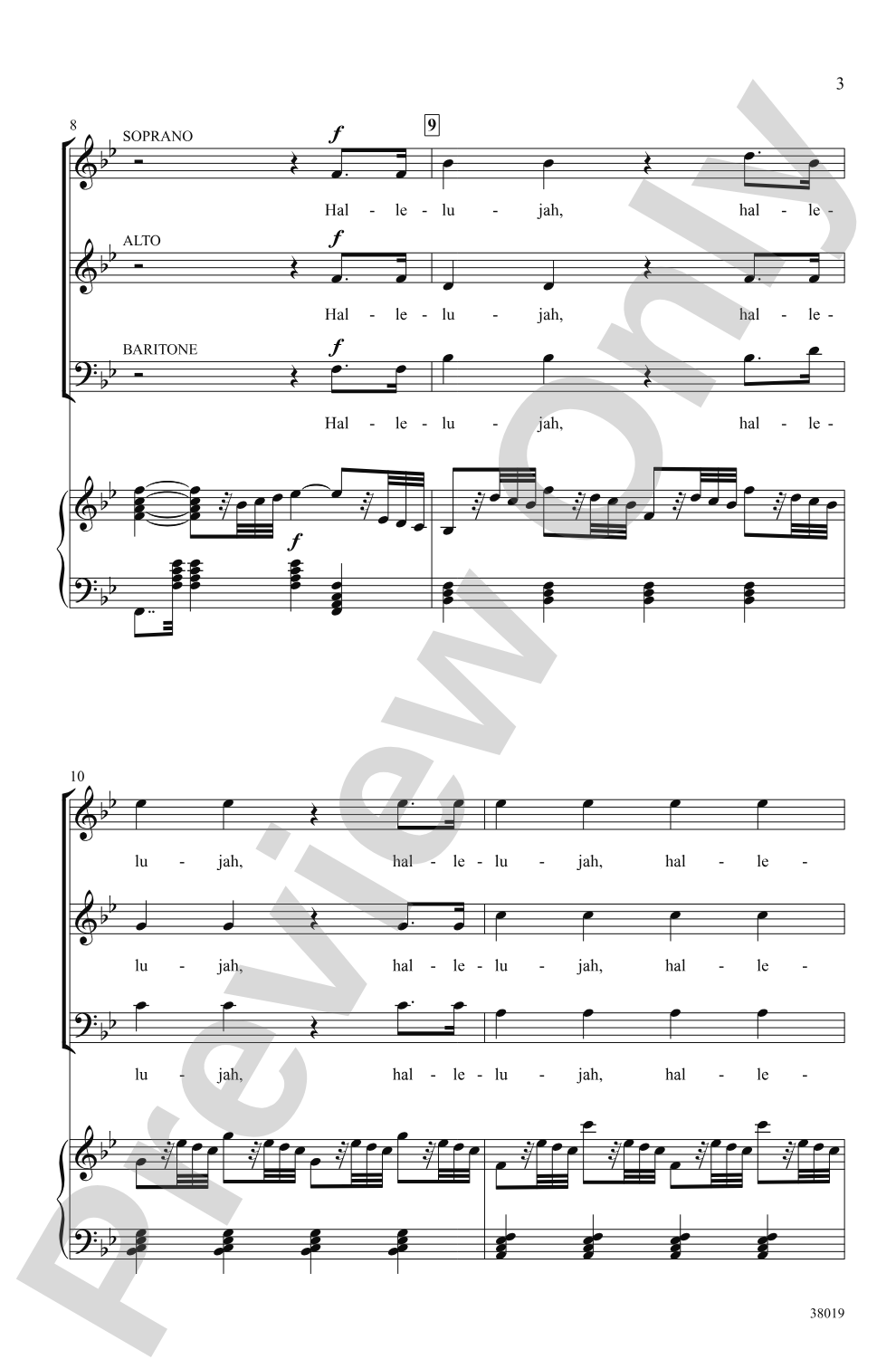
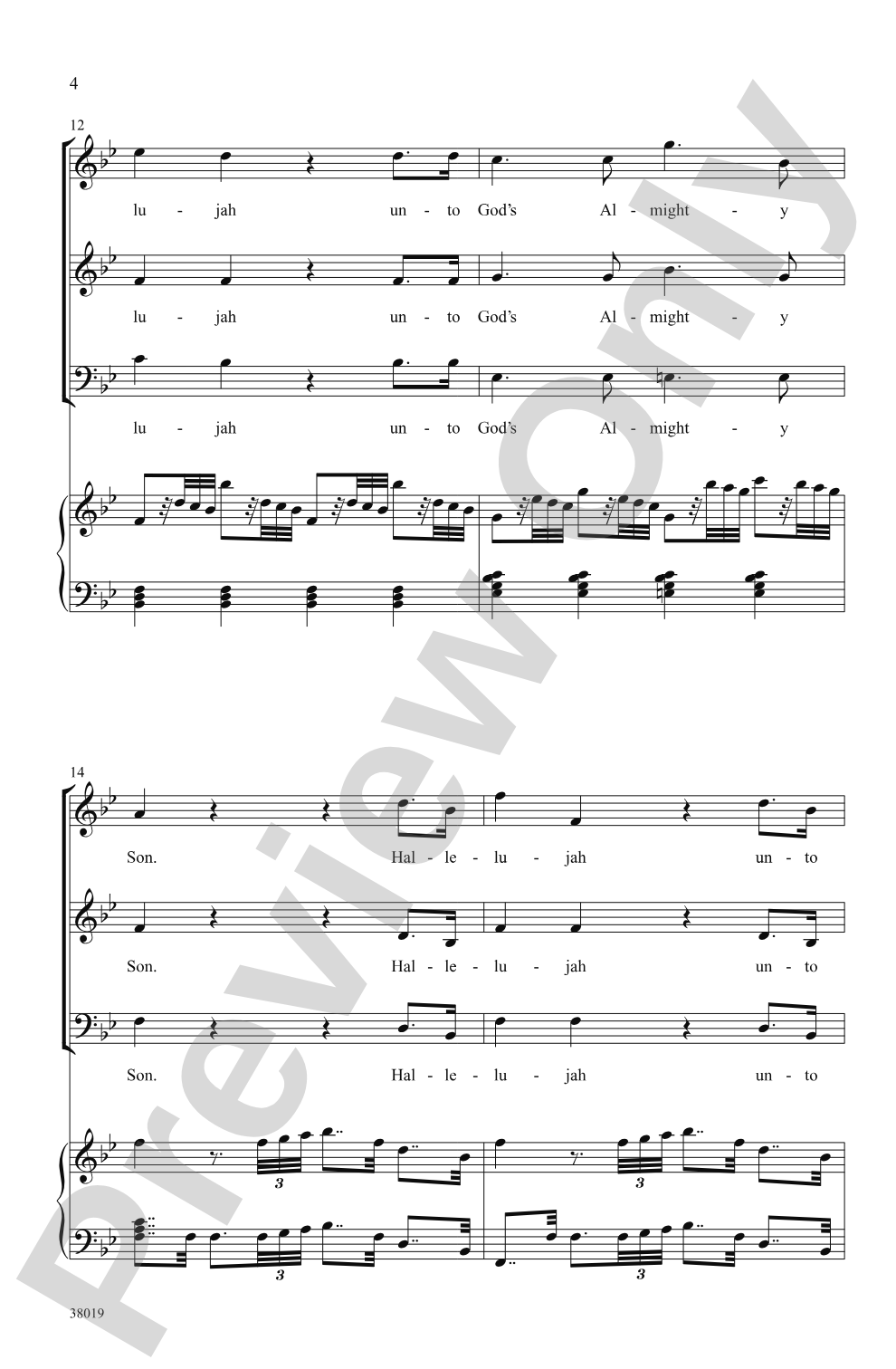
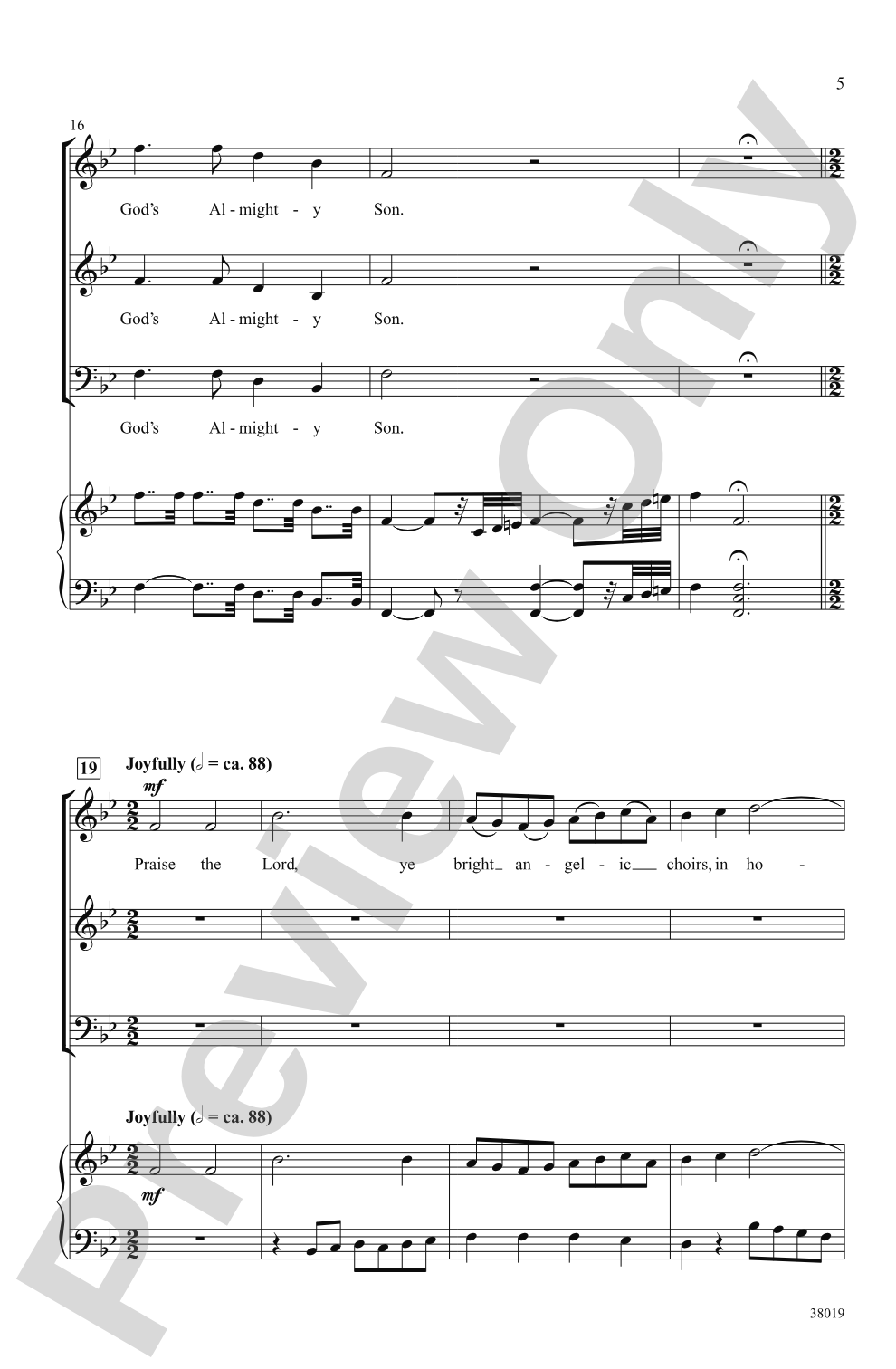
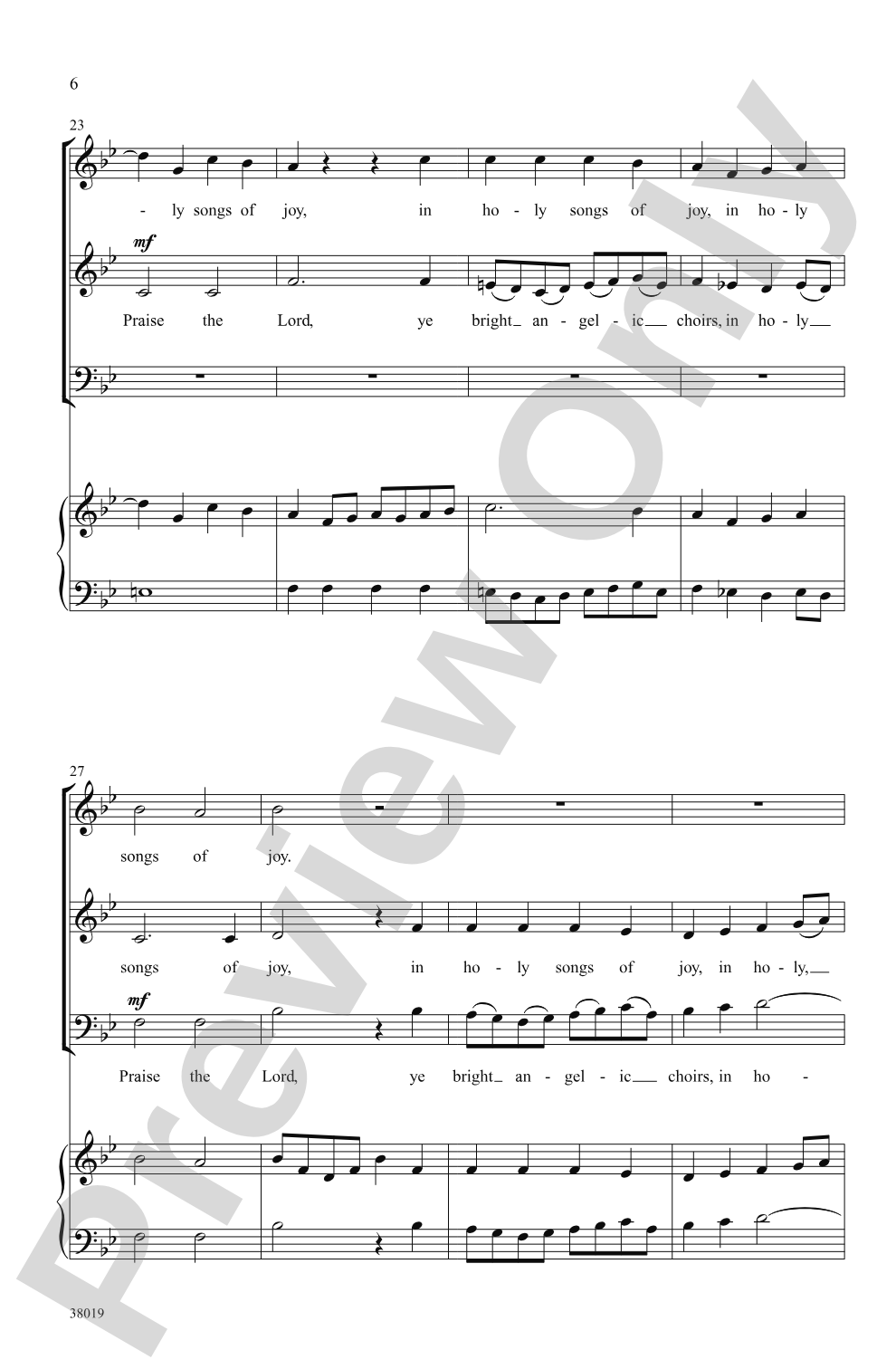

Hallelujah (from Mount of Olives): SAB Choral Octavo
From Mount of Olives
Words and music by Ludwig van Beethoven / arr. Russell Robinson
Item: 00-PO-0001336
$2.50
Minimum order quantity: 20 copies
Pickup currently not available
Related Items
Hallelujah: PianoTrax Digital Download |
$9.99
|
View |
Description
Dr. Robinson presents a manageable edition of this famous final chorus from Beethoven's oratorio. Now smaller and developing choirs can experience this majestic masterwork. (And your accompanist will thank you, too!) Accompaniment available on PianoTrax 4 CD (00-35870).


Hallelujah (from Mount of Olives): SAB Choral Octavo isn't in MakeMusic Cloud just yet...but it could be. Let us know you'd like to see it, and you'll help shape what comes next. In the meantime, start a free trial and dive into thousands of interactive titles your students can play along with today.
Request This Title
Tell us you want it.
Start Your Free Trial
Explore everything that's ready to play right now.
Sample Audio
1
Audio File
--:--
0:00
0:00
Sample Video
No sample videos found.
Additional Details
Series:
Alfred Choral Designs
Publisher:
Alfred Music
Page Count:
24
SKU:
00-PO-0001336
More about this title
About the Composer: Ludwig van Beethoven
Ludwig van Beethoven (1770-1827) stands as the bridge between Classical and Romantic music, a composer whose symphonies, sonatas, and vocal works redefined what music could express. His oratorio "Mount of Olives" (Christus am Ölberge), completed in 1803, captures the dramatic intensity and spiritual depth that characterize his mature style. Beethoven's gift for sweeping melody and architectural form made his music accessible to performers and audiences alike, even as his harmonic language pushed the boundaries of his era.
For choral directors, Beethoven remains endlessly rewarding because his writing combines profound emotional content with clear structural logic. His choruses demand precision and commitment from singers while offering immediate musical payoff. The "Hallelujah" from "Mount of Olives" exemplifies this quality: a celebration of faith rendered in music of undeniable power and clarity.
Why we love this
Russell Robinson's SAB version grants choirs access to a legitimate masterwork without the technical demands of the original full score. The arrangement honors Beethoven's essential voice leading and harmonic architecture while creating genuine parts for treble, alto, and bass. Programming an authentic Beethoven chorus alongside your contemporary repertoire signals to singers and audiences alike that classical literature belongs in every season.
What to expect
Triumphant, direct, and spiritually resonant. The piece radiates certainty and celebration rather than doubt or introspection; Beethoven's "Hallelujah" is an affirmation rendered in straightforward, powerful harmonic language. There's an architectural inevitability to the phrase structure that carries singers forward with its own momentum.
Who it's for
Developing choirs, community ensembles, and smaller high school programs looking to expand beyond standard pop and contemporary arrangements into legitimate classical choral literature. Directors who want to build singers' experience with Beethoven's compositional voice without the vocal demands of unison or SATB full-choir arrangements will find this edition ideal for building confidence and musicianship.
How to get the most out of it
- Build the dynamic shape deliberately across phrases rather than holding at one volume level. Beethoven's text setting creates natural swell points; let the word accents guide your phrasing.
- Lock the harmonic rhythm with your accompanist during rehearsal. The piano part carries the structural framework, and clarity in the accompaniment will anchor intonation for all three parts.
- Pay particular attention to the text underlay in homophonic sections. Beethoven aligns syllables with specific harmonic moments, and misalignment muddles both clarity and musicality.
- Isolate the alto line in sectionals. Middle voices often carry harmonic responsibility that isn't immediately obvious, and secure altos lift the entire chord quality.
How to use it
Feature this as the centerpiece of a sacred concert or as the closing work on a mixed program where classical stakes matter. The piece works beautifully paired with shorter contemporary sacred works or as a capstone moment in a concert exploring different eras of choral writing. Its length and weight make it suitable as a concert finale that leaves audiences with a sense of genuine artistic accomplishment.
Skills your students will build
- Reading and executing dynamic contrasts in homophonic textures
- Balancing three independent melodic lines while maintaining harmonic cohesion
- Executing sustained phrases with proper breath support
- Interpreting Romantic-era underlay and phrasing conventions
- Singing with textual clarity in a foreign language (German)