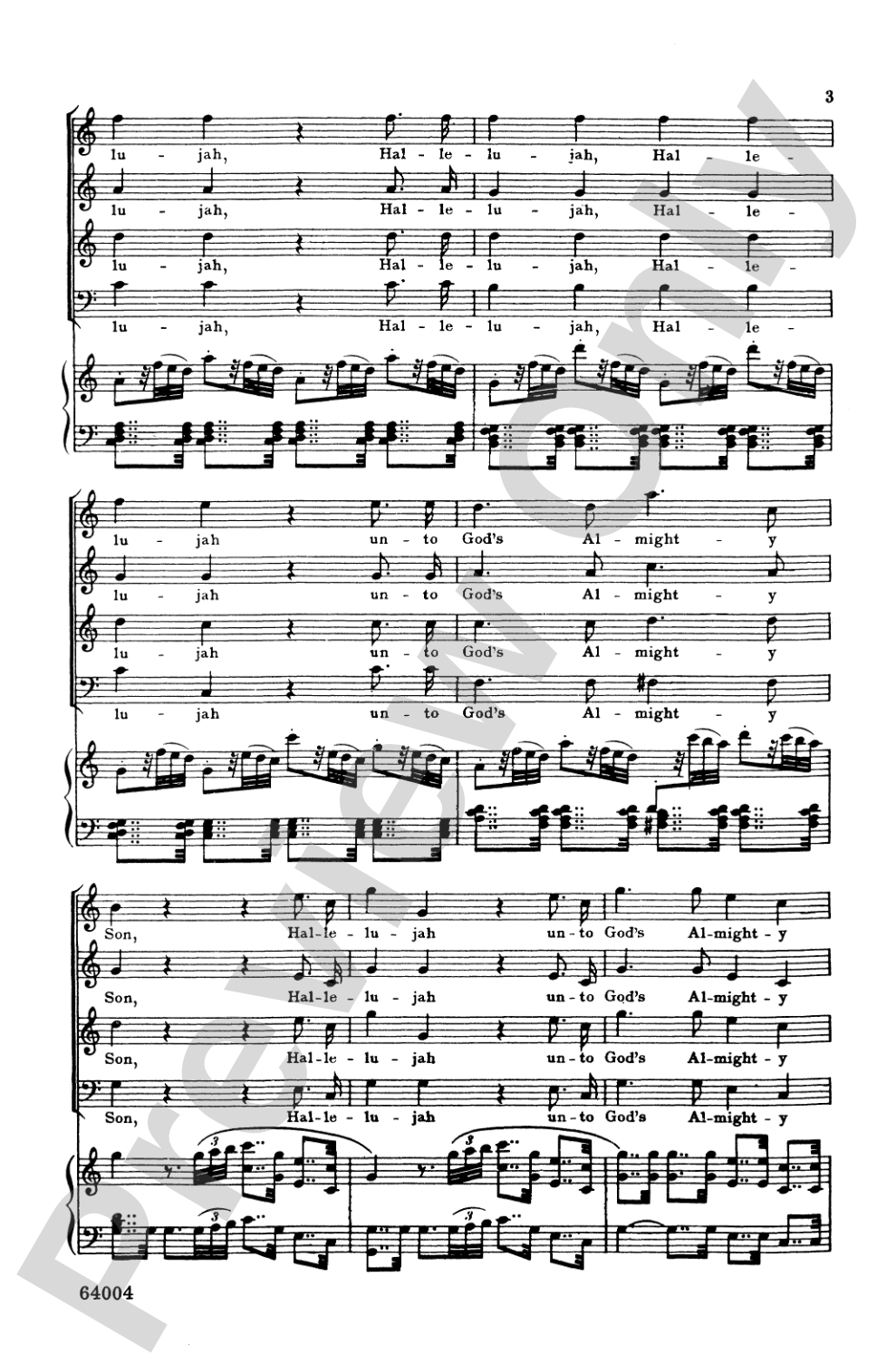
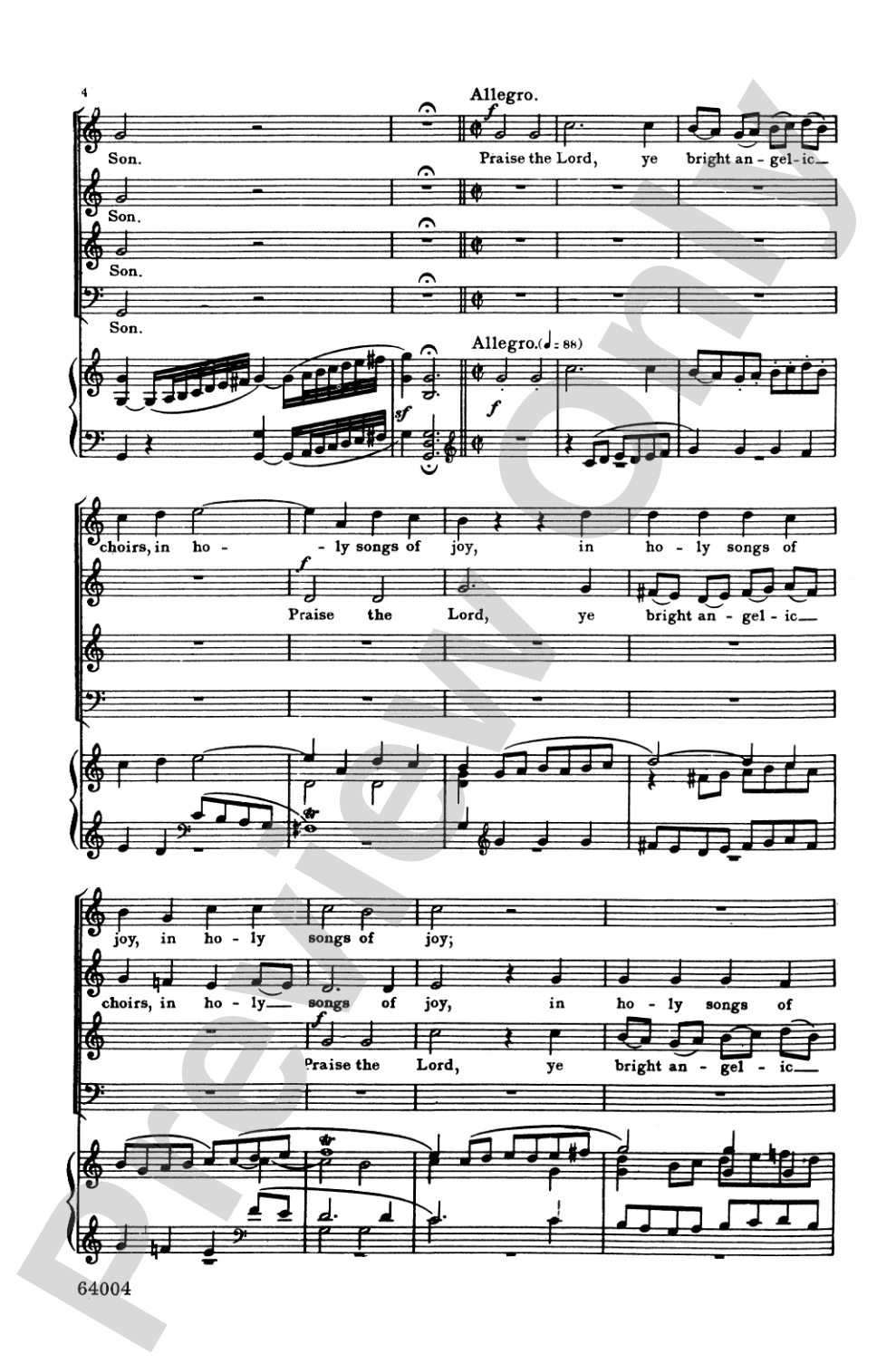
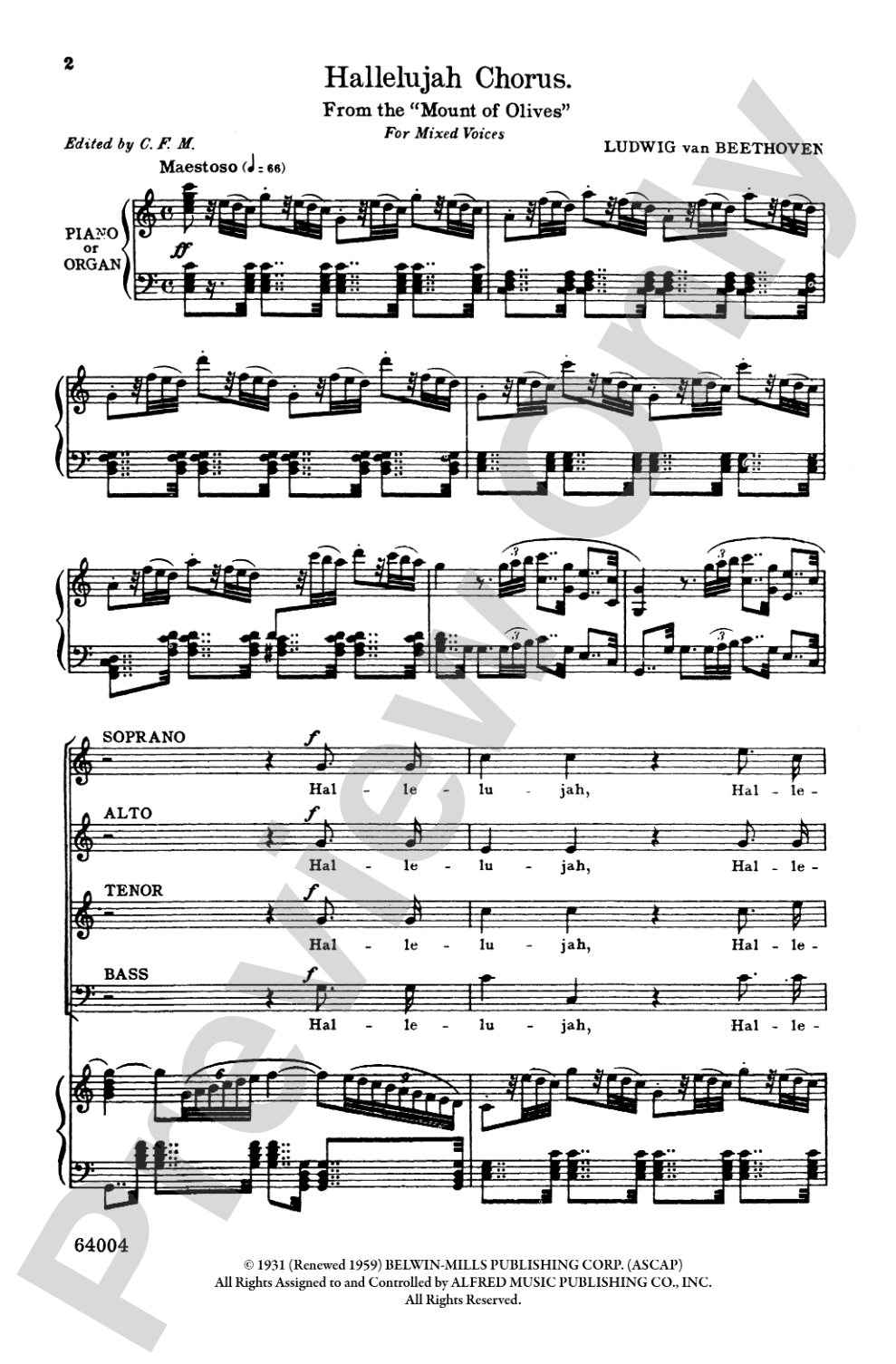
Hallelujah Chorus (<I>Mount of Olives</I>) Sheet Music Preview

Hallelujah Chorus (Mount of Olives): SATB Choral Octavo

By Ludwig van Beethoven

Level: Moderately Difficult

Item: 00-PO-0004525

Digital Download
$2.95

Minimum order quantity: 20 copies

Description

Hallelujah Chorus (Mount of Olives): SATB Choral Octavo isn't in MakeMusic Cloud just yet...but it could be. Let us know you'd like to see it, and you'll help shape what comes next. In the meantime, start a free trial and dive into thousands of interactive titles your students can play along with today.

Sample Audio
No sample audio found.
Sample Video
Additional Details
Series: Alfred Archive Edition: Belwin Sacred Choral Series
Publisher: Alfred Music
Page Count: 16
SKU: 00-PO-0004525

More about this title

About the Composer: Ludwig van Beethoven

Ludwig van Beethoven (1770-1827) was a German composer whose nine symphonies and numerous chamber works became cornerstones of Western classical music. Working across the Classical and Romantic periods, he expanded harmonic language and formal structures in ways that influenced composers for generations. His sacred vocal works, including the *Missa Solemnis* and the oratorio *Christus am Ölberge* (Mount of Olives), demonstrate his ability to blend intimate human expression with monumental choral writing.

Beethoven's choral music demands both technical skill and emotional maturity from singers. The *Hallelujah* from *Mount of Olives* exemplifies his approach to text setting: direct, powerful, and deeply connected to the meaning of the words. This piece teaches choirs about the weight of declaration and the architectural strength needed to sustain grand affirmations of faith.

Why we love this

This setting elevates the *Hallelujah* beyond ornamental jubilation into something architecturally substantial. Beethoven's harmonic language gives singers real dramatic substance to express, and the four-part writing remains accessible without sacrificing sophistication. It's a piece that rewards careful preparation and pays dividends in performance.

What to expect

Grandeur grounded in clarity. Beethoven's *Hallelujah* feels both celebratory and solemn, with a harmonic richness that moves singers through emotional terrain rather than keeping them in one vocal zone. The piece has heft and formality, yet its construction remains transparent enough that good ensemble singing reveals its logic.

Who it's for

This octavo fits choirs at the secondary and collegiate levels that are ready for moderately complex part-writing and textural variety. Directors preparing a contest or festival program will find a work that sits comfortably in the intermediate-to-advanced range without requiring operatic demands.

How to get the most out of it

  • Shape the harmonic progressions with intent. Beethoven's chord changes often move toward structural points; singers should feel these shifts as signposts rather than surprises.
  • Balance articulation across all four voice parts. SATB independence means some voices carry the main line while others provide harmonic support. Keep the texture clear by letting each part know its role in each phrase.
  • Sustain the piece's declarative character without rushing. "Hallelujah" is not a quick affirmation here; it's a statement that unfolds with deliberation and weight.
  • Tune the unison or octave passages with extra care. When voices double, intonation becomes more obvious and must be pristine.

How to use it

This works exceptionally well as a centerpiece in a program that pairs sacred classical masterworks with contemporary or traditional pieces. Its 16-page length and moderate difficulty make it a strong anchor for festival or concert programming. Consider pairing it with a lighter opening number or a complementary sacred work to frame it effectively.

Skills your students will build

  • Reading and balancing independent SATB lines with varying rhythmic profiles
  • Sustaining long phrase arcs across harmonic changes
  • Shaping text-driven declaration with precision and intention
  • Tuning complex harmonic progressions, especially passing chords and modulations
  • Ensemble focus when voice parts double or move in parallel motion

You May Also Like