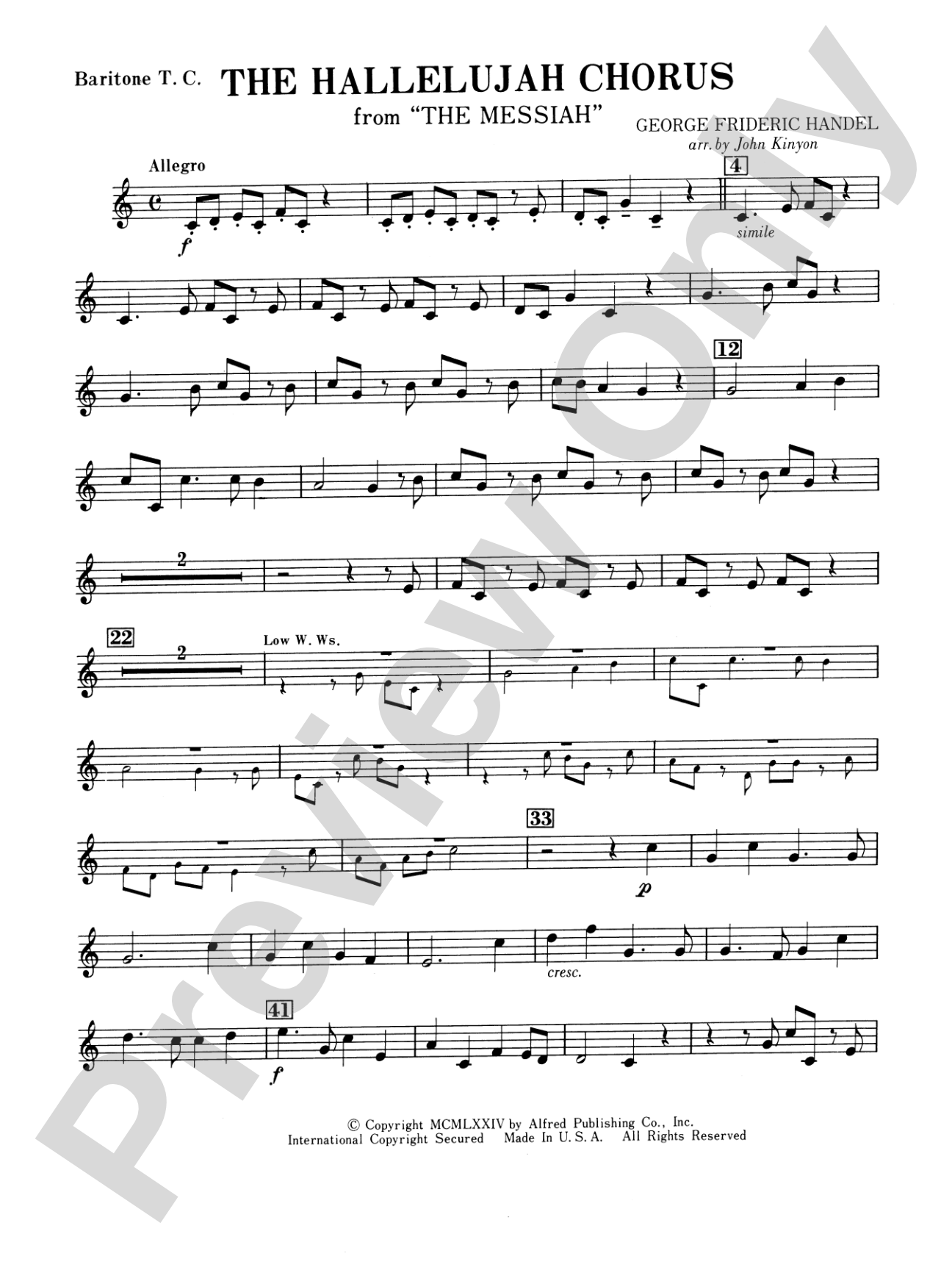
Hallelujah Chorus: Baritone T.C. Sheet Music Preview

Hallelujah Chorus: Baritone T.C.

By George Frideric Handel / arr. John Kinyon

Grade: 3 (Medium)

Item: 00-PC-0000082_BTC1

Digital Download
$3.00
Description

Don't just read it, hear it, play along with it, and watch your students grow with it. In MakeMusic Cloud, Hallelujah Chorus: Baritone T.C. comes alive with professional accompaniment, adjustable tempo, and built-in practice tools that turn solo practice into real progress.

Sample Audio
No sample audio found.
Sample Video
Additional Details
Series: Growing Band Series
Publisher: Alfred Music
Page Count: 246
SKU: 00-PC-0000082_BTC1

More about this title

About the Composer: George Frideric Handel

George Frideric Handel (1685–1759) was a German-born composer who spent most of his career in England, where he became one of the most celebrated musicians of the Baroque era. His music blends Italian melody with German contrapuntal craft, creating works of both immediate appeal and structural sophistication. Handel wrote across every major genre of his time: operas, oratorios, concertos, and keyboard music that remain central to the concert repertoire and to music education.

The Hallelujah Chorus, from his 1741 oratorio Messiah, stands as one of the most recognizable pieces in Western music. Its jubilant energy, memorable melodic hooks, and grand harmonic architecture make it enduringly popular in schools, churches, and concert halls. For student musicians, Handel's music offers accessible entry into Baroque compositional thinking and the rewards of performing a true masterwork.

Why we love this

John Kinyon's arrangement opens this iconic chorus to concert bands at a realistic Grade 3 level without sacrificing the piece's essential character or grandeur. The inclusion of both band and chorus parts means you can program it with singers if you have them, or let the band stand alone, giving you flexible performance options. Audiences respond instantly to this music, which makes it an intelligent choice for holiday concerts, pops programs, or any event that benefits from immediate emotional impact.

What to expect

Triumphant and unabashed. This is Baroque jubilation at its most direct: homophonic blocks of sound, driving rhythms, and that famous syncopated melodic figure that lodges instantly in the ear. The piece radiates confidence and ceremony without pretense. Playing it generates genuine energy in the ensemble and lifts the mood of any concert.

Who it's for

Concert bands at the Grade 3 level, whether in middle school, high school, community, or church settings. Directors seeking repertoire that excites both student musicians and audiences will find this arrangement engaging; it's substantial enough to feel like a real achievement but accessible enough that students can execute the music with musicality rather than struggling through the mechanics.

How to get the most out of it

  • Balance the melody across sections so the main theme sings clearly; Grade 3 bands often cluster sound in the woodwinds, so bring out French horns and trumpets where Handel voices them with the tune.
  • Establish a steady, confident tempo from measure one; resist the urge to slow down on the famous repeated 'Hallelujahs' or you'll lose the propulsive joy that makes this chorus work.
  • Shape the dynamic arc across the full piece rather than treating each phrase in isolation; the Hallelujah sections build toward a summit, not a series of separate peaks.
  • If adding chorus, rehearse the coordination carefully in advance; the band's rhythmic clarity will anchor singers and give them confidence, especially in the homophonic passages.

How to use it

Program this in the second half of a holiday concert to provide an emotional peak after quieter sacred works, or close a winter/Christmas show with it to send the audience out energized. It also works as a standalone opener for a pops concert or as part of a Baroque survey program where it can sit alongside lighter Handel dances or other baroque band arrangements. The 246-page score and parts indicate a substantial publication, so use it as a concert centerpiece rather than an encore.

Skills your students will build

  • Balanced voicing in homophonic textures
  • Baroque articulation and ornamentation
  • Ensemble rhythmic precision in repeated figures
  • Dynamic shaping and phrasing across longer formal sections
  • Coordination between band and vocal parts (if performed together)

You May Also Like