Hallelujah Chorus (arr. Fred Bock) Sheet Music Preview

Hallelujah Chorus (arr. Fred Bock): Choral Instrumental Pak

By Georg F. Handel / Arranged by Fred Bock

Item: 35-PK01537199

Digital Download
$35.00

One moment…

Description
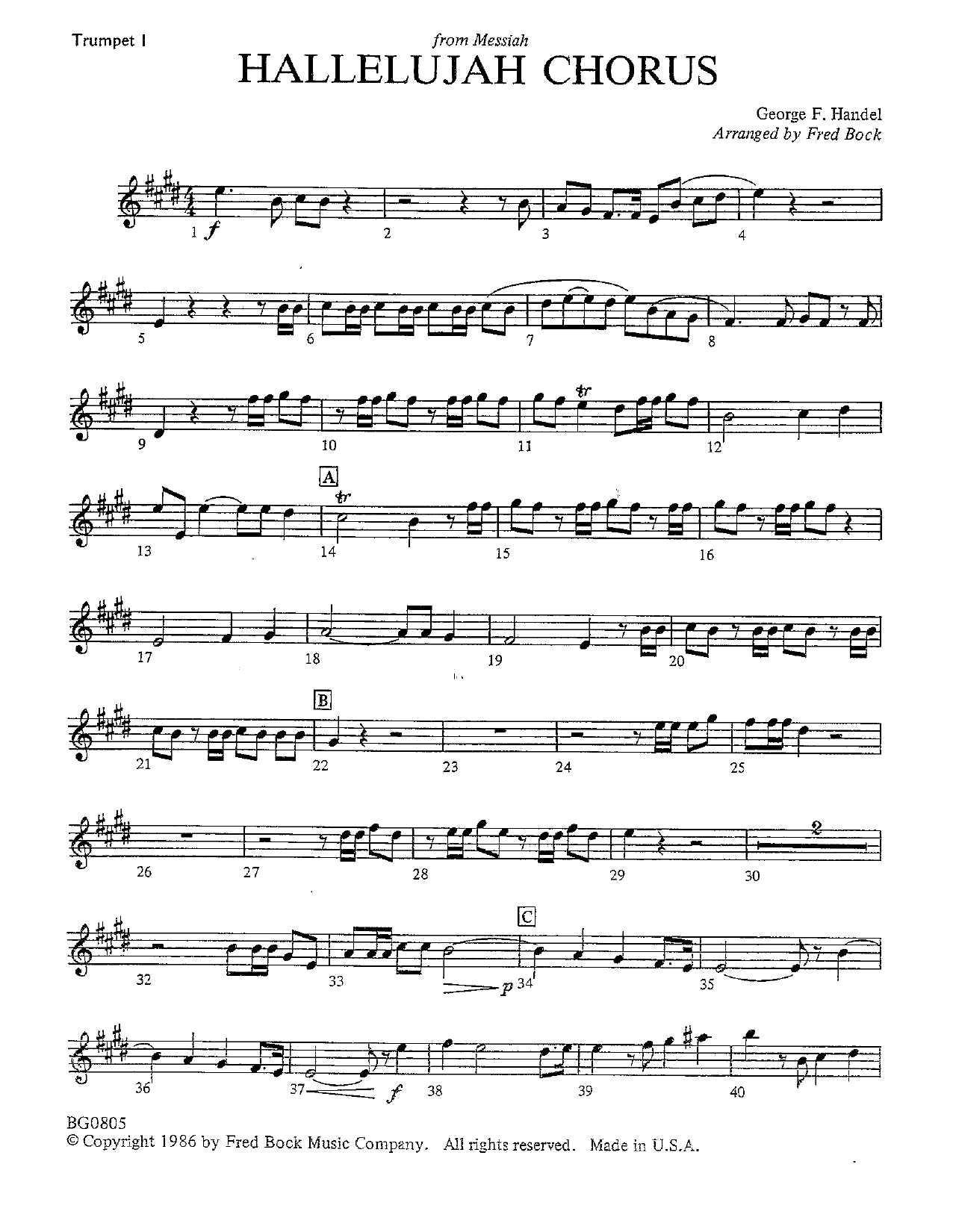
Brass parts for Hallelujah Chorus (arr. Fred Bock)

Hallelujah Chorus (arr. Fred Bock): Choral Instrumental Pak isn't in MakeMusic Cloud just yet...but it could be. Let us know you'd like to see it, and you'll help shape what comes next. In the meantime, start a free trial and dive into thousands of interactive titles your students can play along with today.

Sample Audio
No sample audio found.
Sample Video
Additional Details
Publisher: Hal Leonard
SKU: 35-PK01537199

More about this title

About the Composer: Georg F. Handel

Georg Friedrich Händel (1685–1759) was a German-born composer who spent much of his career in England, where he became a dominant force in baroque music. His mastery of dramatic gesture and sweeping melodic lines made him equally fluent in opera, oratorio, and instrumental music, and his works remain central to the choral repertoire. The Messiah, from which the Hallelujah Chorus emerges, stands as one of the most performed choral works in history, a testament to Händel's gift for writing music that moves both performers and audiences with crystalline clarity and structural brilliance.

What makes Händel essential to music education is precisely this clarity. His writing never obscures intention; every part has voice and purpose. Students who study his choruses learn not just baroque style but fundamental principles of voice leading, harmonic function, and the architecture of large forms. For directors, Händel provides repertoire that teaches without requiring specialized period-practice knowledge, making it accessible to ensembles at many levels.

Why we love this

Fred Bock's arrangement gives your brass section a chance to own one of music's most recognizable moments. The familiarity of the melody actually works in your favor: the brass can focus entirely on blend, intonation, and the rhythmic precision that makes this chorus grip an audience. Bock's scoring respects both the original's grandeur and the practical realities of the rehearsal room.

What to expect

Crystalline and exultant. The repeated "Hallelujah" figures feel almost like bells or fanfares, cutting through with harmonic support underneath that's both complex and utterly clear. There's no darkness here, only affirmation and light.

Who it's for

Choirs performing the Messiah who want to add instrumental weight to the final chorus without rearranging everything from scratch. This works equally well for smaller ensembles that need reinforcement on the melody or for full orchestral programs where brass alone can provide the celebratory punch the text demands.

How to get the most out of it

  • Nail the unison passages first. The repeated "Hallelujah" figures gain their power from locked articulation and breath control across the entire section; sloppy attacks here will undermine everything that follows.
  • Balance the harmonic movement underneath the melody. If your first trumpets carry the tune, the lower brass must anchor without overwhelming; their job is to illuminate the harmonic progression, not compete for attention.
  • Shape the longer note values deliberately. Baroque style often reads as brittle when players rush or let air escape; each held note should be a full breath, not a fade.
  • Work the dynamic curve across phrases, not just within them. The Hallelujah chorus builds cumulatively, so each repetition should feel slightly more emphatic than the last, even if you're not literally getting louder.

How to use it

This is your Easter finale, your concert closer, or your piece for a holiday program where you want something audiences will recognize immediately and something your ensemble can deliver with confidence. Because the melody is so well-known, you can rely on listeners' familiarity to carry them through the harmonic movement, freeing your brass to focus on the technical and artistic demands of staying together and projecting joy.

Skills your students will build

  • Baroque articulation and rhythmic precision in unison figures
  • Balance and blend in brass sonorities supporting a known melody
  • Sustained intonation on held notes at various dynamic levels
  • Harmonic awareness when doubling or supporting rather than leading
  • Shaping longer phrases with dynamic arc rather than relying on crescendos

You May Also Like