
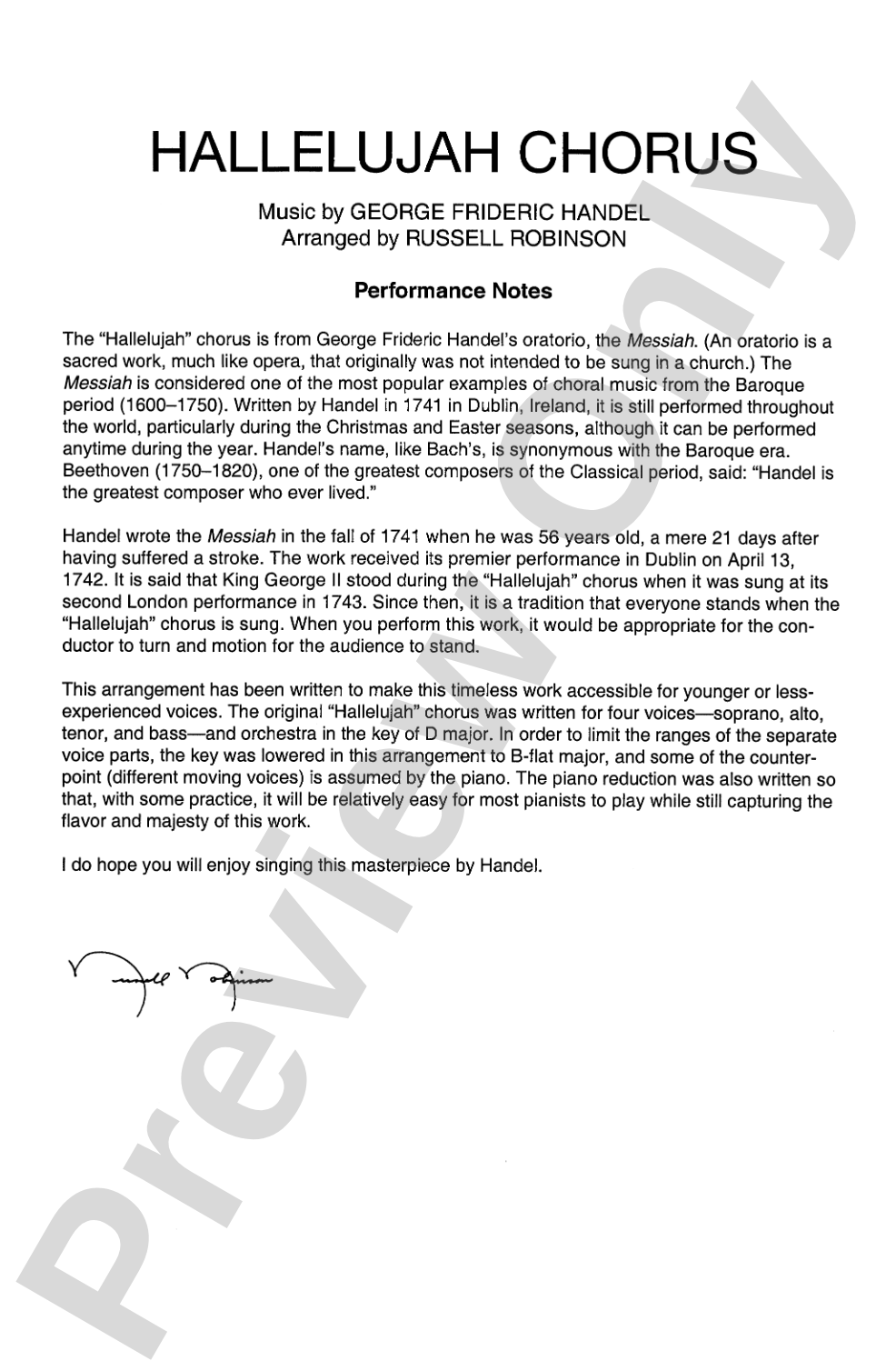
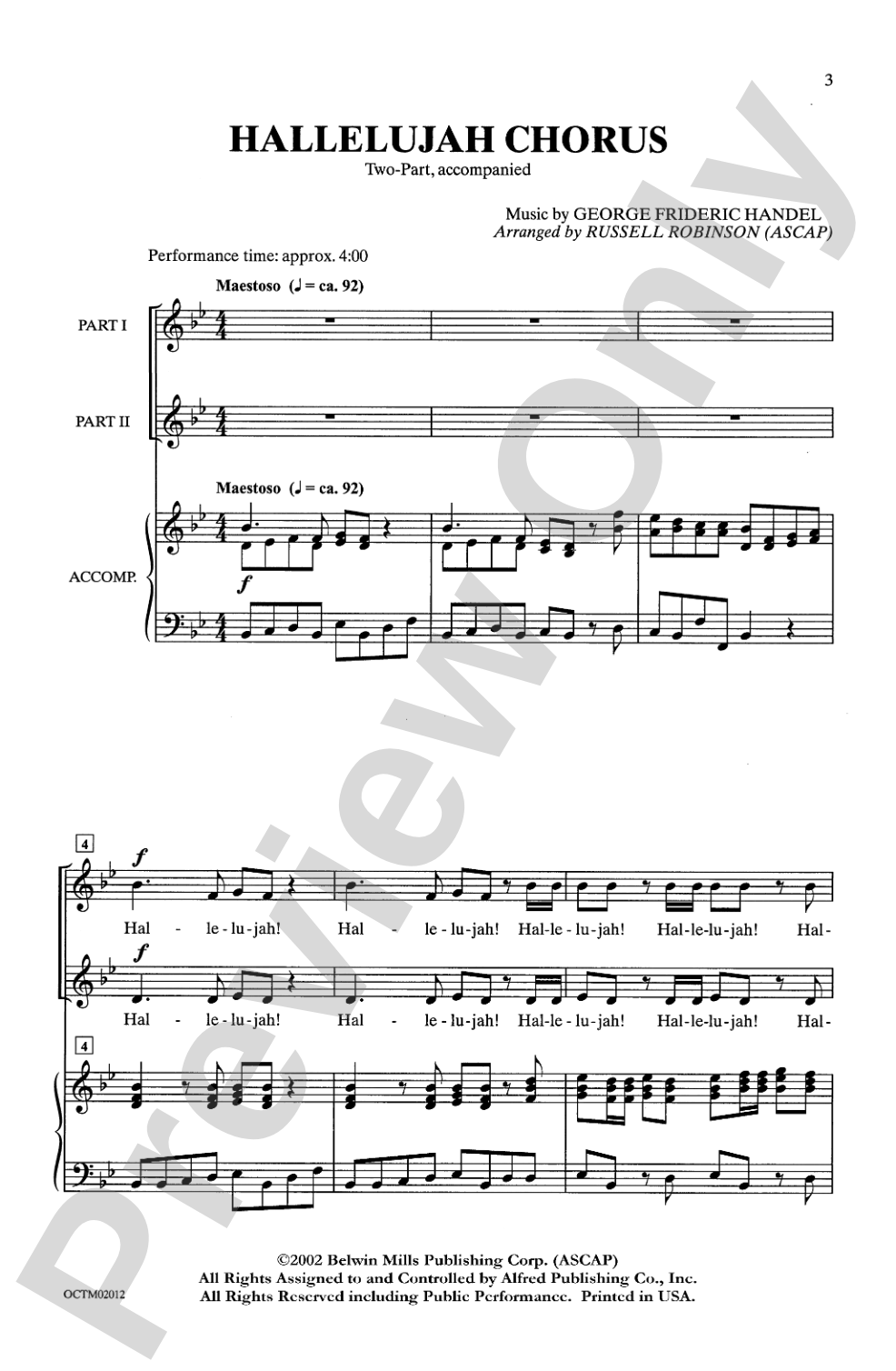
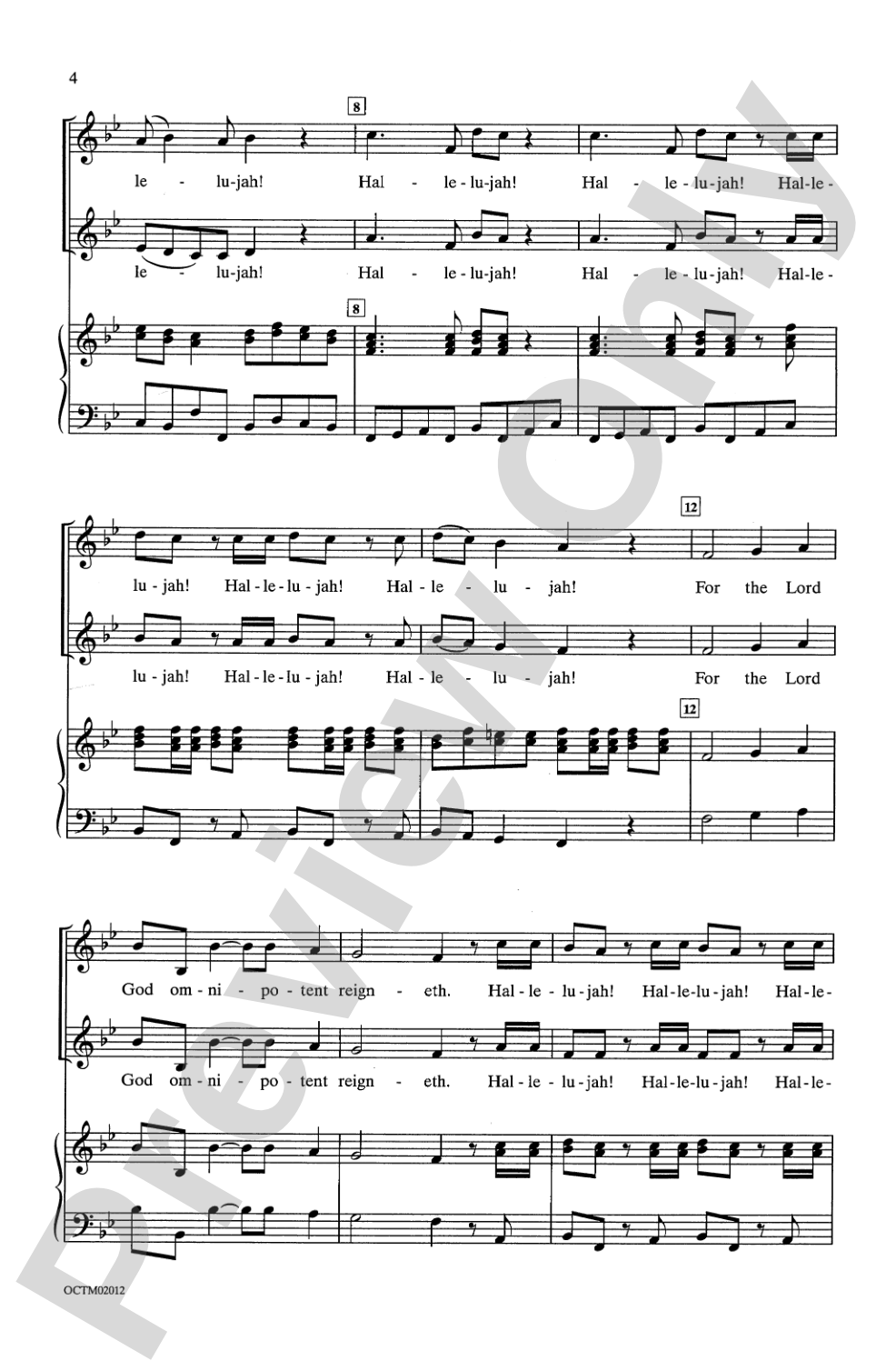

Hallelujah Chorus: 2-Part Choral Octavo
By George Frideric Handel / arr. Russell Robinson
Level: Moderate
Item: 00-PO-0005174
$2.95
Minimum order quantity: 20 copies
Pickup currently not available
Description


Hallelujah Chorus: 2-Part Choral Octavo isn't in MakeMusic Cloud just yet...but it could be. Let us know you'd like to see it, and you'll help shape what comes next. In the meantime, start a free trial and dive into thousands of interactive titles your students can play along with today.
Request This Title
Tell us you want it.
Start Your Free Trial
Explore everything that's ready to play right now.
Sample Audio
No sample audio found.
Sample Video
No sample videos found.
Additional Details
Series:
Alfred Archive Edition: Belwin Festival Series
Publisher:
Alfred Music
Page Count:
16
SKU:
00-PO-0005174
More about this title
About the Composer: George Frideric Handel
George Frideric Handel (1685-1759) shaped the Baroque era as a master of both instrumental and vocal music. Born in Halle, Germany, he spent much of his career in England, where he became the dominant force in opera and oratorio. His ability to write melodies of immediate appeal and harmonic structures of genuine sophistication made him one of the most performed composers of his time and remains so today.
Handel's oratorios, including Messiah, represent some of the greatest achievements in choral literature. These works broke away from the operatic conventions of his day to create a new genre that spoke directly to audiences through memorable choruses, virtuosic solo writing, and profound emotional depth. His influence on choral music education and concert programming endures across centuries.
Why we love this
Robinson's 2-part arrangement makes this Baroque masterpiece accessible to singers who lack the range or experience for the full four-part original. The straightforward voicing lets younger choirs focus on the piece's brilliant text-painting and infectious energy without wrestling with complex harmonic writing. Audiences hear the unmistakable Hallelujah we know, performed with the confidence that comes from a well-matched arrangement.
What to expect
Joy and triumph radiate from every measure. The ascending melodic lines and repeated "Hallelujah" declarations create an infectious sense of celebration and affirmation. Despite its Baroque style, the piece communicates immediately and warmly, inviting audiences into a moment of genuine musical elation.
Who it's for
This arrangement serves choirs in grades 3-5 who want to perform a work that audiences immediately recognize and connect with emotionally. It suits middle school and younger high school ensembles, as well as community and church choirs seeking a shorter, more manageable version of the original. Singers develop musical maturity through Handel's compositional craft without the technical demands of full four-part writing.
How to get the most out of it
- Establish a crisp, articulate diction from the first rehearsal. Handel's text-painting depends on consonants landing cleanly together, especially on repeated "Hallelujah" figures.
- Shape the longer phrases with gentle dynamic swells rather than aggressive dynamic contrasts. This maintains the jubilant character while allowing singers to breathe and phrase musically.
- Balance the two parts carefully in passages where they move in octaves or unison. Neither voice should disappear; instead, they should feel like two strands of the same musical idea.
- Approach the rhythmic patterns with confidence and precision. Handel's Baroque figuration should feel dance-like, not mechanical.
How to use it
This works beautifully as a centerpiece for holiday concerts or winter programs, where it provides a sacred anchor that most audiences will embrace. It also fits well in a spring or end-of-year celebration of masterworks, paired with other Baroque or contemporary pieces to create a diverse program. Consider using it as a closing number to leave audiences with the undeniable energy and optimism Handel intended.
Skills your students will build
- Sustaining long phrases with consistent breath support and intonation
- Performing baroque-era ornamentation and rhythmic patterns with confidence
- Balancing two-part harmony while maintaining independent melodic lines
- Shaping text with clear articulation and musical intent
- Responding to conductorial cues for dynamic and expressive control