

Hallelujah, Amen (from Judas Maccabaeus): SATB Choral Octavo
From Judas Maccabaeus
By George Frideric Handel / arr. Patrick M. Liebergen
Item: 00-PO-0002941
$2.25
Minimum order quantity: 20 copies
Pickup currently not available
Description
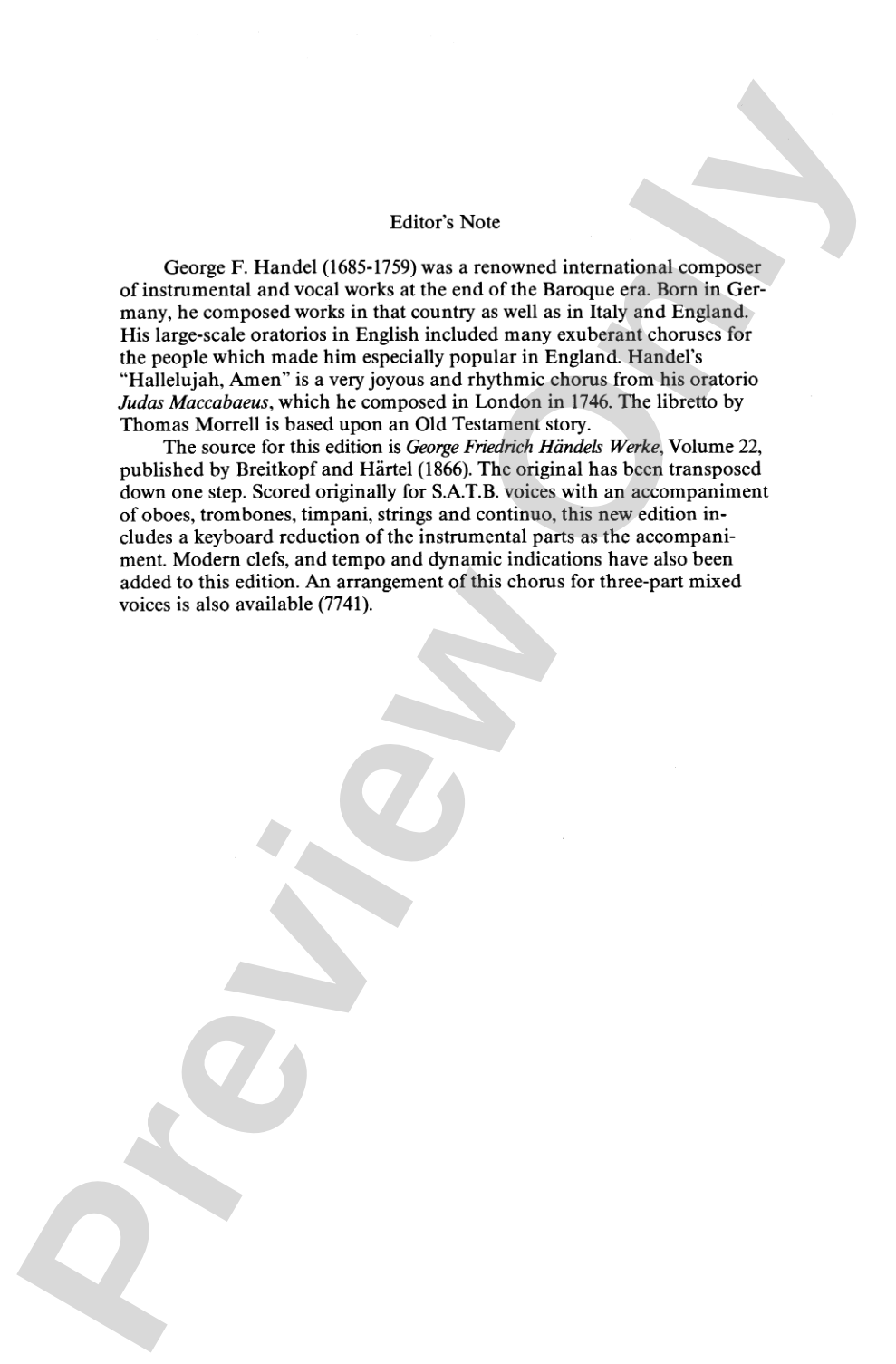
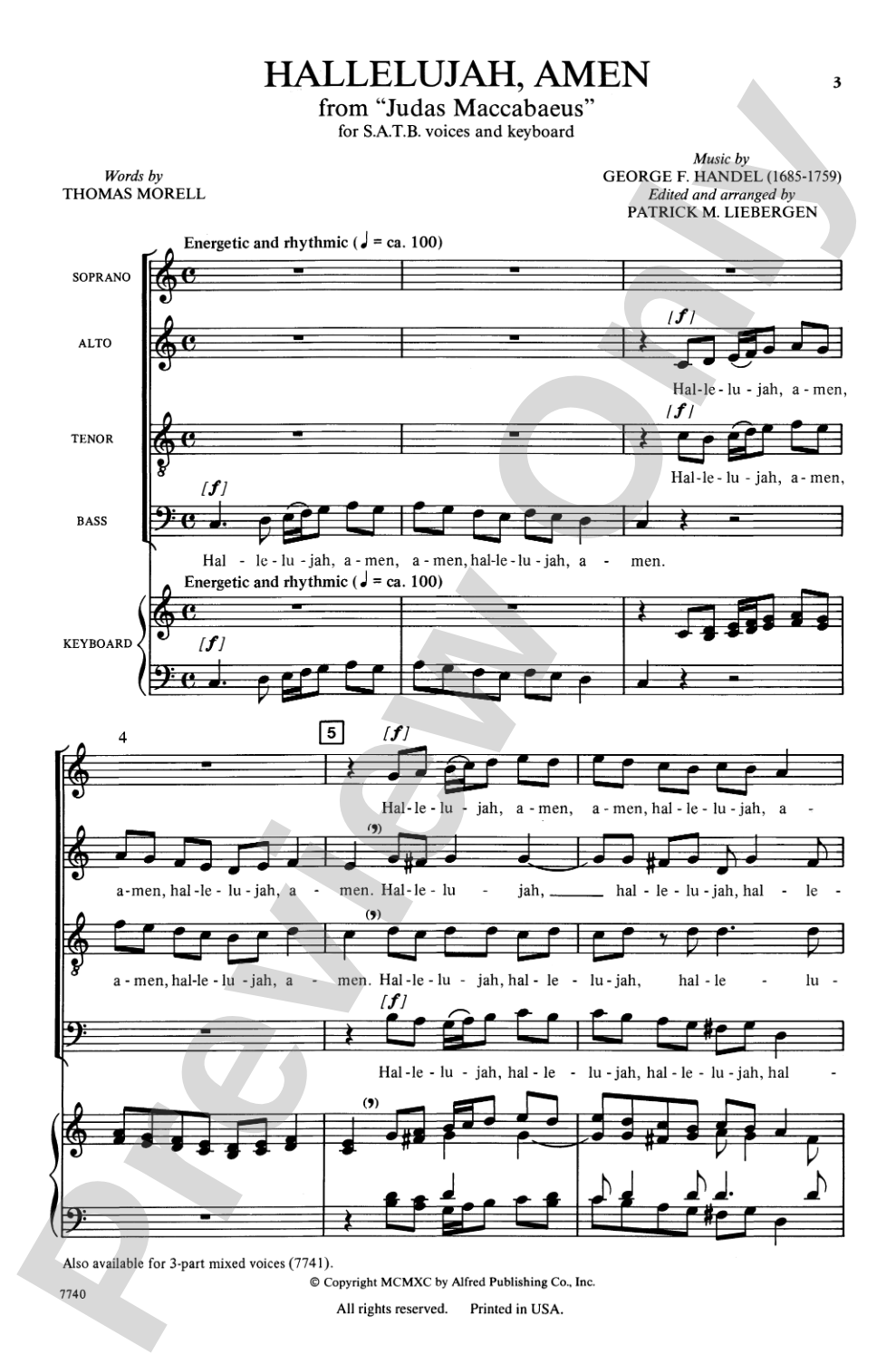
A classic new edition of the choral masterpiece from Handel's Judas Maccabaeus. Patrick Liebergen has carefully edited this work from an 1866 German publication, reducing the instrumental accompaniment to piano or organ. Give your choir the opportunity to perform this fine masterwork from the choral literature of Handel.


Hallelujah, Amen (from Judas Maccabaeus): SATB Choral Octavo isn't in MakeMusic Cloud just yet...but it could be. Let us know you'd like to see it, and you'll help shape what comes next. In the meantime, start a free trial and dive into thousands of interactive titles your students can play along with today.
Request This Title
Tell us you want it.
Start Your Free Trial
Explore everything that's ready to play right now.
Sample Audio
1
Audio File
--:--
0:00
0:00
Sample Video
Additional Details
Series:
Alfred Archive Edition: Alfred Choral Designs
Publisher:
Alfred Music
Page Count:
8
SKU:
00-PO-0002941
More about this title
About the Composer: George Frideric Handel
George Frideric Handel (1685-1759) was a German-born composer who spent most of his career in England, where he became the dominant figure in Baroque music. A master of both instrumental and vocal music, Handel composed 46 operas, numerous oratorios, and sacred works that showcase his gift for memorable melody and dramatic architecture. His oratorios, particularly those with biblical subjects, became cornerstones of the English choral tradition and remain central to the repertoire today.
Handel's ability to write for voices was unmatched among his contemporaries. He understood how to craft lines that sit naturally in the voice while achieving emotional depth and technical brilliance. His choral writing balances accessibility with sophistication, making his works rewarding for both accomplished ensembles and developing choirs.
Why we love this
This edition makes a monumental work genuinely accessible. Liebergen's thoughtful reduction of the orchestral accompaniment to keyboard allows choirs of varying resources to tackle major Baroque choral literature without requiring an orchestra. The writing itself is pure Handel: dignified, memorable, and constructed to showcase choral voices in their best light.
What to expect
The music radiates Baroque grandeur tempered by clarity and warmth. Handel's harmonic language moves with purpose, and the choral lines have the gift of being both singable and dignified. There's jubilation here, but it's earned through architecture and craft rather than mere volume.
Who it's for
This octavo suits intermediate to advanced SATB choirs seeking substantial repertoire with strong musical substance. Ensembles competing in festivals, performing concert programs, or studying Baroque choral literature will find this an excellent choice that demands real musicianship without requiring resources beyond keyboard accompaniment.
How to get the most out of it
- Balance the text setting carefully between homophonic sections and imitative writing. Handel shifts between these textures deliberately, so clarity about where the ear should follow prevents muddiness.
- Shape long phrases through subtle dynamic contours rather than beat-by-beat changes. Baroque phrasing values overall line integrity, which means thinking across multiple bars of music at once.
- Let the keyboard accompaniment breathe as an independent partner. The reduction includes important harmonic and rhythmic anchors that support intonation and ensemble cohesion.
- Articulate text cleanly on repeated notes and scalar passages. Handel often repeats syllables or words for musical effect, and crisp diction prevents these moments from feeling static.
How to use it
Program this as a centerpiece of a Baroque choral concert or as a major work anchoring a sacred music service. Its length and substance also make it valuable as a festival showcase piece that demonstrates your choir's technical and interpretive capabilities.
Skills your students will build
- Reading and performing imitative counterpoint
- Sustaining long Baroque phrases with appropriate shape and direction
- Balancing text clarity in faster-moving sections
- Tuning major and minor harmonic movements in Baroque voice-leading
- Ensemble cohesion when parts move independently