

Hallelujah, Amen (from Judas Maccabaeus): 3-Part Mixed Choral Octavo
From Judas Maccabaeus
By George Frideric Handel / arr. Russell Robinson
Level: Moderate
Item: 00-PO-0002715
$2.25
Minimum order quantity: 20 copies
Pickup currently not available
Related Items
Hallelujah, Amen: 3-Part Mixed Choral Octavo |
$2.25
|
View |
Description
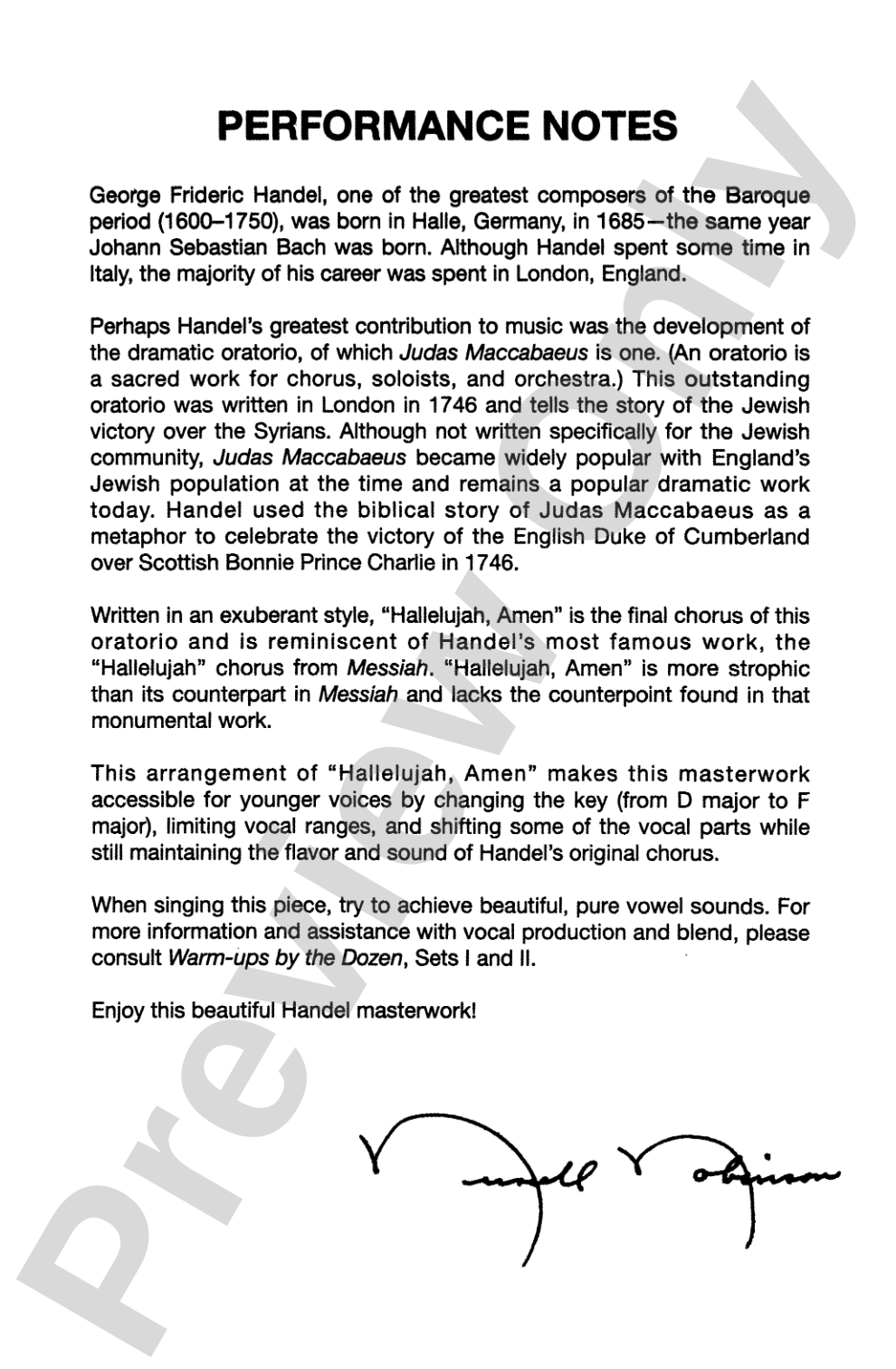
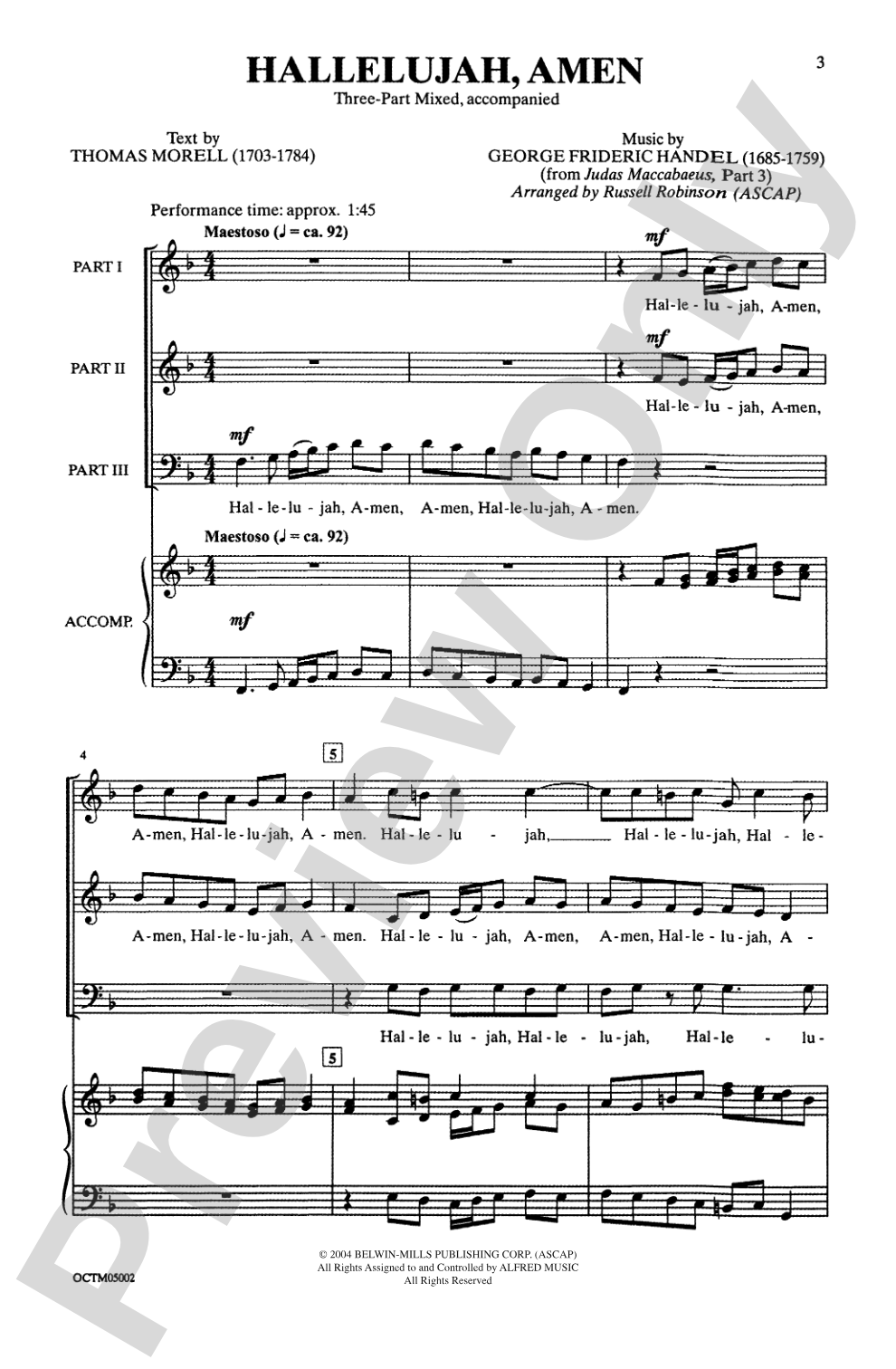
The final chorus from Handel's oratorio Judas Maccabaeus is a true choral masterpiece. Russell Robinson's arrangement places this great work within reach of younger and developing choirs. It will be a delightful addition to any concert.


Hallelujah, Amen (from Judas Maccabaeus): 3-Part Mixed Choral Octavo isn't in MakeMusic Cloud just yet...but it could be. Let us know you'd like to see it, and you'll help shape what comes next. In the meantime, start a free trial and dive into thousands of interactive titles your students can play along with today.
Request This Title
Tell us you want it.
Start Your Free Trial
Explore everything that's ready to play right now.
Sample Audio
1
Audio File
--:--
0:00
0:00
Sample Video
No sample videos found.
Additional Details
Series:
Alfred Archive Edition: Belwin Festival Series
Publisher:
Alfred Music
Page Count:
8
SKU:
00-PO-0002715
More about this title
About the Composer: George Frideric Handel
George Frideric Handel (1685-1759) was a German-born composer who spent most of his career in England, where he became a dominant figure in Baroque music. He composed 42 operas, numerous oratorios, and instrumental works that shaped the musical landscape of the 18th century. His oratorios, written for English audiences, combined dramatic storytelling with accessible melodies and powerful choral writing that remains central to choral literature today.
Handel's oratorio Judas Maccabaeus (1746) commemorates military victory and national pride, making it one of his most frequently performed works. The final chorus captures both the jubilation and majesty that define his choral writing. His influence on music education extends through centuries of transcriptions and arrangements that have kept his masterworks alive in school and church choirs.
Why we love this
Russell Robinson's arrangement distills the grandeur of Handel's closing chorus into a Grade 3 setting that retains its ceremonial power. The harmonic structure remains true to the original while the three-part voicing allows younger singers to engage with genuine Baroque counterpoint without overwhelming them. Directors appreciate that this is recognizable repertoire with real musical substance, not a simplified version that sanitizes Handel's vision.
What to expect
The piece radiates affirmation and triumph. Handel's "Hallelujah, Amen" unfolds with ceremonial dignity, its interlocking voices building a sense of inevitable resolution. Singing this finale brings the satisfaction of genuine choral architecture, where each voice part matters and the text rings with purpose and joy.
Who it's for
This arrangement serves developing choirs, middle school ensembles, and high school groups seeking substantial Baroque literature without the complexity of the original full score. It works equally well for competitive festival settings and concert programming where directors want to include a recognized masterwork that students can execute with confidence.
How to get the most out of it
- Shape the longer note values with clear weight on the arrival points rather than letting them diminish; Baroque music thrives on purposeful phrase architecture.
- Articulate the text "Hallelujah, Amen" with precision across all three parts so the layered voices create clarity rather than muddiness.
- Balance the soprano line against the alto and bass parts so the main melody emerges naturally without the supporting voices receding into the background.
- Consider adding a simple organ or keyboard foundation beneath the choir to anchor the harmonic language and give singers confidence in their pitches.
How to use it
This makes an ideal concert closer or the final selection of a choral program where you want to end on strength and grandeur. It also fits naturally into spring festival competition calendars, where judges and audiences expect to hear both artistry and musical substance. Consider pairing it with other Grade 3 sacred works to create a program theme around Baroque choral traditions.
Skills your students will build
- Reading SAB voicing and maintaining independent part integrity
- Baroque phrasing and understanding harmonic arrival points
- Text projection in multiple voice parts simultaneously
- Building crescendos and diminuendos across entire harmonic structures