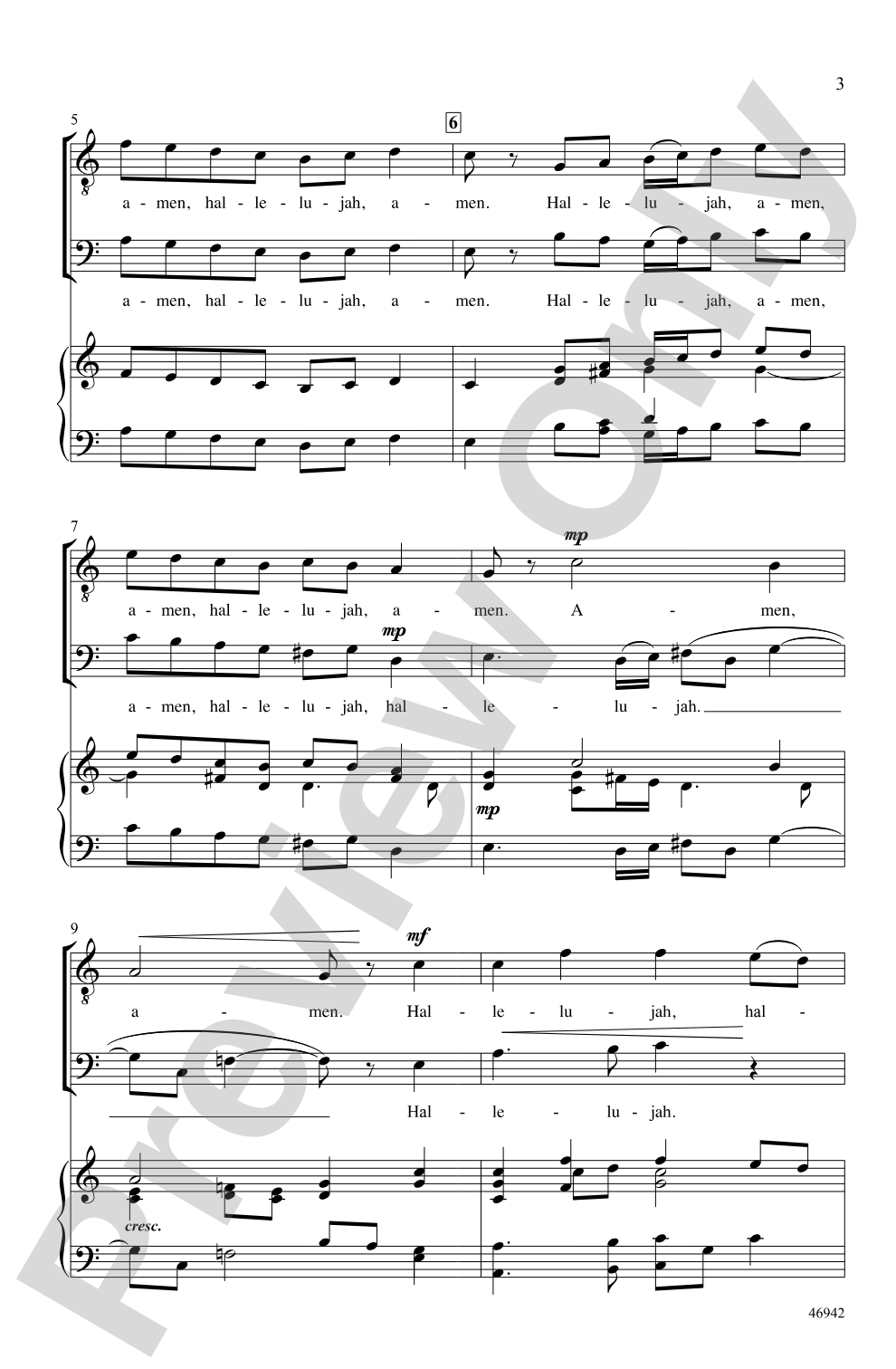
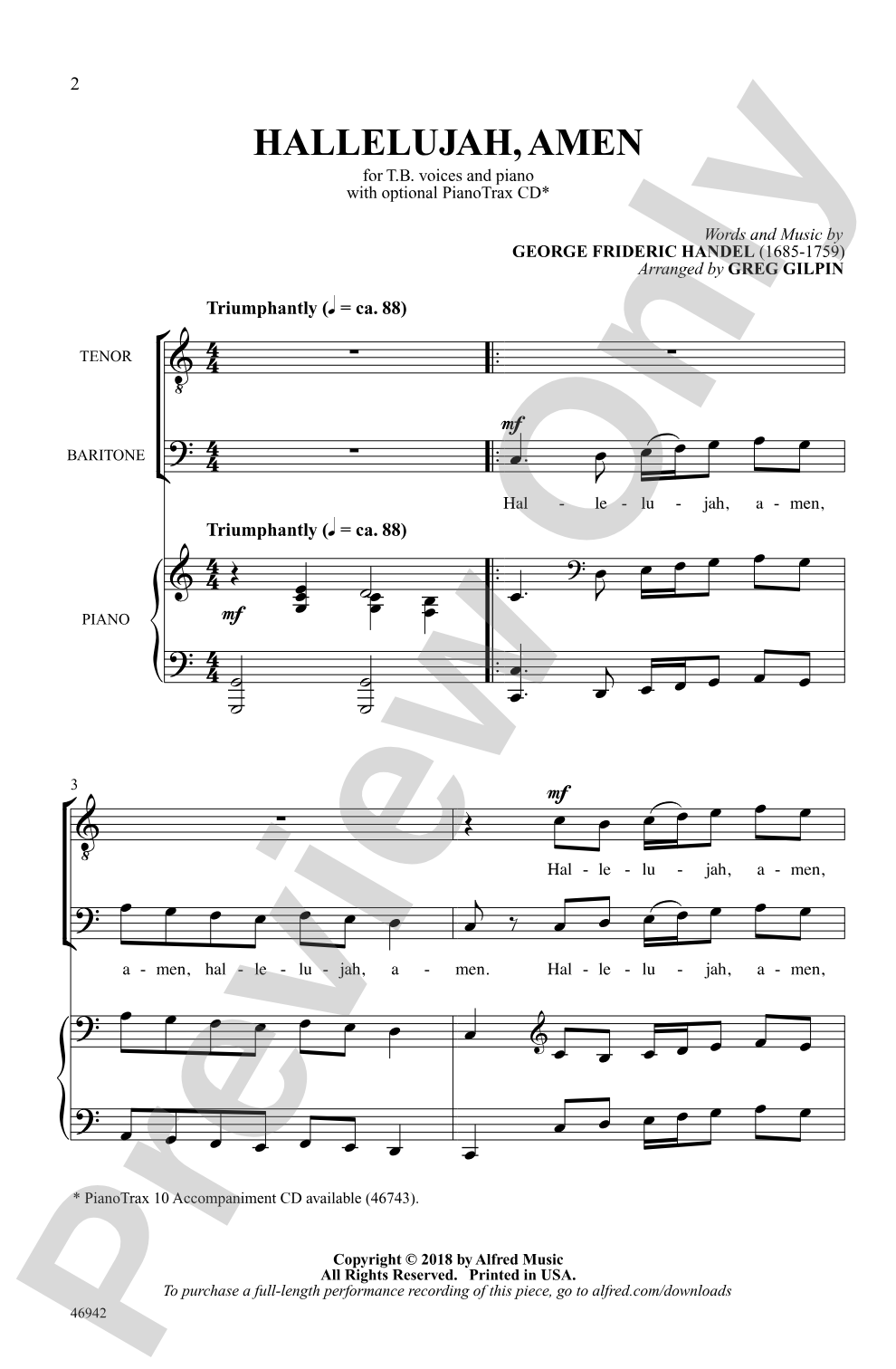
Hallelujah, Amen Sheet Music Preview

Hallelujah, Amen: TB Choral Octavo

Words and music by George Frideric Handel / arr. Greg Gilpin

Item: 00-PO-0005809

Digital Download
$2.05

Minimum order quantity: 20 copies

Description
Introduce your men's ensemble to this powerful chorus from Handel's oratorio Judas Maccabeus. Adapted for men in just two voice parts, this arrangement preserves much of the original counterpoint. A wonderful piece for exploring melismatic phrases, developing vocal agility, and encouraging breath control. Most importantly, it's an achievable masterwork for your guys!

Hallelujah, Amen: TB Choral Octavo isn't in MakeMusic Cloud just yet...but it could be. Let us know you'd like to see it, and you'll help shape what comes next. In the meantime, start a free trial and dive into thousands of interactive titles your students can play along with today.

Sample Audio
0:00
0:00
Sample Video
Additional Details
Series: Alfred Choral Designs
Publisher: Alfred Music
Page Count: 8
SKU: 00-PO-0005809

More about this title

About the Composer: George Frideric Handel

George Frideric Handel (1685, 1759) was a master of large-scale vocal writing who shaped the oratorio as a major musical form. His works for chorus remain cornerstones of the choral repertoire, prized for their architectural clarity, harmonic sophistication, and the way they balance accessibility with genuine musical substance.

Handel's genius lay in writing for the human voice at every level of ability. His choruses could thrill audiences in grand concert halls while remaining teachable for student ensembles. Judas Maccabeus, composed in 1746, stands as one of his most celebrated oratorios, and its choruses have inspired generations of singers.

Why we love this

Greg Gilpin's arrangement respects Handel's original voice-leading while creating something genuinely singable for men's groups. You're not simplifying a masterpiece; you're opening a door to it. The counterpoint remains engaging enough to hold your ensemble's musical interest while the two-part texture keeps the technical hurdles manageable.

What to expect

Jubilant and affirmatory. The melismas dance rather than burden, and the harmonic language feels both sturdy and uplifting. There's a celebratory quality that makes singers feel like they're part of something grand, even in the intimate setting of a two-part arrangement.

Who it's for

Men's choirs and barbershop-adjacent ensembles looking for repertoire with genuine musical substance. This works equally well for high school octets, college groups, or community men's choirs that want to stretch beyond contemporary pop arrangements.

How to get the most out of it

  • Approach the melismatic passages as single melodic thoughts, not separate syllables. Let the text shape your phrasing so the runs feel inevitable rather than ornamental.
  • Balance the two lines independently. In Baroque writing, each voice carries real harmonic weight, so resist blending everything into one uniform blend.
  • Establish a steady, buoyant tempo early. This music thrives on forward momentum; too much pulling will flatten the joy out of it.
  • Pay attention to the harmonic rhythm. Handel's changes move deliberately, and respecting them prevents the piece from becoming rhythmically monotonous.

How to use it

Open a pops or holiday concert with this to set a triumphant tone. It also pairs beautifully on a program exploring Baroque sacred music or as a contrast to a string of spirituals or folk arrangements. The eight pages make it substantial enough to anchor a set without overwhelming rehearsal time.

Skills your students will build

  • Singing melismatic passages with clarity and control
  • Independent voice part maintenance in two-part counterpoint
  • Baroque text articulation and phrasing
  • Breath management across sustained melismatic lines
  • Harmonic listening in sparse textures

You May Also Like