
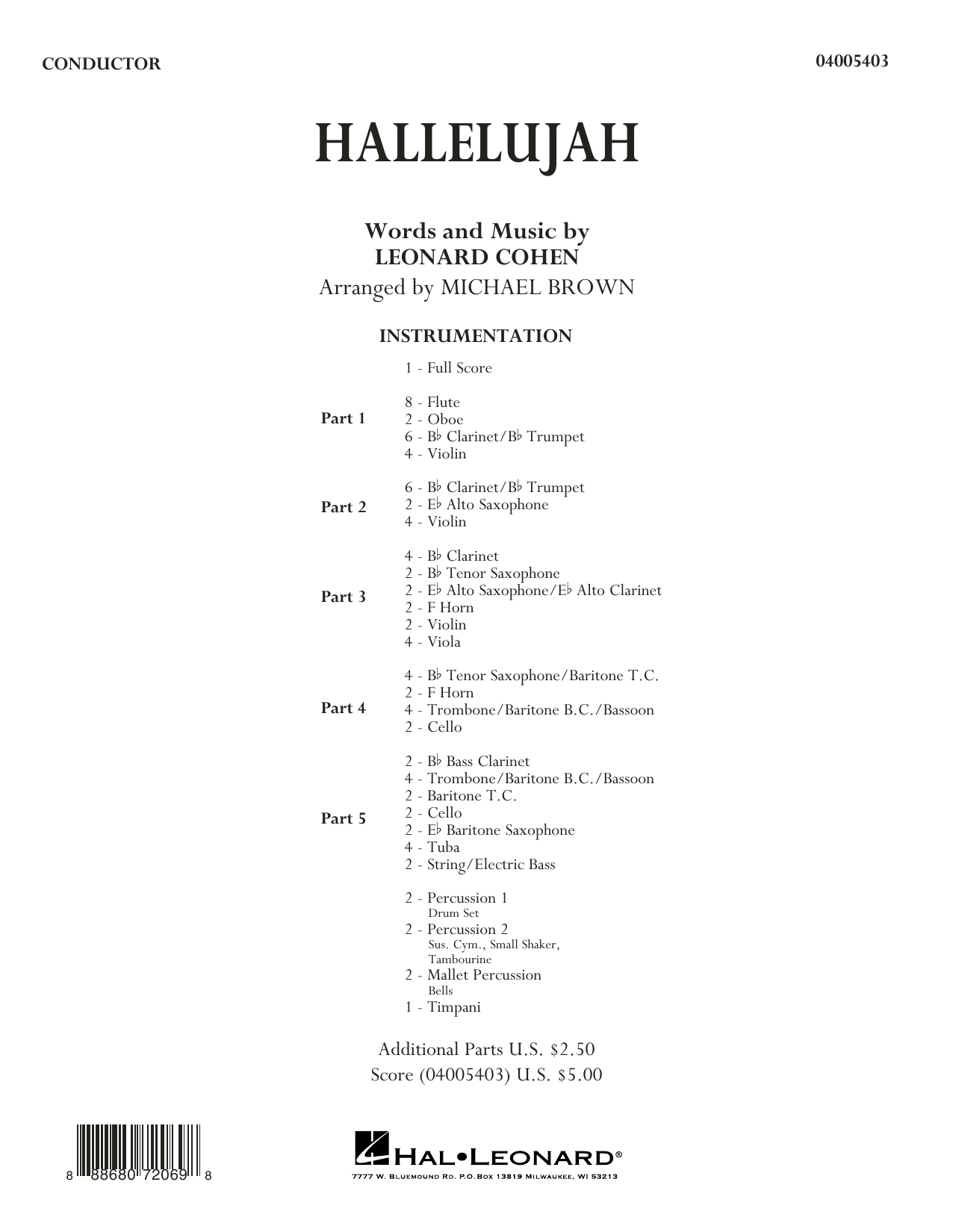

Hallelujah: Flex Ensemble Conductor Score & Parts
As performed by Leonard Cohen / As performed by Lee DeWyze / As performed by Justin Timberlake Matt Morris featuring Charlie Sexton / Arranged by Michael Brown
Grade: 2-3
Item: 35-PK00406762
$65.00
Pickup currently not available
Buy Extra Parts (Digital PDF Download)
Parts Added to Cart!
Description
This landmark ballad by Leonard Cohen has been recorded by countless artists, and continues to be featured in TV and film, notably in the movie "Shrek". Here's a marvelous version with flexible scoring options for smaller groups. Dur: 2:55


Hallelujah: Flex Ensemble Conductor Score & Parts isn't in MakeMusic Cloud just yet...but it could be. Let us know you'd like to see it, and you'll help shape what comes next. In the meantime, start a free trial and dive into thousands of interactive titles your students can play along with today.
Request This Title
Tell us you want it.
Start Your Free Trial
Explore everything that's ready to play right now.
Sample Audio
No sample audio found.
Sample Video
No sample videos found.
Additional Details
Publisher:
Hal Leonard
SKU:
35-PK00406762
More about this title
About the Artist: Leonard Cohen
Leonard Cohen was a Canadian singer, poet, and songwriter whose introspective lyrics and distinctive baritone voice shaped popular music across five decades. His work bridged literary sophistication with accessible melodies, earning him recognition as one of the most influential songwriters of the modern era.
Why we love this
This arrangement captures the emotional depth that made Cohen's original so timeless while offering genuine flexibility for ensembles of varying sizes. Michael Brown's scoring respects the song's intimate character without oversimplifying it, giving your students a contemporary piece that resonates with audiences while remaining manageable in rehearsal.
What to expect
The piece unfolds with quiet reverence, grounded in Cohen's characteristic minor-key meditation. As the arrangement builds toward its peaks, listeners encounter moments of surprising uplift alongside passages of genuine longing, creating a performance that feels both intimate and expansive.
Who it's for
Flex Ensemble ensembles performing at grades 2 through 3, particularly those seeking accessible popular repertoire with genuine musical substance. Directors building concerts that connect with student musicians and audiences alike will find this flexible scoring ideal for groups without full instrumentation.
How to get the most out of it
- Shape the opening verses with space and restraint. The power of this song emerges from what you leave unsaid, not from overstating the harmony.
- Balance vocal clarity against instrumental texture. Instrumental parts should support the melody's storytelling rather than compete with it.
- Let the arrangement breathe during the modulations. These moments shift the emotional weight of the piece, and rushing through them diminishes their impact.
- Engage the recorded accompaniment as a rehearsal tool early on. Its tempo and phrasing will anchor your ensemble once live performance begins.
How to use it
Consider pairing this with other contemporary or spiritual selections to create a thematic concert section exploring faith, love, and introspection. Its cultural resonance makes it an effective set closer or program anchor, especially when you want to demonstrate that concert music speaks directly to the world students inhabit.
Skills your students will build
- Sustaining vocal blend across changing harmonic contexts
- Balancing melody awareness with ensemble cohesion
- Interpreting contemporary song arrangements with stylistic sensitivity
- Managing flexible instrumentation and part doubling
- Shaping phrase contours within a restrained dynamic range